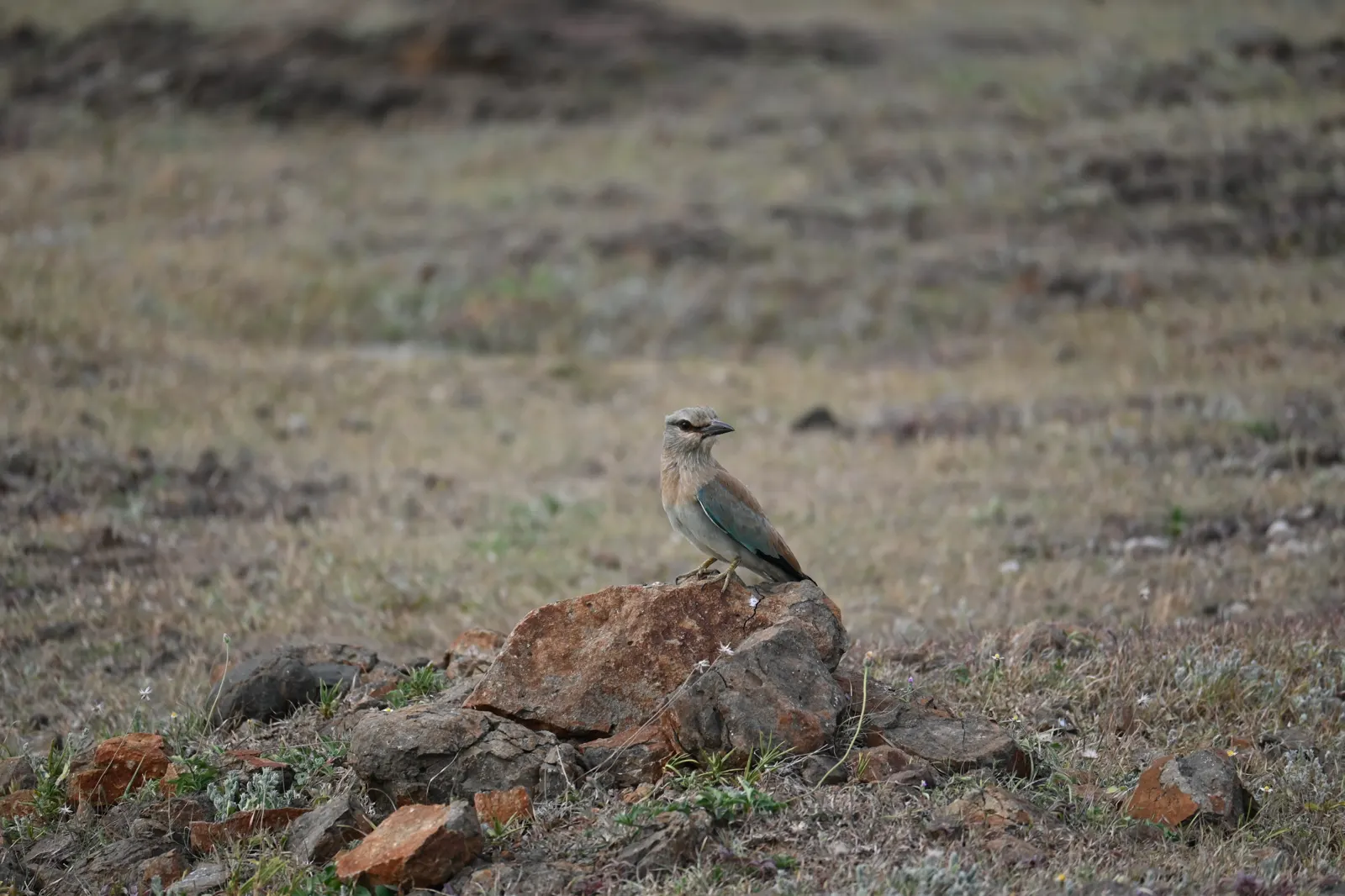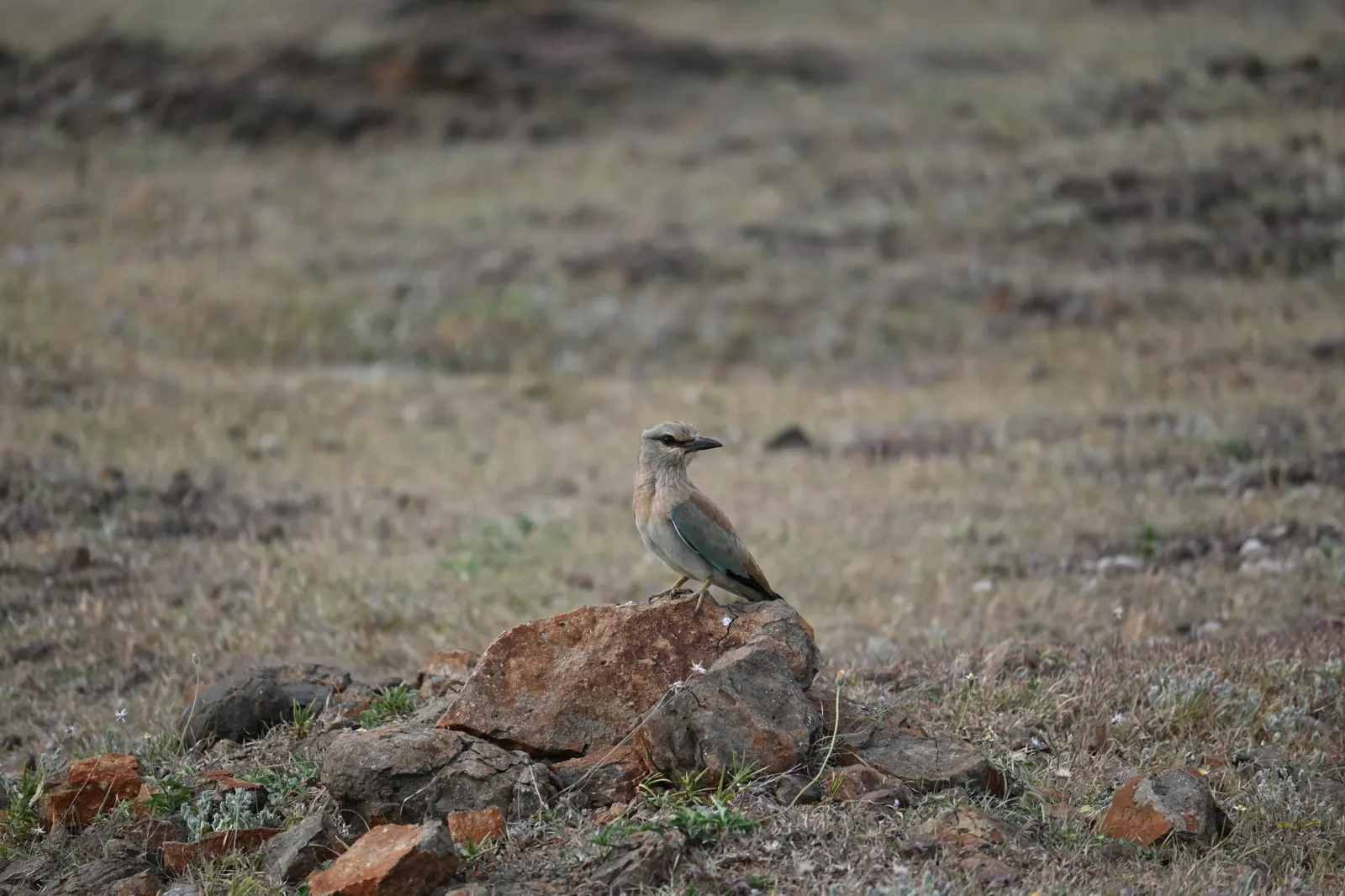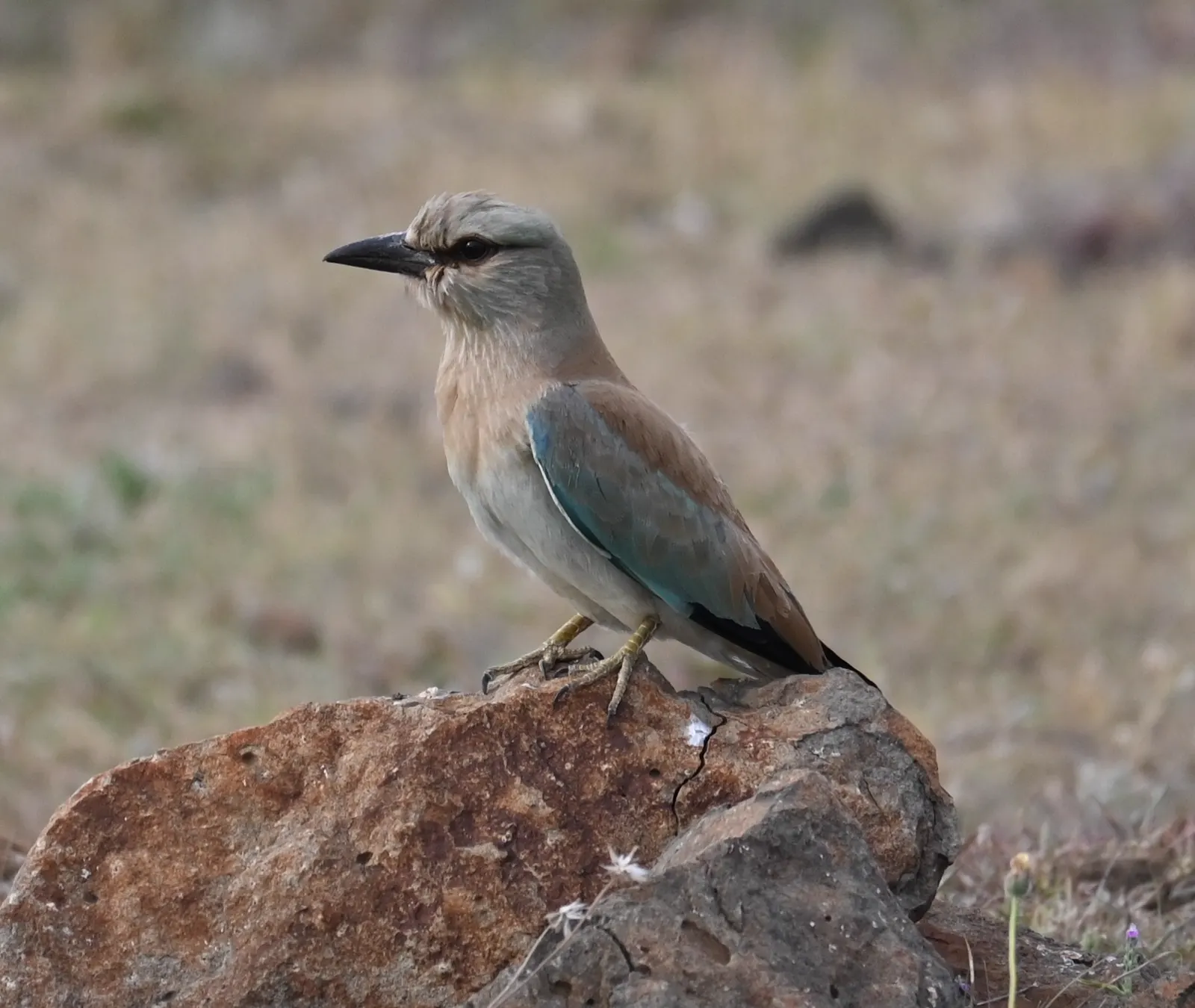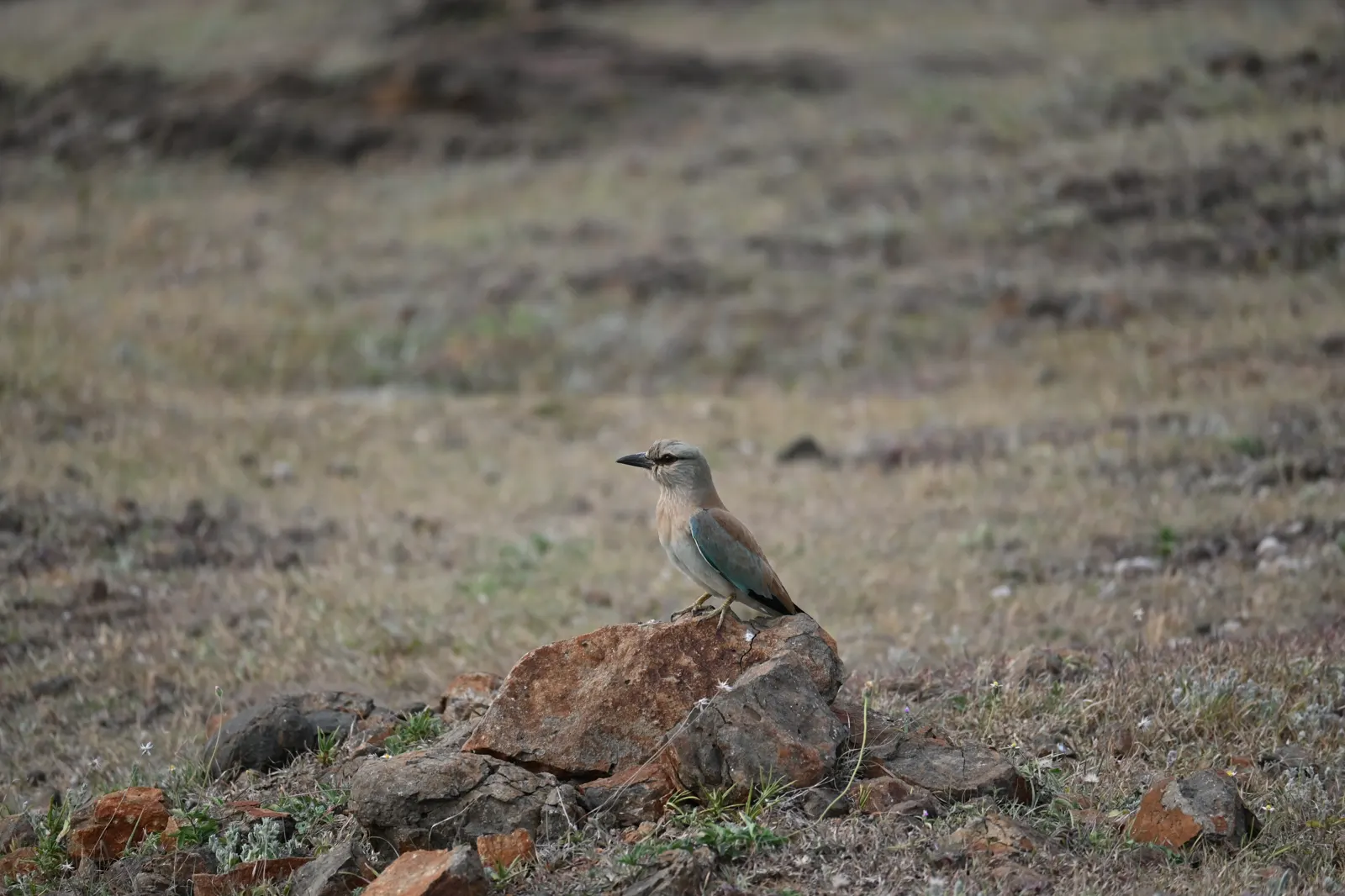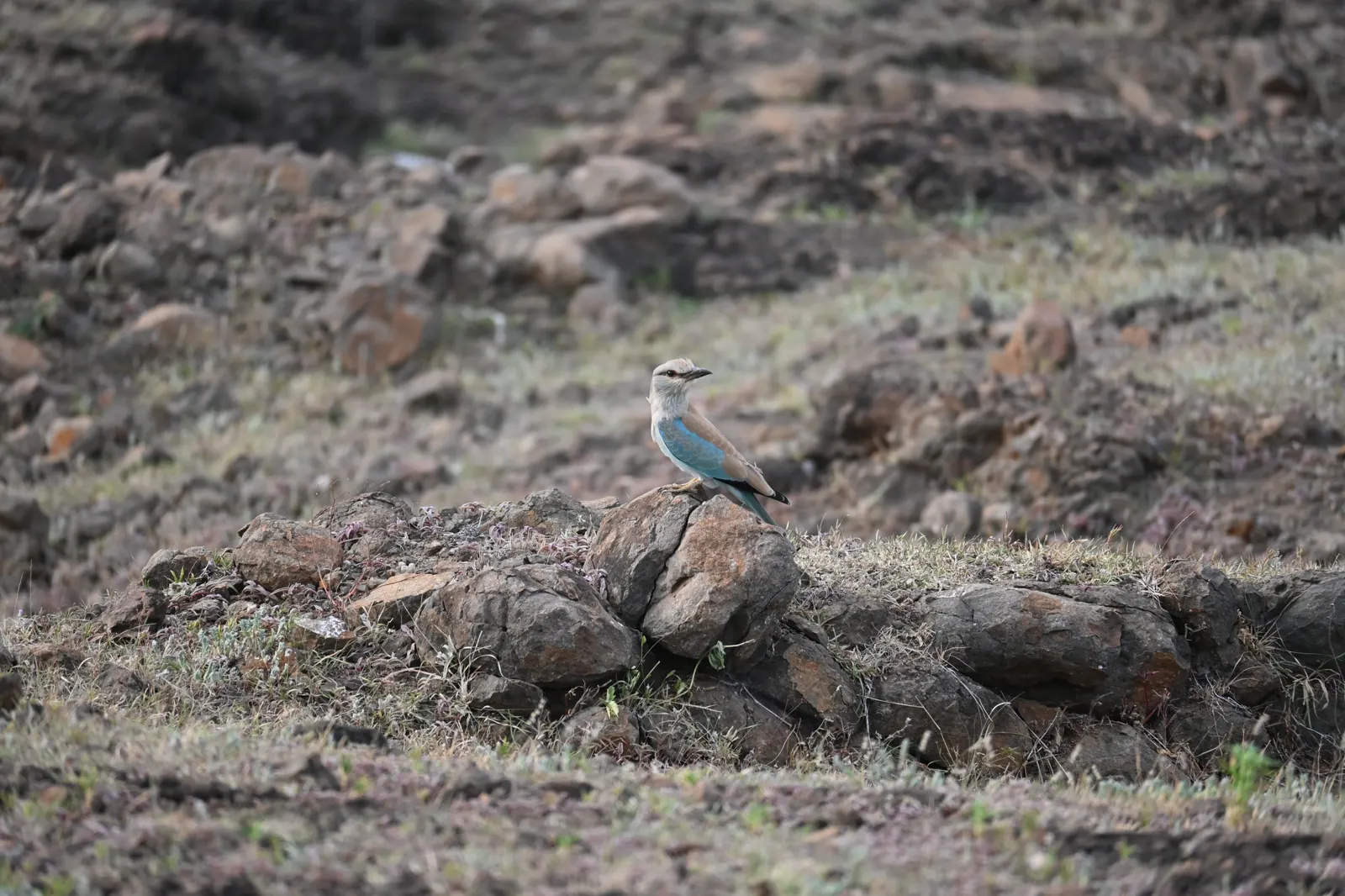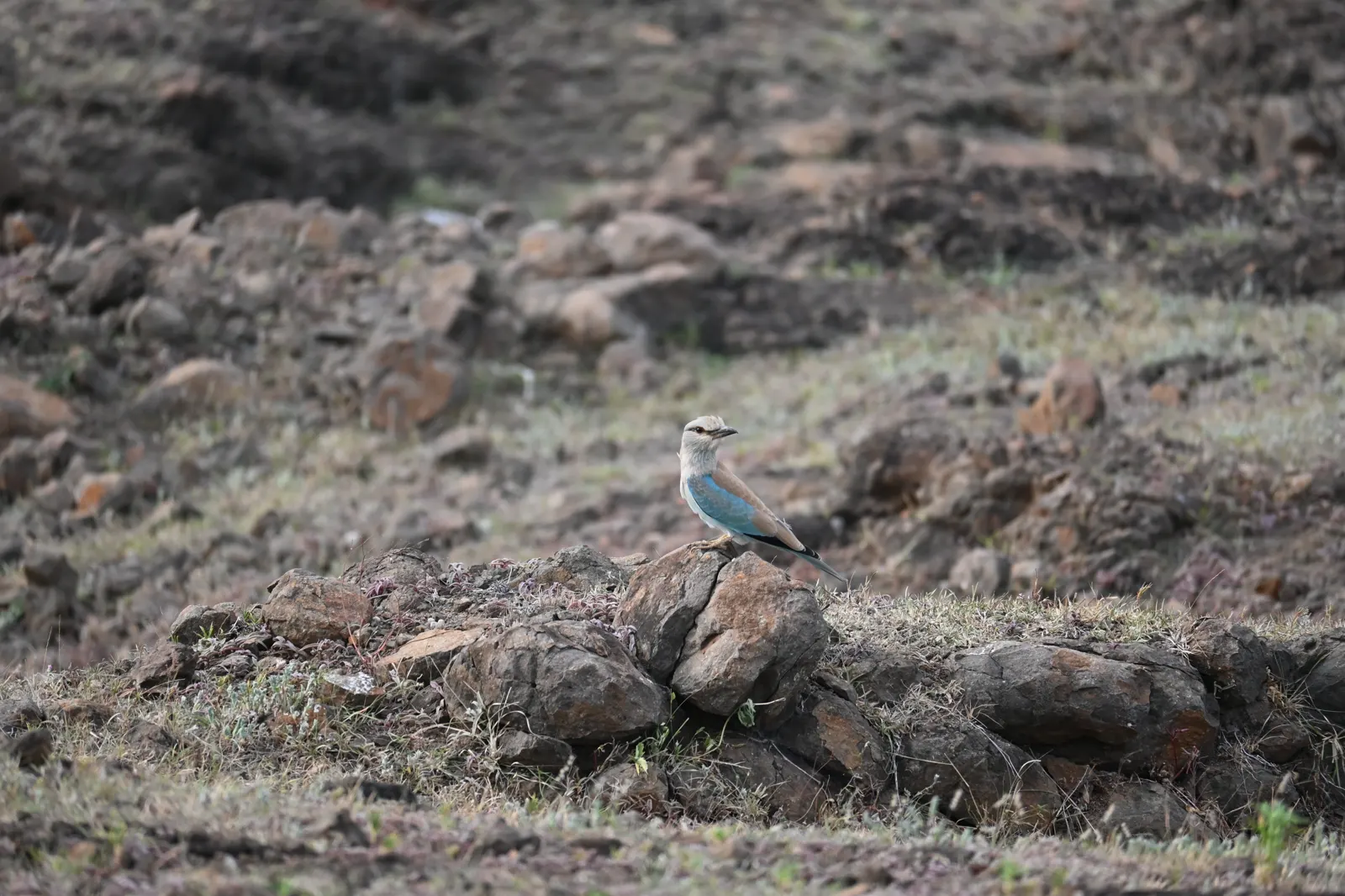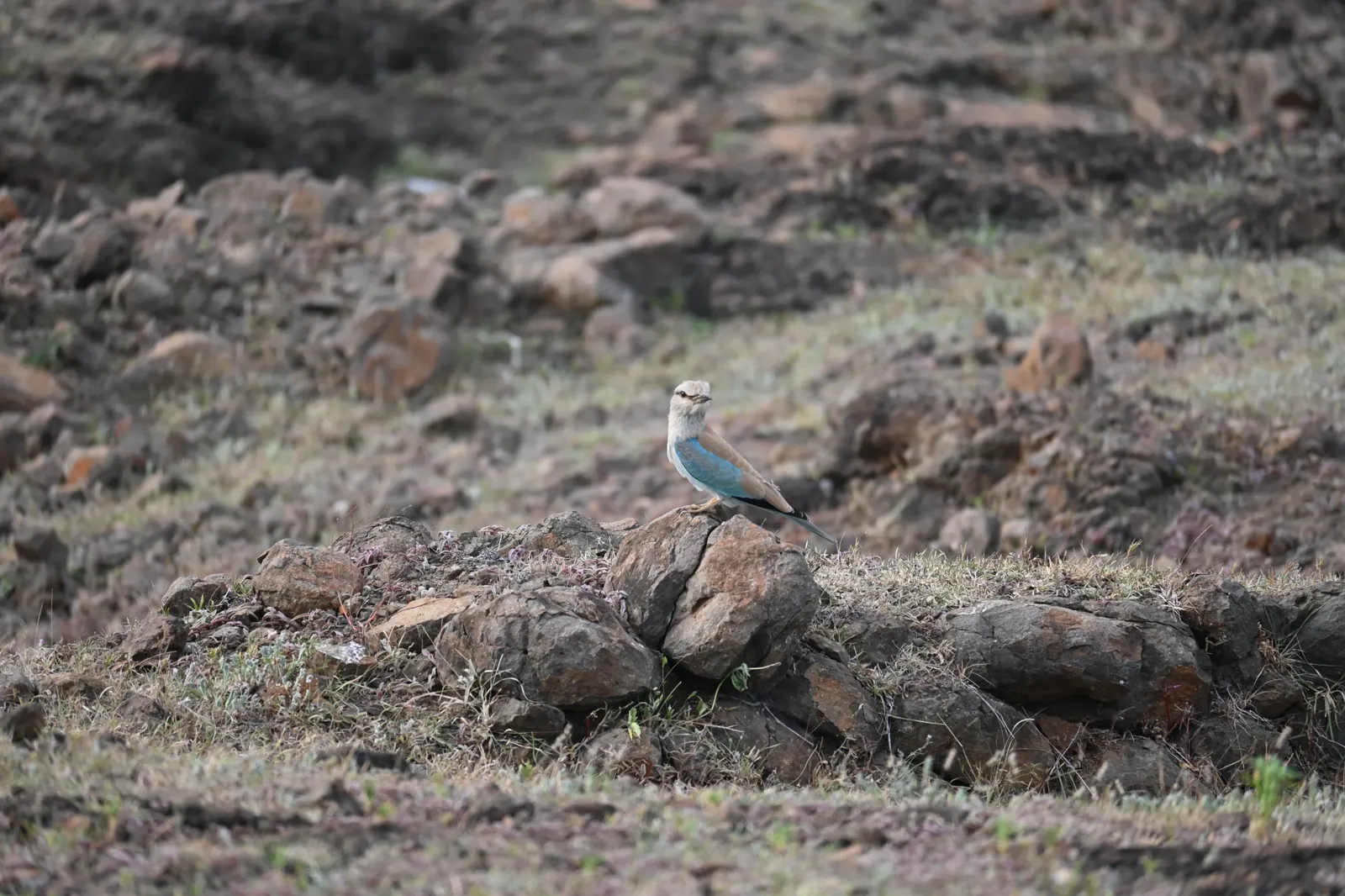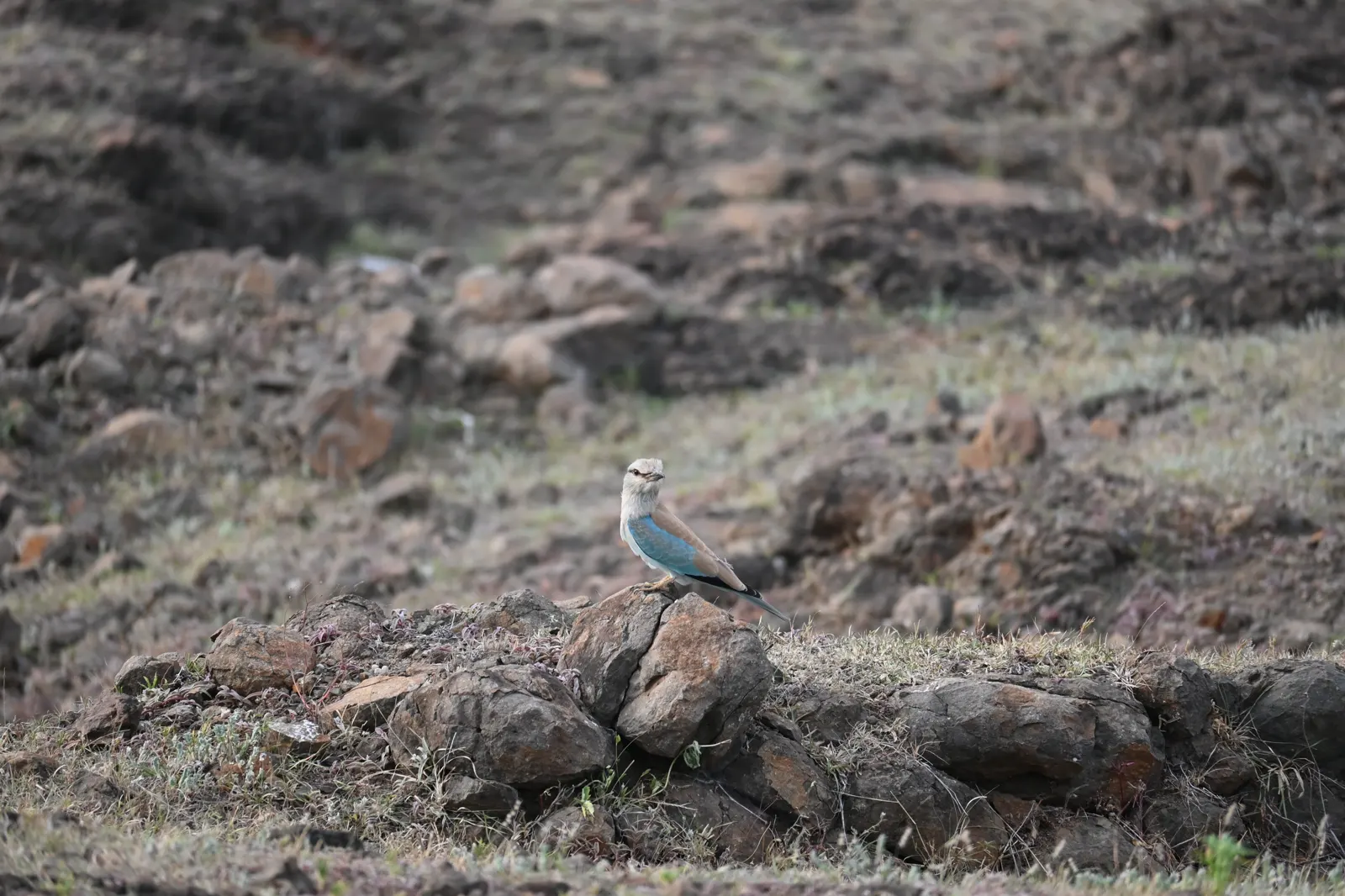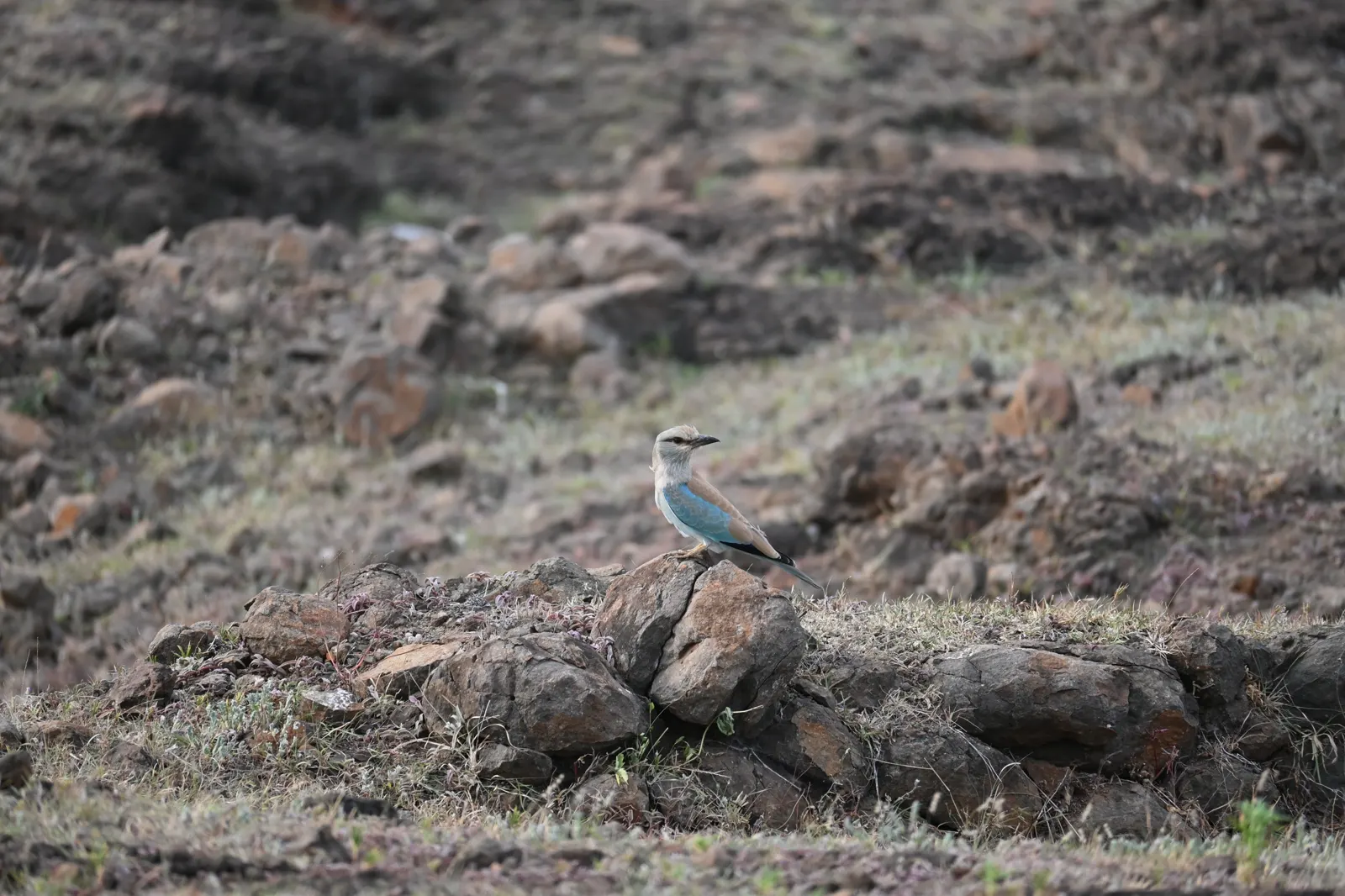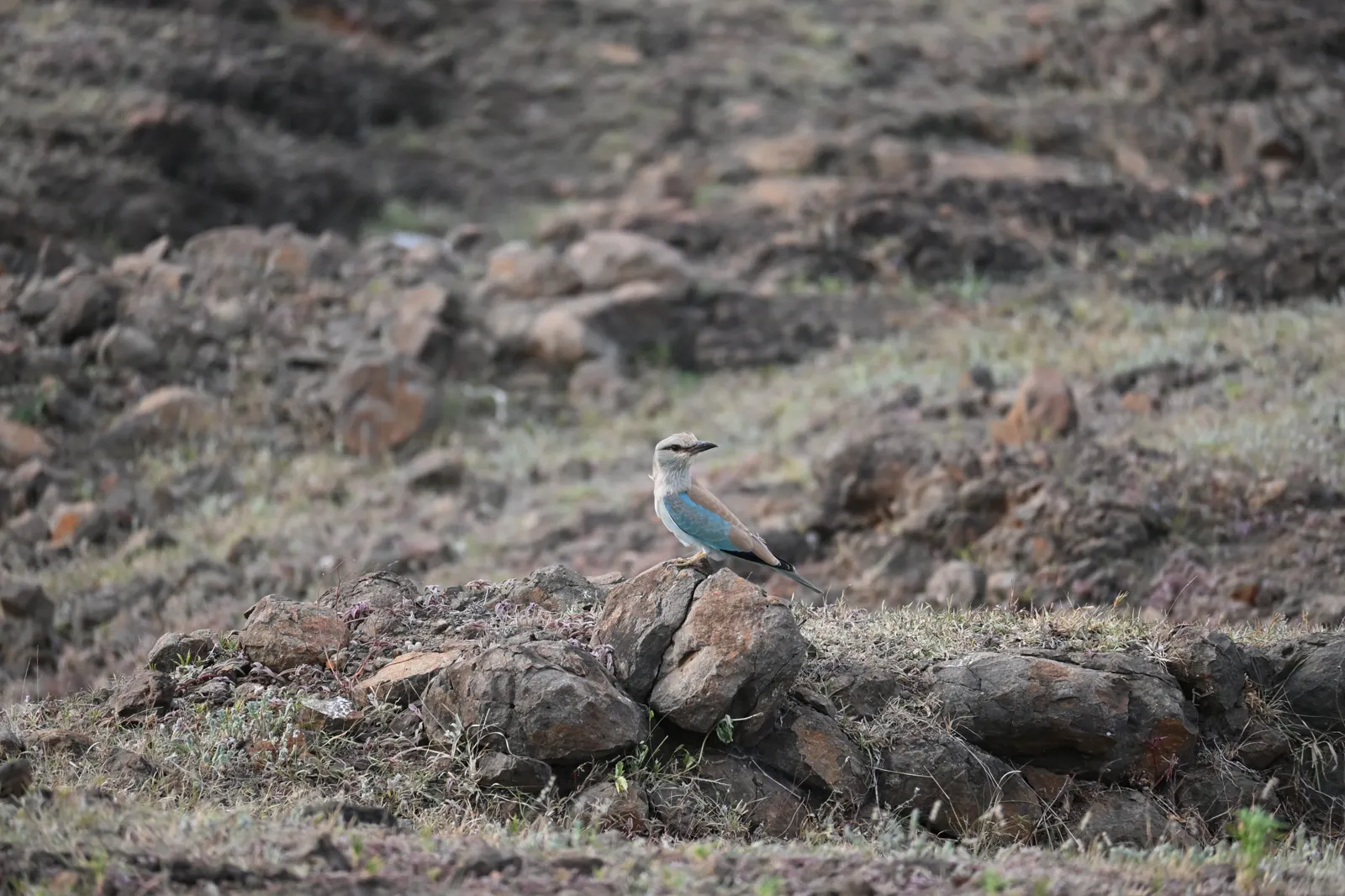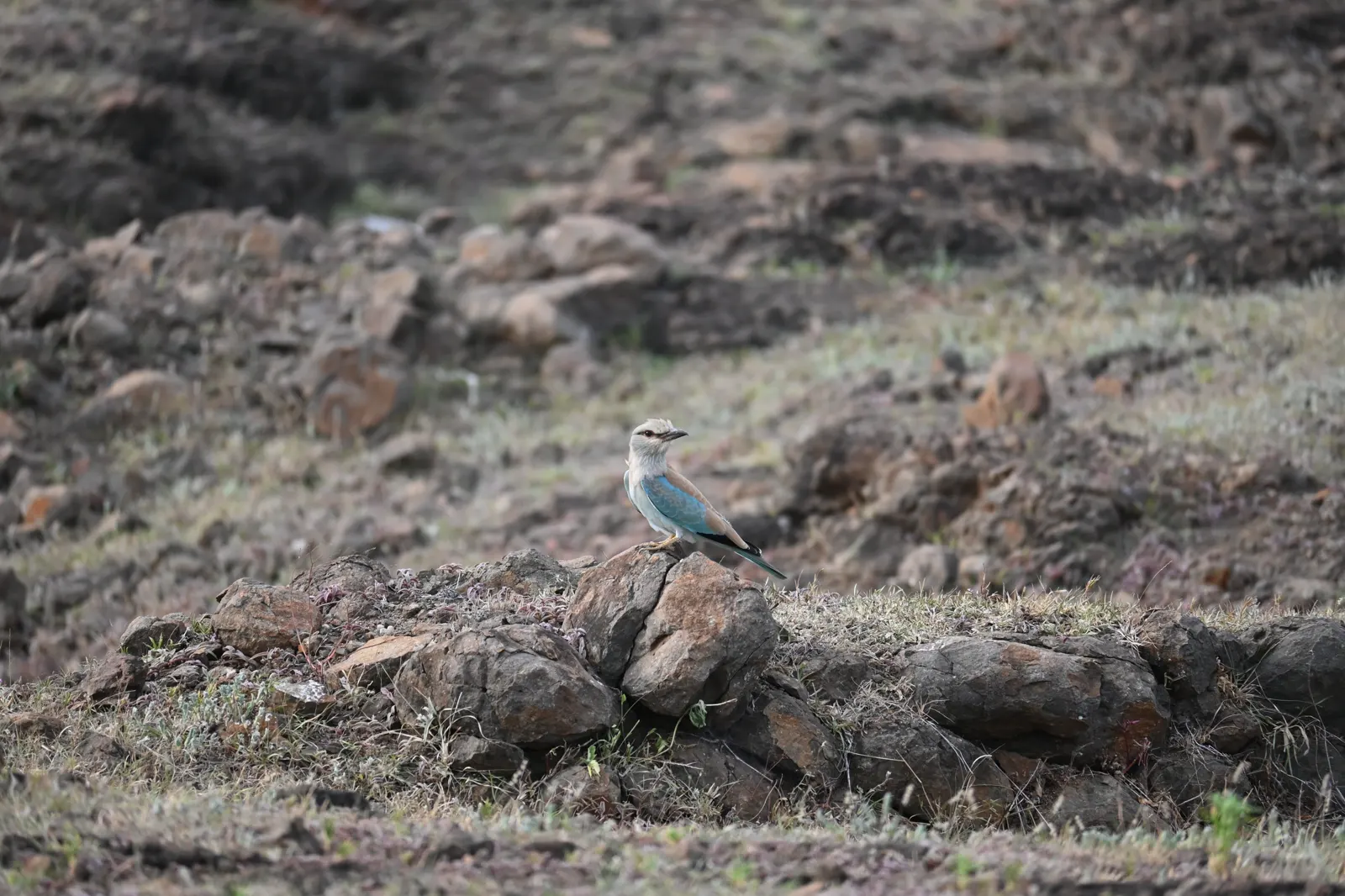
A blue roller perched among the rocks and branches of the dry grassland near Bhigwan. This photo story keeps the identification cautious: the pictures show a roller, but we are not using the old European Roller label without a confirmed review of the full photo sequence. The bird’s colour changes markedly between shade, direct light and flight, which is why a single frame can mislead.
The clearest views
These three frames show the bird at different angles. Open them to see the feather detail; on a phone, the pictures stack in one column.
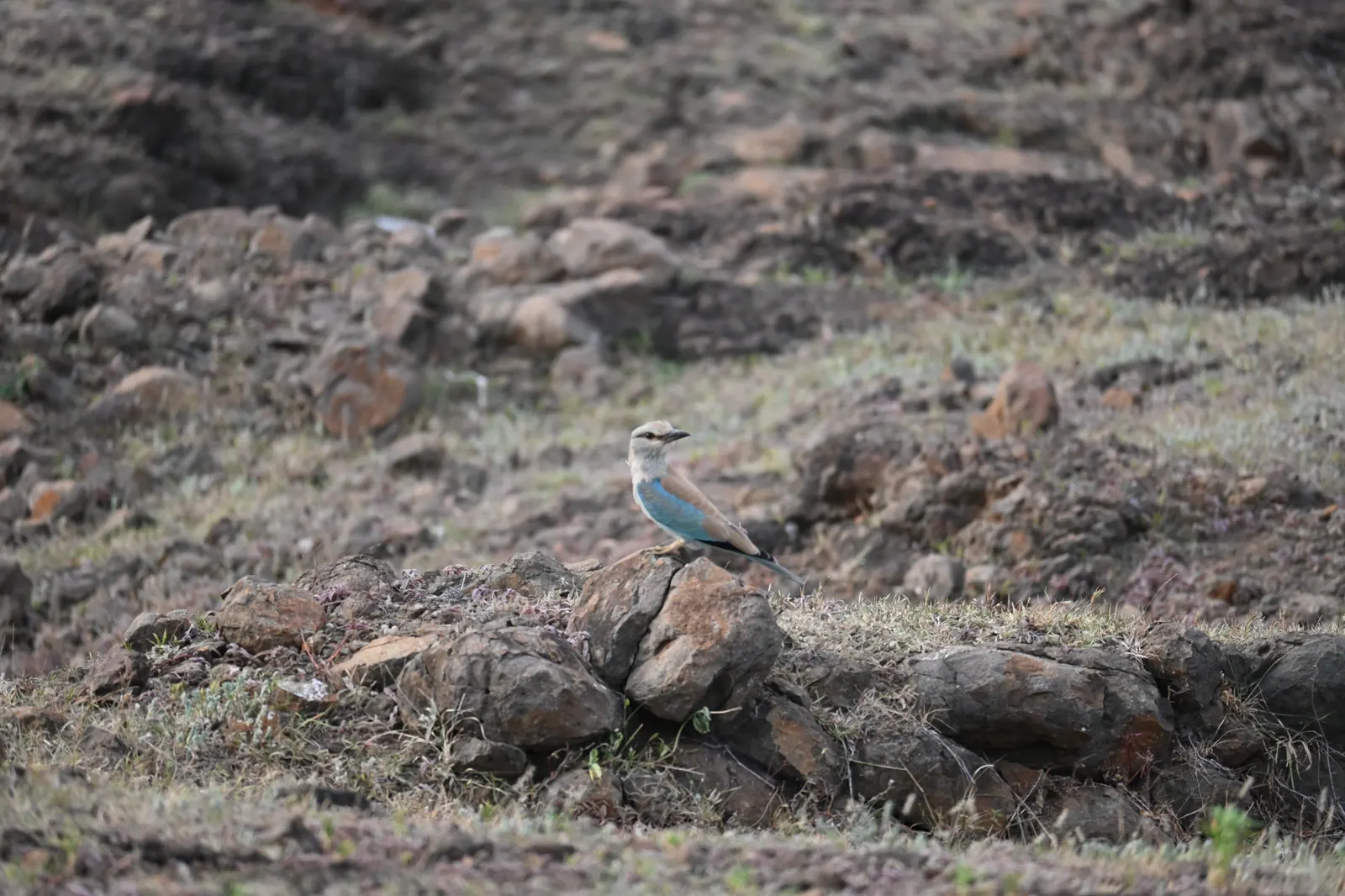
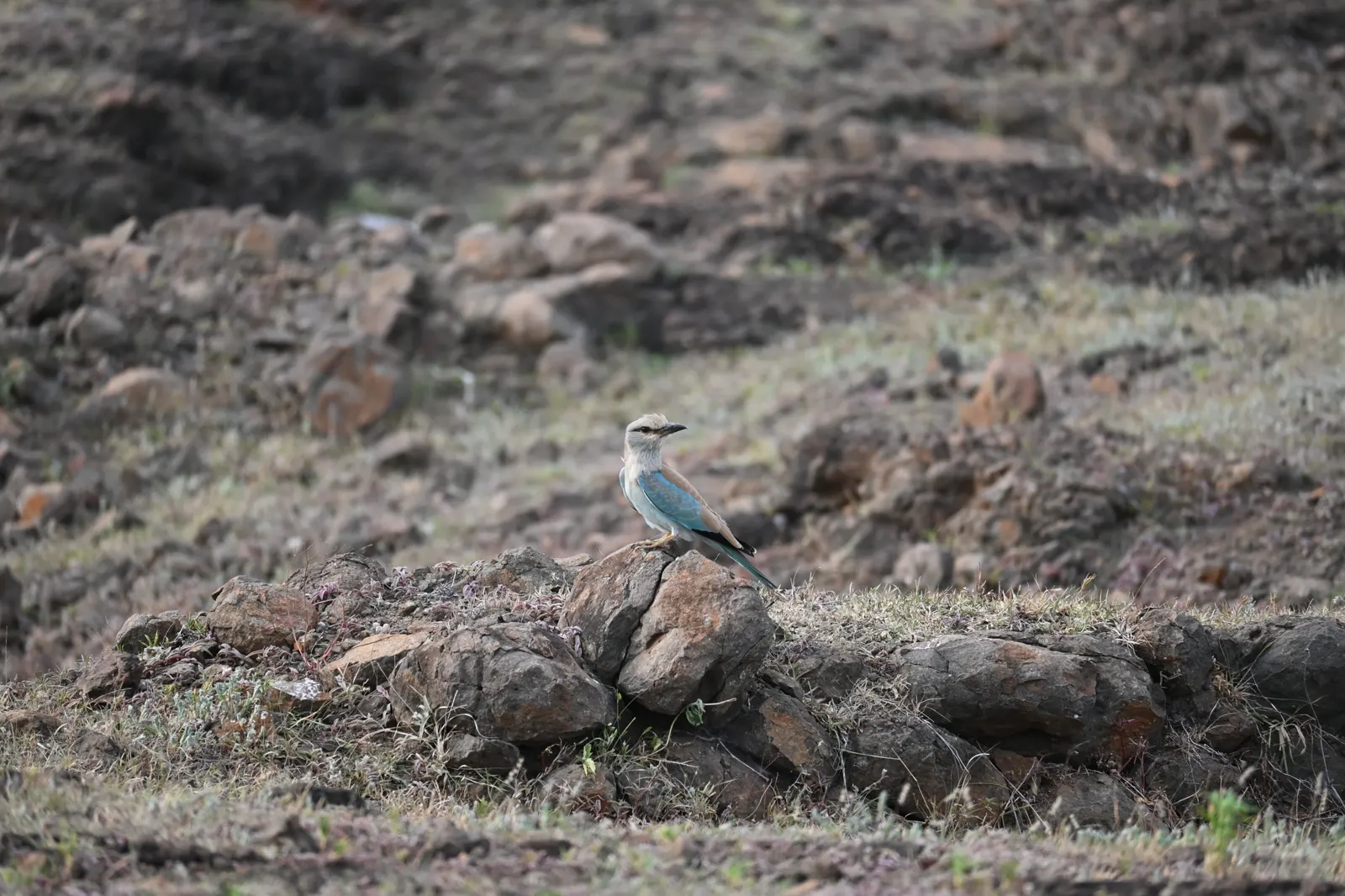
What the photographs tell us
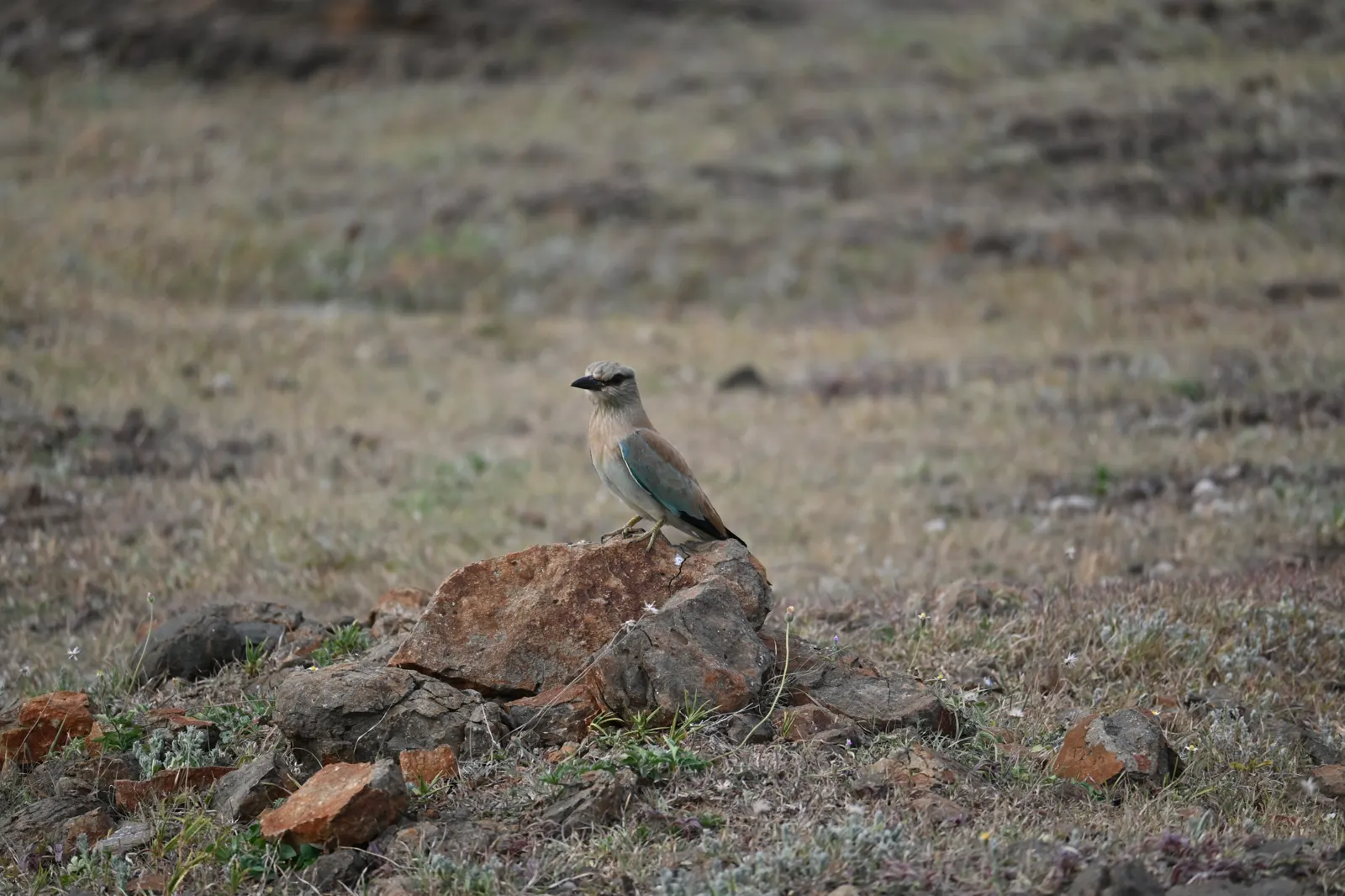
The photographs show a stocky bird with a broad head, strong bill and blue in the wings. Several frames make the pattern easier to follow than one close crop. They also show the habitat around it: open, dry ground with scattered perches. They do not, by themselves, prove where this individual came from or whether it was migrating.
Rollers often use a raised perch to watch the ground. If you see one from a track, watch quietly before moving closer. A change of angle or a natural take-off may show the wing pattern better than chasing the bird for a photograph. Stay on existing tracks and let the bird keep its space.
Why the species name is cautious here
“Roller” is a useful field name, but identifying a blue roller to species needs a clear look at the whole bird and, ideally, several flight and perched views. An older version of this article used the name European Roller. That identification is under review, so this page now avoids presenting it as a fact. We would rather be accurate than attach a confident name to an uncertain bird.
For other birds photographed in the same landscape, see the Bhigwan grassland bird photo guide and our Indian Courser field notes.
More roller photographs
The gallery below includes the full new sequence from Bhigwan. Similar frames remain together so you can follow small changes in posture and light, not just the most colourful instant. Tap or click a photograph to open its full-size file.