
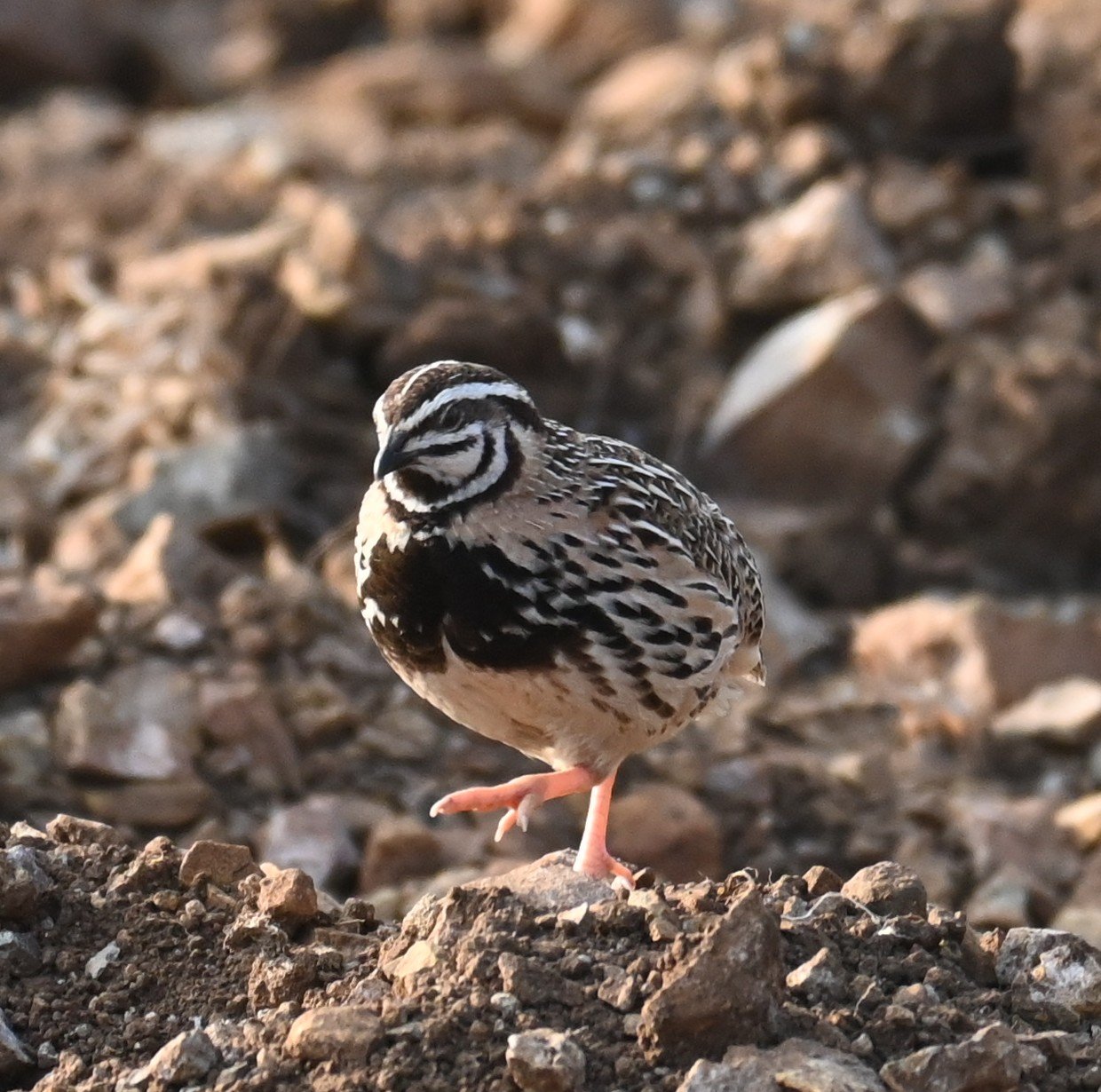
On the dry, rocky ground around Bhigwan, a small quail moved carefully through sparse weeds and loose stones. The black-and-white face pattern, dark breast and pink legs showed that it was a male Rain Quail (Coturnix coromandelica). This is a compact ground bird that can vanish into cover in seconds, making a clear view a rewarding part of birding in Maharashtra.
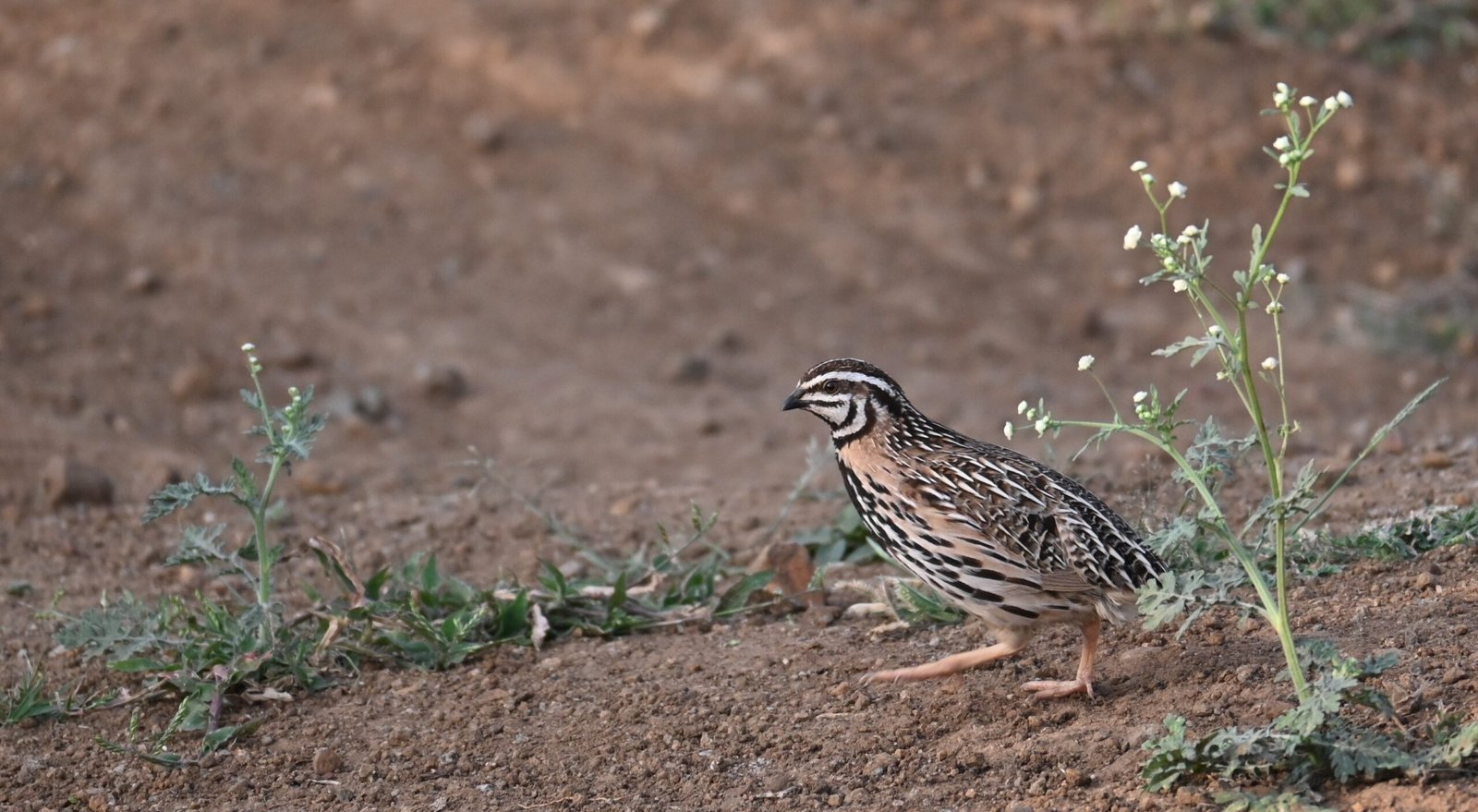
Rain Quail identification
The Rain Quail is also known as the Black-breasted Quail. A male can be recognised by its broad pale eyebrow, bold dark-and-white facial markings and a deep dark patch across the upper breast. The upperparts are patterned in brown, buff and black, giving excellent camouflage against dry soil and grass. Pinkish legs, a short bill and a compact, rounded body complete the picture.
These features separate this bird from the Jungle Bush Quail at Bhigwan and the Barred Buttonquail, which are different species. In particular, the male Rain Quail’s strongly marked face and black breast are valuable field marks.
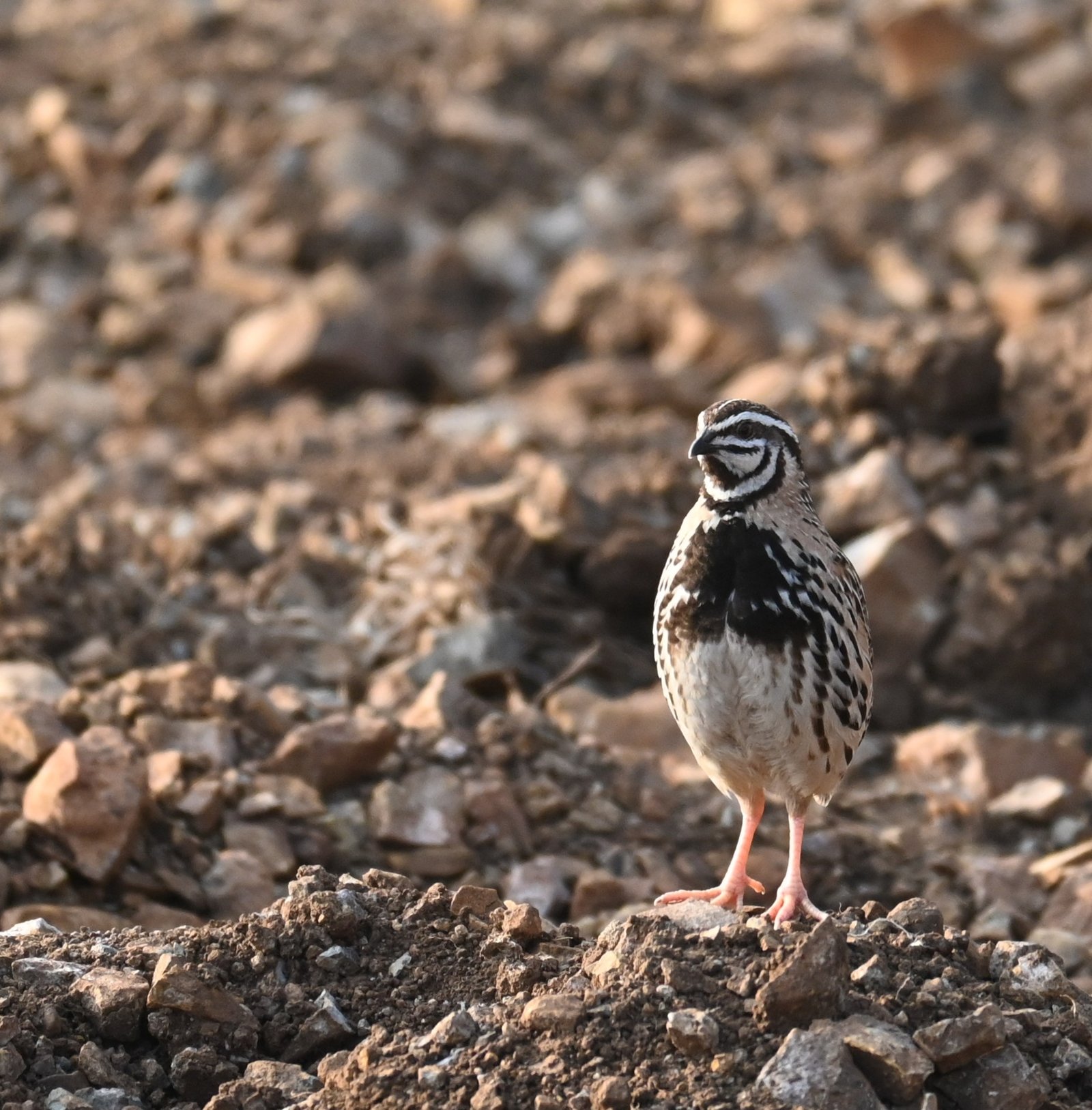
Rain Quail habitat in Maharashtra
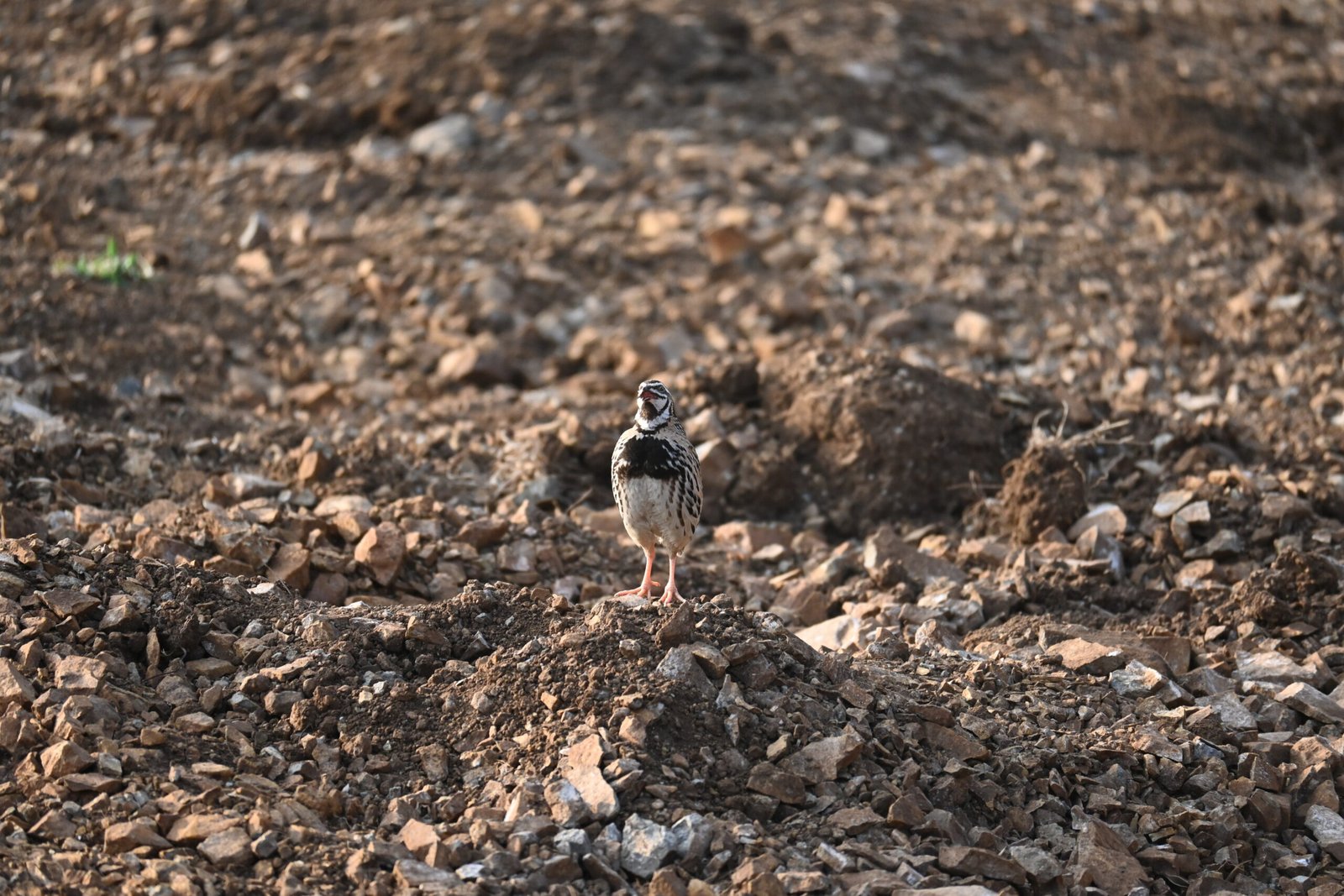
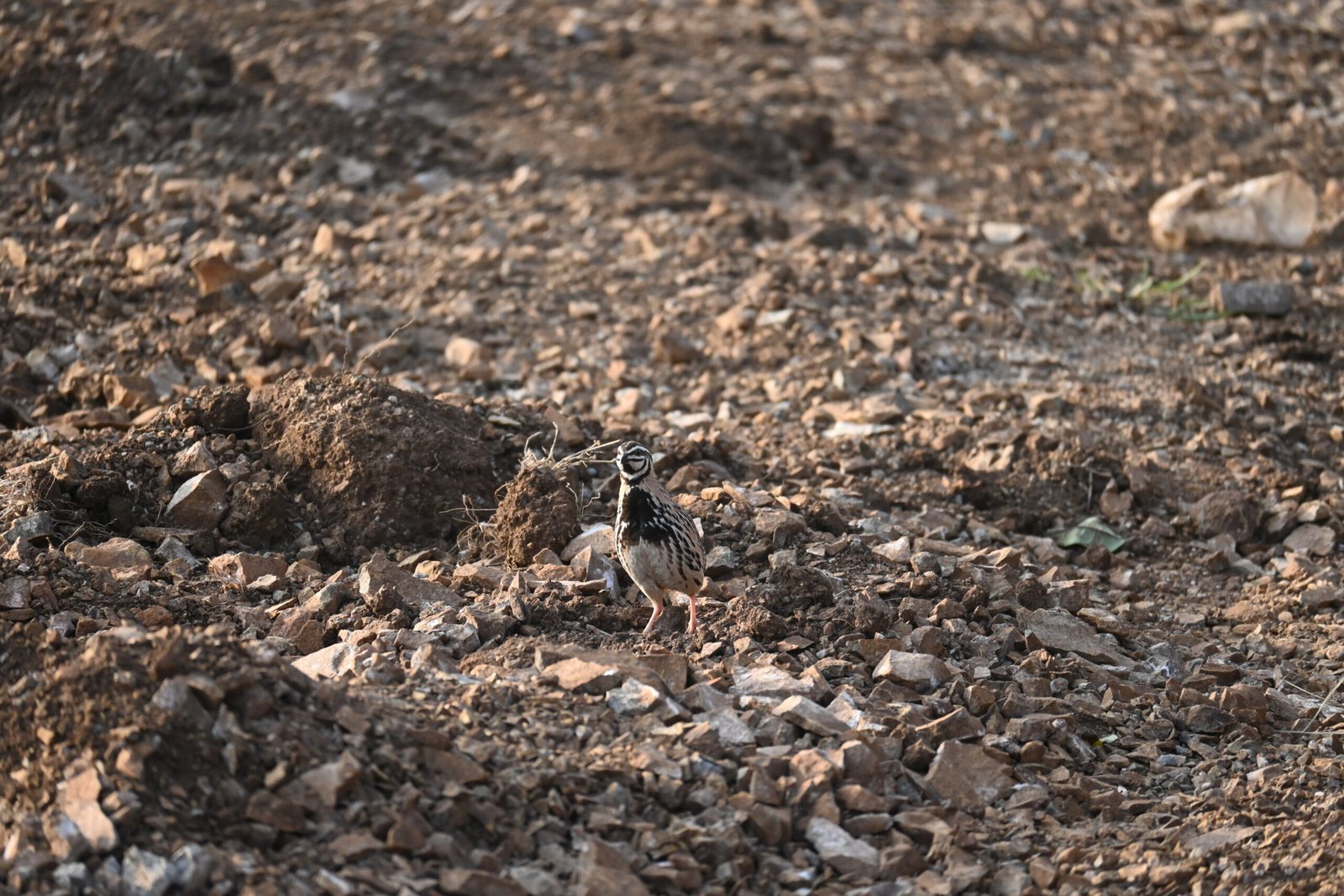
Rain Quails use open habitat: grassland, cropland, scrub margins, fallow fields and stony ground with enough low cover to hide in. This matches the wider Bhigwan landscape, where wetlands meet farmland, scrub and rocky patches. Bhigwan birding is often associated with waterbirds, but its surrounding open country is equally worth a slow, patient search.
The species is usually easiest to locate through a brief movement, a quiet call or a shape at the edge of cover. Once it stops, its plumage can blend almost completely into the earth and stones. A long lens and calm observation are more useful than moving closer.
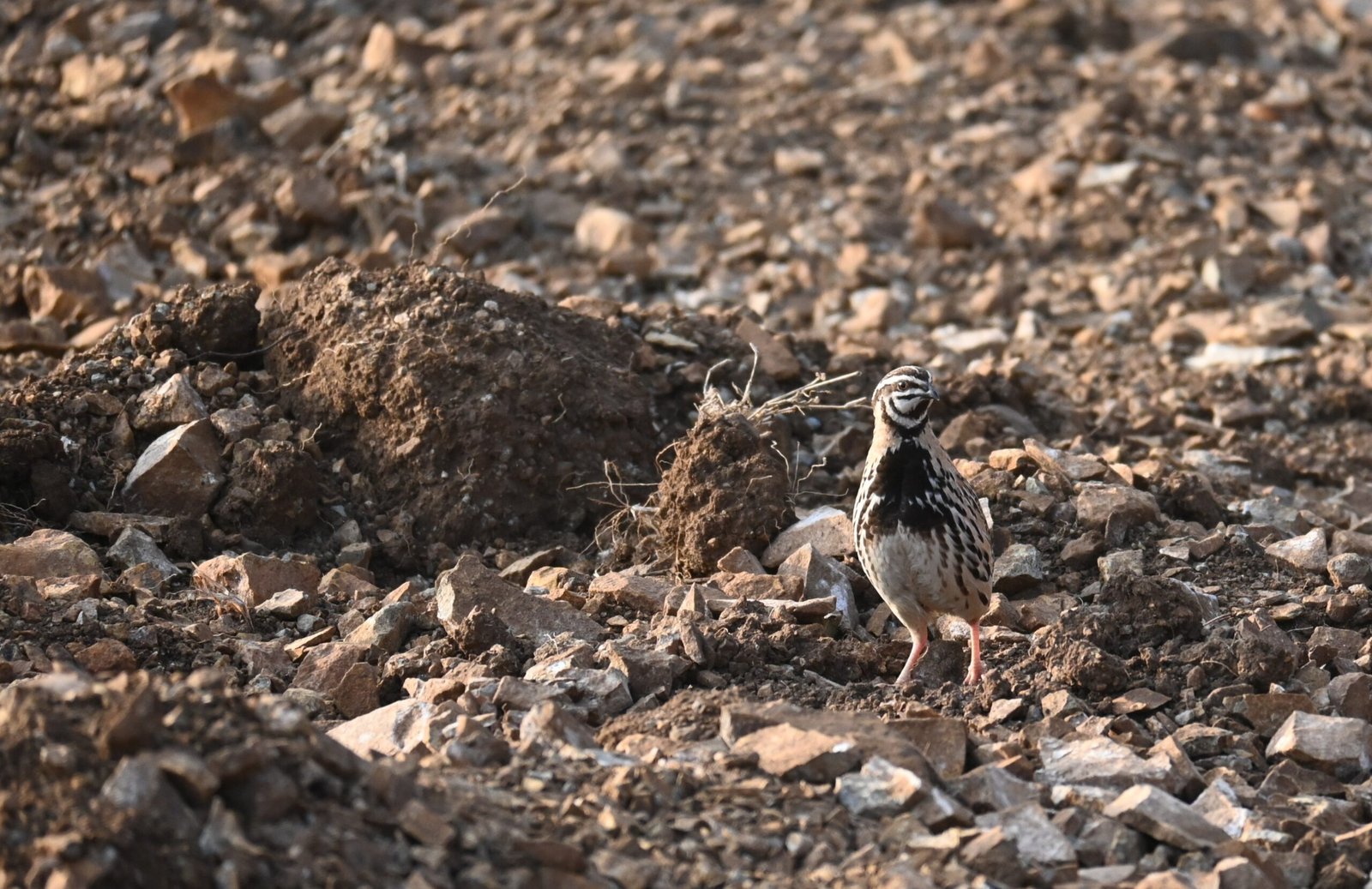
How to watch and photograph Rain Quails responsibly
Rain Quails are ground-dwelling birds and rely on cover for safety. Keep a respectful distance, remain on existing tracks and allow the bird to choose its direction. Avoid loud voices, flash, playback and attempts to make a quail fly for a photograph. A bird that continues feeding or walking naturally offers a more honest field observation.
Early morning and late afternoon give softer light for bird photography in Bhigwan. Stay low only where it is safe and without blocking the bird’s route; use a telephoto lens rather than approaching. The wider frames here are as useful as close portraits because they show the rocky, open habitat where this quail was found.
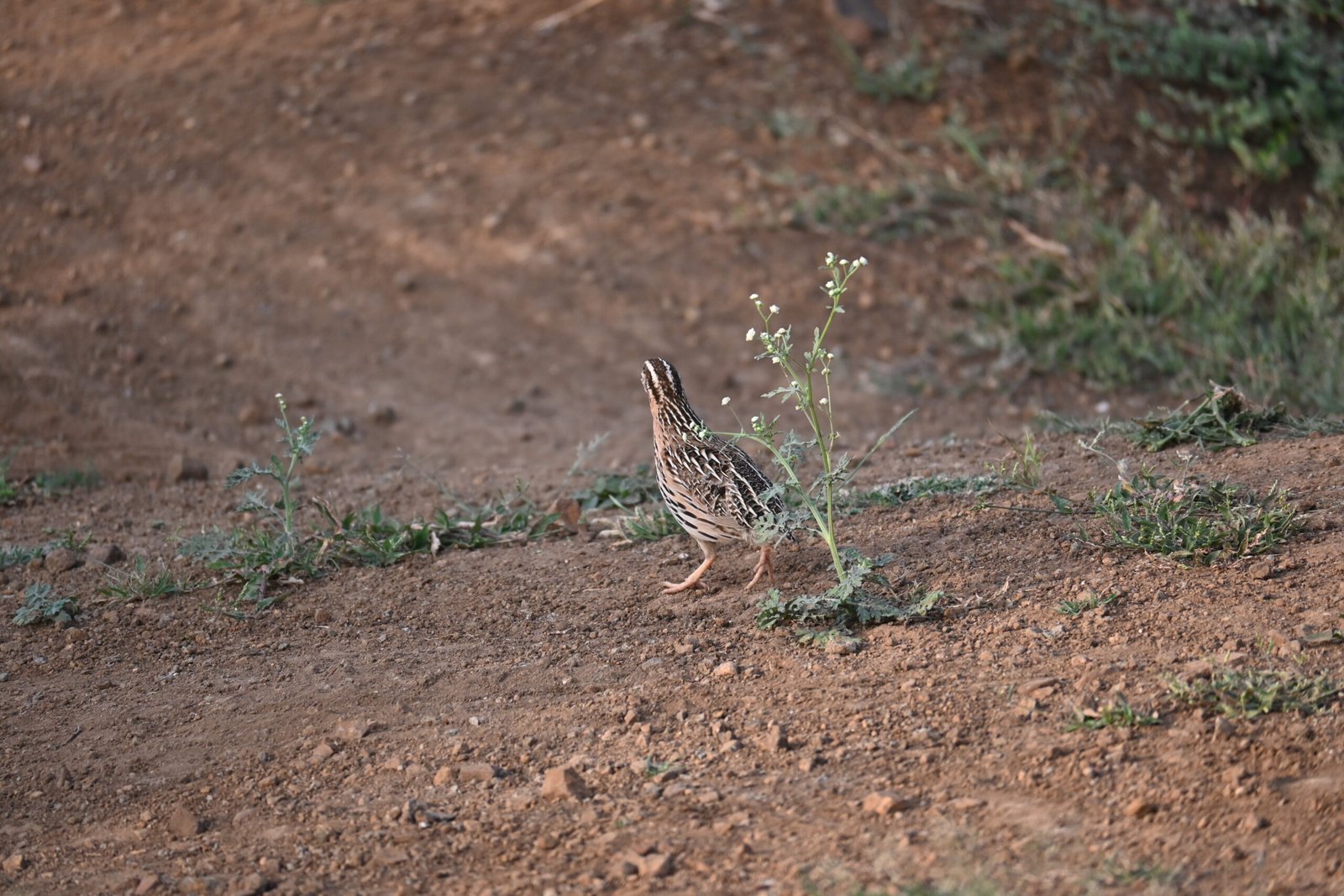
Rain Quail facts
- Scientific name: Coturnix coromandelica
- Also called: Black-breasted Quail
- Family: Phasianidae
- Habitat: Grassland, cultivation, scrub, fallow fields and open stony country
- Behaviour: A secretive, ground-dwelling bird that relies on camouflage
- Diet: Seeds, grain, shoots and small invertebrates
Birding beyond Bhigwan’s wetlands
A visit to Bhigwan is more rewarding when the whole landscape is considered. Scan reed beds and water for wetland birds, then look across field margins, grassland and rocky soil for species such as quails, buttonquails, larks and raptors. Explore our Birds of Bhigwan guide for more sightings from the region.
The Rain Quail is a reminder that some of the most memorable Bhigwan wildlife observations happen close to the ground. Patience, a careful scan and respect for the bird’s space can reveal a bird that is otherwise almost invisible.
Best time and conditions for Rain Quail birding
Rain Quails can be overlooked because they spend much of their time on the ground, and the best approach is to scan open patches slowly rather than walking directly through likely cover. In the Bhigwan area, search the edges of grassland, crop fields and scrub in calm early-morning or late-afternoon light. After rain, fresh green growth may make the wider landscape look very different, so repeat visits in different seasons can be valuable for Maharashtra birding.
Listen as well as look. A soft call or a brief movement at the base of a weed can be the first clue. Stop, wait and let the bird resume its natural movement. This patient method is useful for other small ground birds too, including the Jungle Bush Quail and the Barred Buttonquail.
Planning a Bhigwan birding visit
Bhigwan offers much more than a single habitat. A productive route can combine open-country birding with wetland viewing: spend the first light in grassland and field margins, then scan water and reedbeds as the morning progresses. Our Birds of Bhigwan guide is a useful starting point for planning the wider checklist, while the Indian Eagle-Owl field notes show another rewarding birding subject from the same region.
Keep the visit low impact by using established tracks, keeping voices quiet and never flushing birds for a closer photograph. Notes on time, weather, habitat and behaviour add real value to a photograph and make each sighting more useful as a field record.
Frequently asked questions
Is the Rain Quail the same as the Barred Buttonquail?
No. They are different species. The Rain Quail is a true quail, while the Barred Buttonquail belongs to a separate buttonquail group. The male Rain Quail in these photographs has a strongly patterned face and a dark breast, whereas the Barred Buttonquail has different body patterning and structure.
What is the best lens for photographing a Rain Quail?
A telephoto lens lets you maintain space between yourself and the bird. The priority is an undisturbed bird behaving naturally, rather than a close image obtained by approaching its cover.