
The Blue-eared Kingfisher is the bird you photograph while waiting for the Oriental Dwarf Kingfisher. It is smaller than the common kingfishers most people know, it stays inside forest, and it is a much better fisherman than its famous neighbour.
We photographed this one over two days near Vanoshi in Sindhudurg during the August monsoon.
Tap any photo to view it full size.
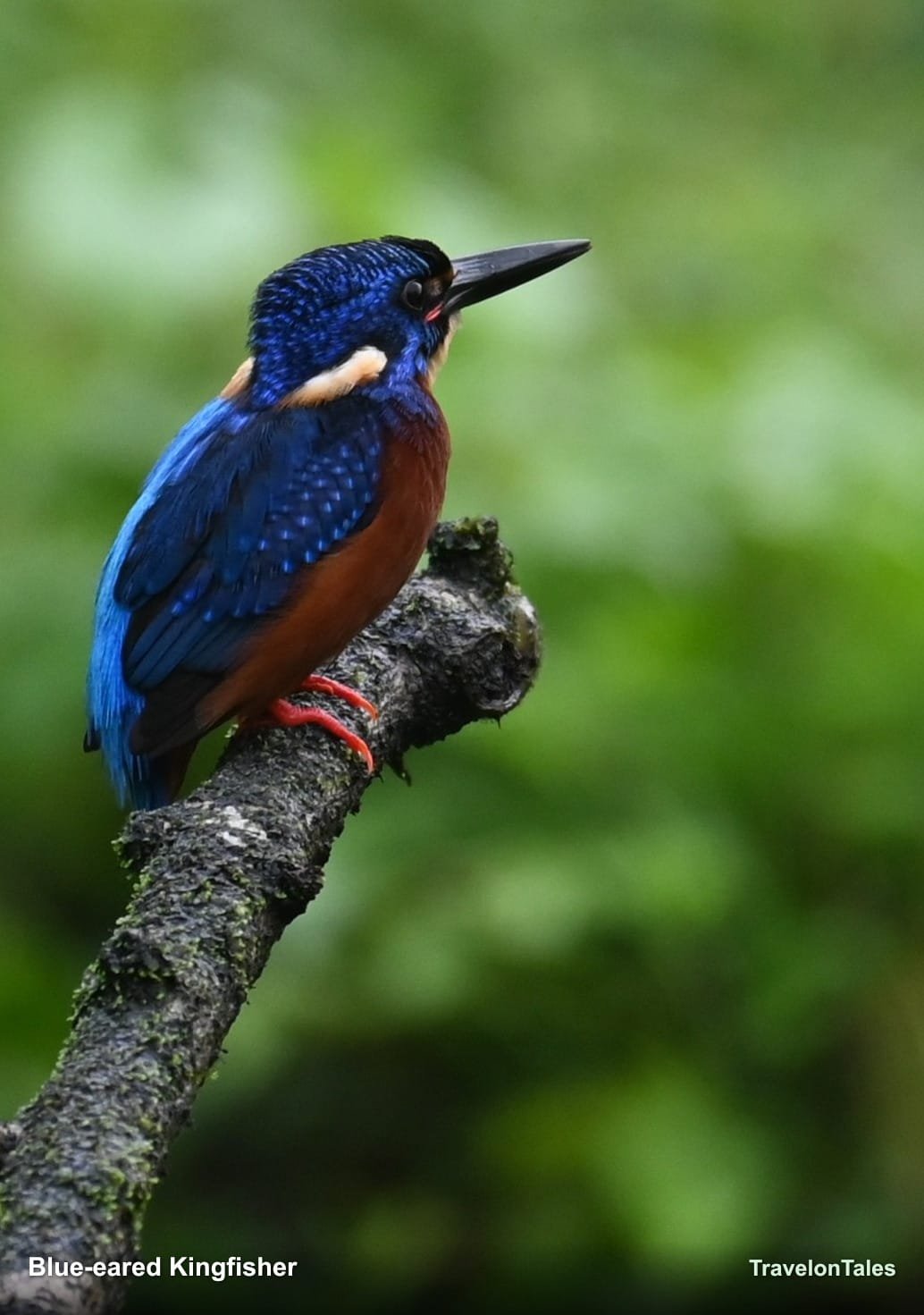
What is the Blue-eared Kingfisher?
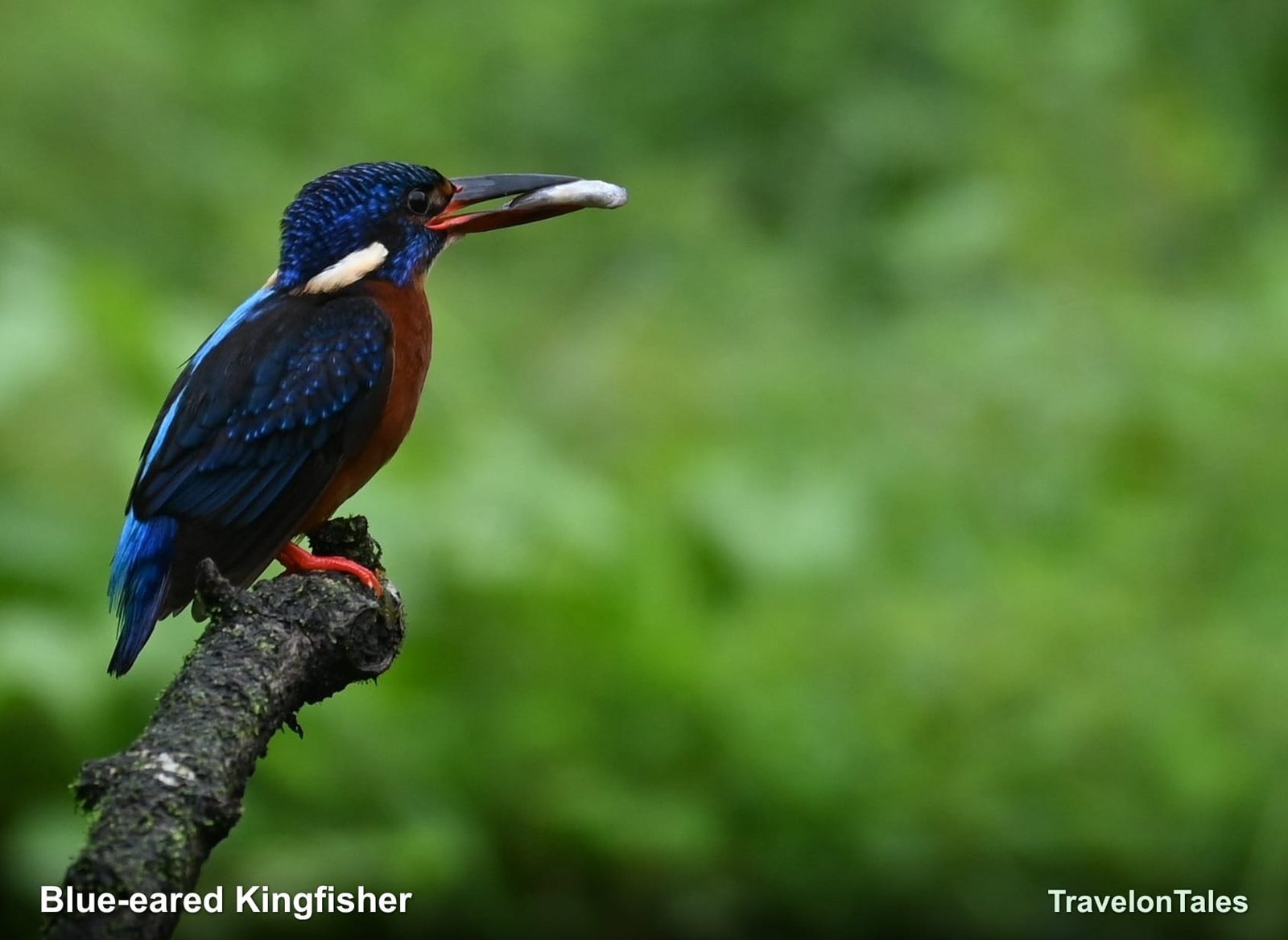
The Blue-eared Kingfisher (Alcedo meninting) is about 16 cm long. It has a deep blue back, a bright blue stripe down the middle of the back, orange underparts and a dark bill.
The name comes from the blue patch on the side of the head where the Common Kingfisher has an orange one. That single patch is the fastest way to tell the two apart.
Blue-eared Kingfisher vs Common Kingfisher
These two look almost the same at a glance. This is how to separate them.
- Ear patch: blue on the Blue-eared, orange on the Common. This is the reliable one.
- Colour: the Blue-eared is a deeper, darker blue. The Common is paler and greener.
- Habitat: the Blue-eared stays on shaded forest streams. The Common is happy on open ponds, canals and village tanks.
- Underparts: the Blue-eared is a richer, deeper orange.
If the bird is on a shaded stream inside forest and looks very dark blue, it is the Blue-eared.
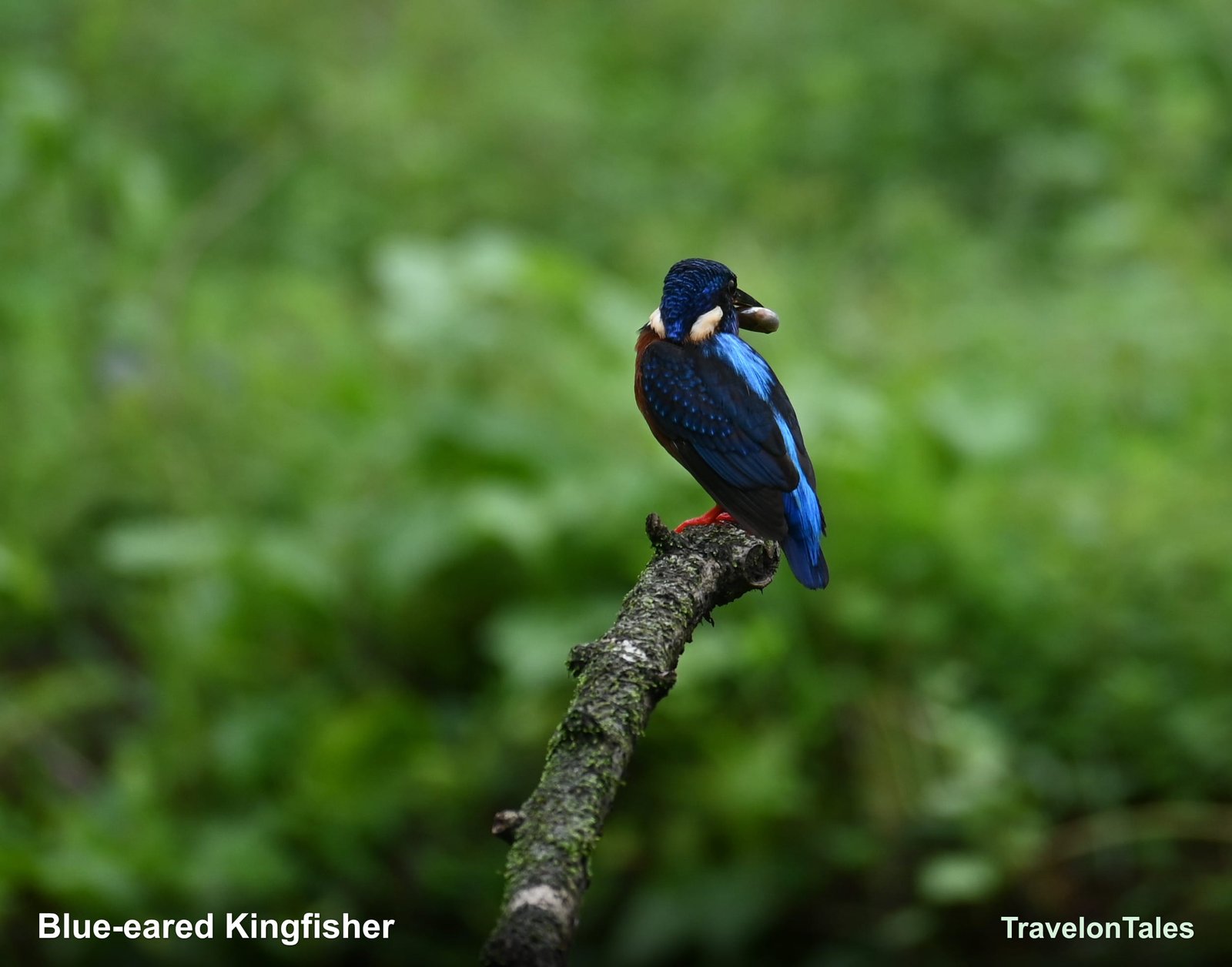
Where to see it in Sindhudurg
It needs clean, shaded, slow-moving forest streams. In Sindhudurg that is the wooded belt inland from the coast. We were near Vanoshi.
It sits on a low branch over water, often less than a metre above the surface, and watches. It will use the same few perches every day, which is what makes it photographable.
Best time to see it
It is present all year, but the monsoon between June and September is when most people visit this area. That is also when the forest is at its greenest.
Early morning is the most active period. It fishes hardest in the first two hours of light.
What does it eat?
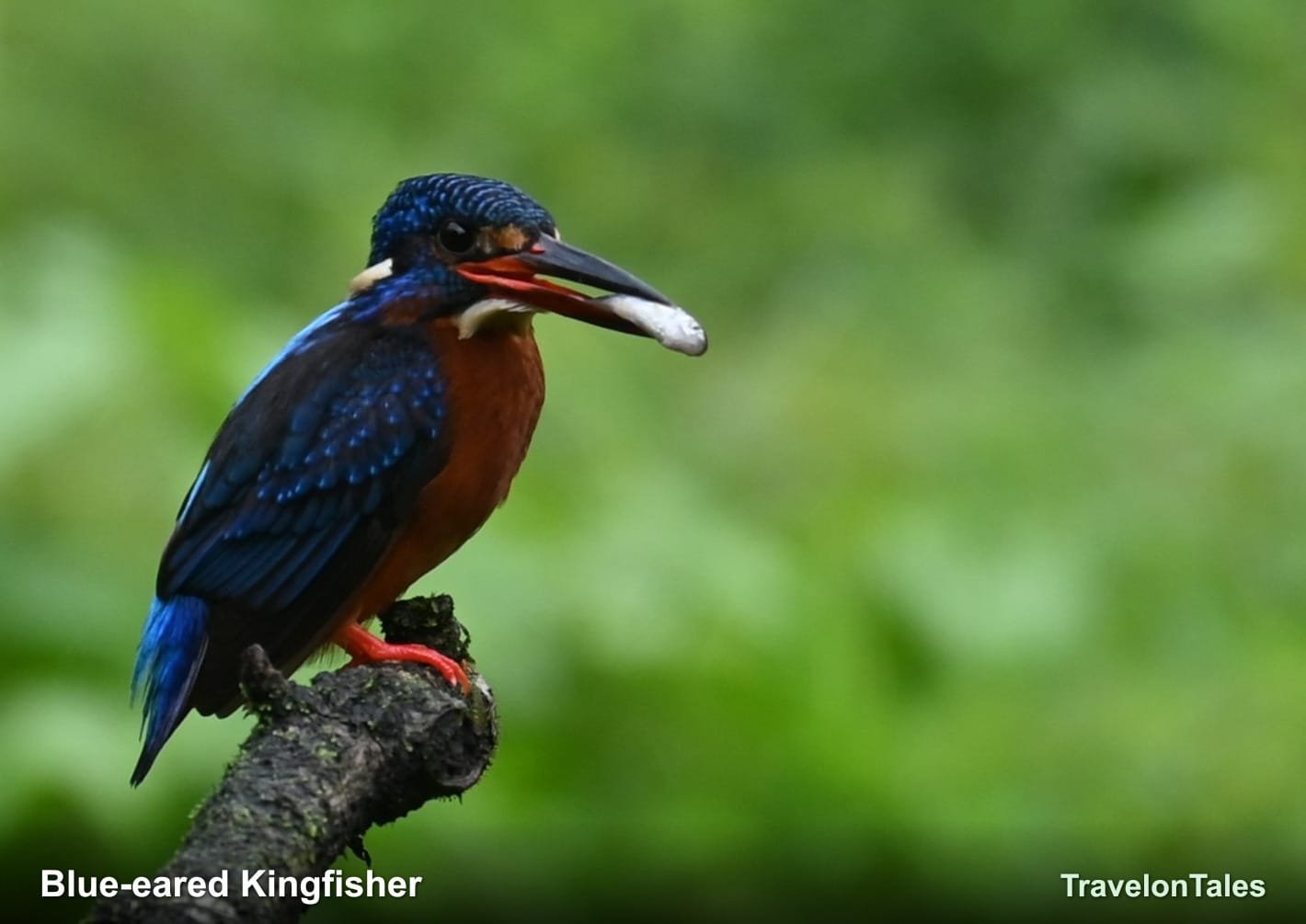
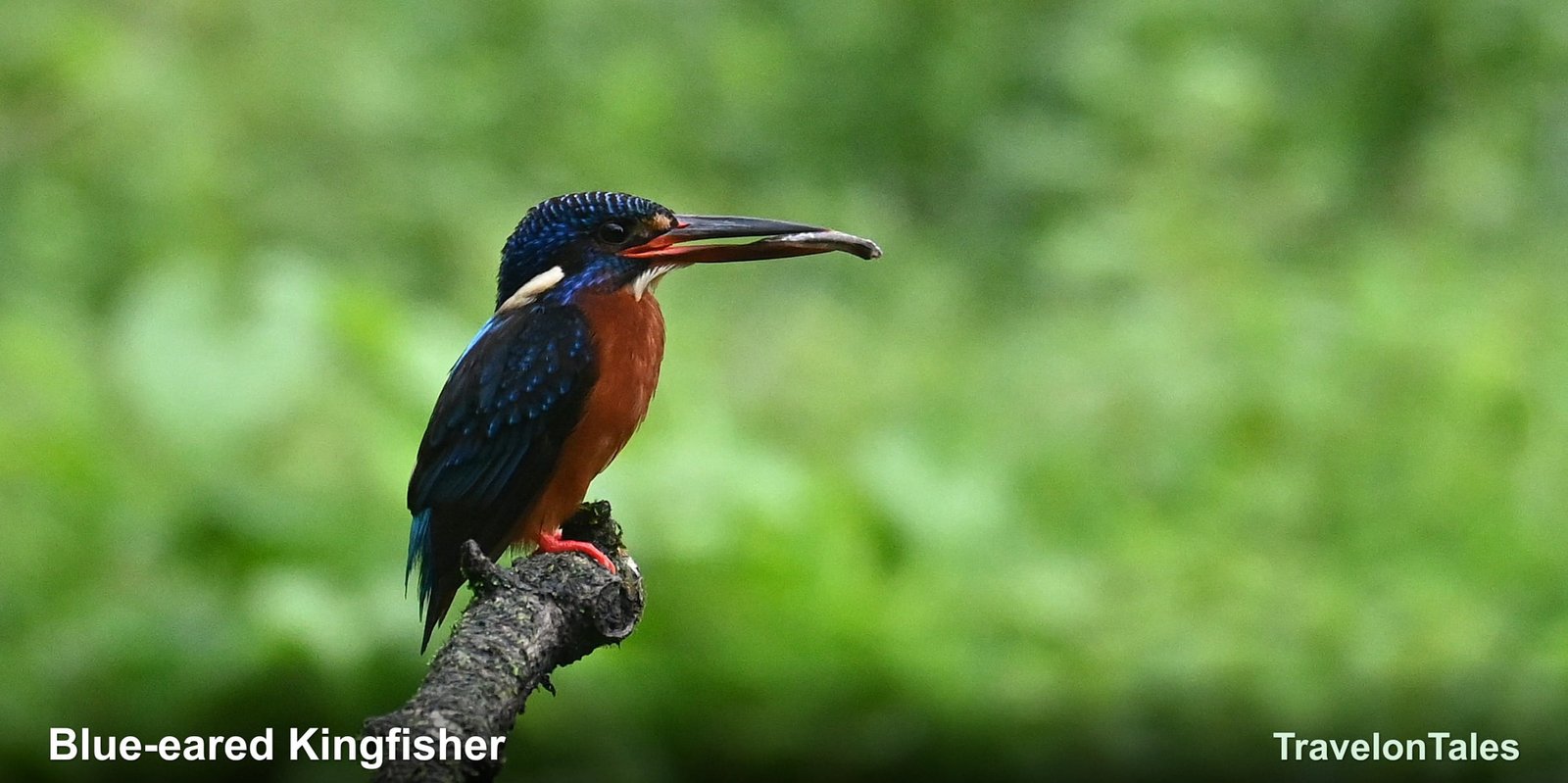
Unlike the Oriental Dwarf Kingfisher, this one really does eat fish. Small stream fish mostly, plus tadpoles, water insects and small crustaceans.
It dives straight down from the perch, takes the fish, and returns to the same branch. Then it beats the fish against the wood before swallowing it head first.
Photography tips
- Find the perch and stay. It returns to the same branches. Set your frame on one and wait rather than following the bird.
- Watch for the dive. It usually bobs its head and tenses before dropping. That is your cue.
- Shoot fast. 1/1600 or faster if you want the dive or the shake. In shaded forest that means a high ISO.
- Get low. Shooting at the bird’s level over water gives a much cleaner background than looking down at it.
- Protect your gear. Rain covers and silica gel are essential in the monsoon.

More frames
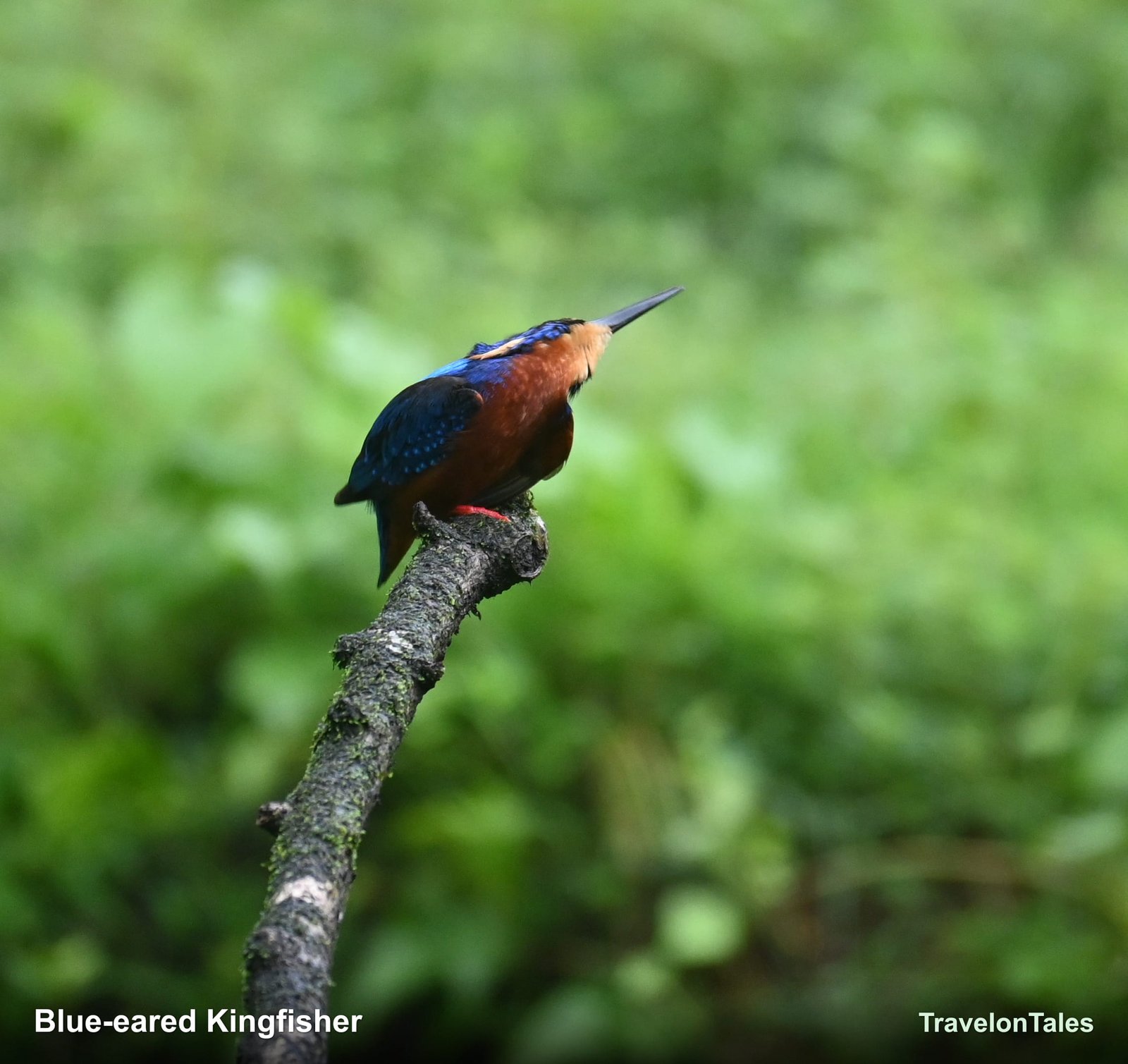
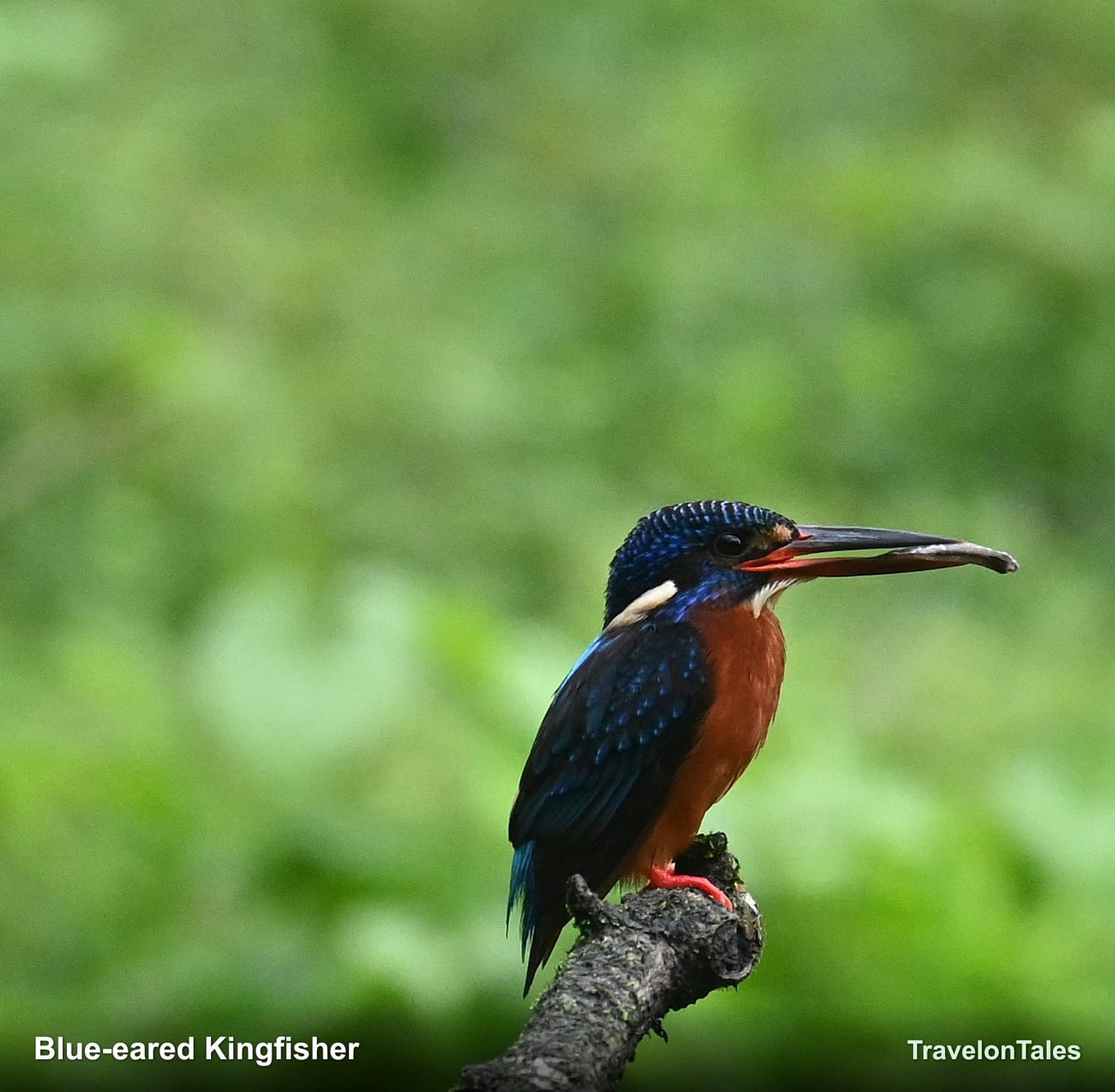
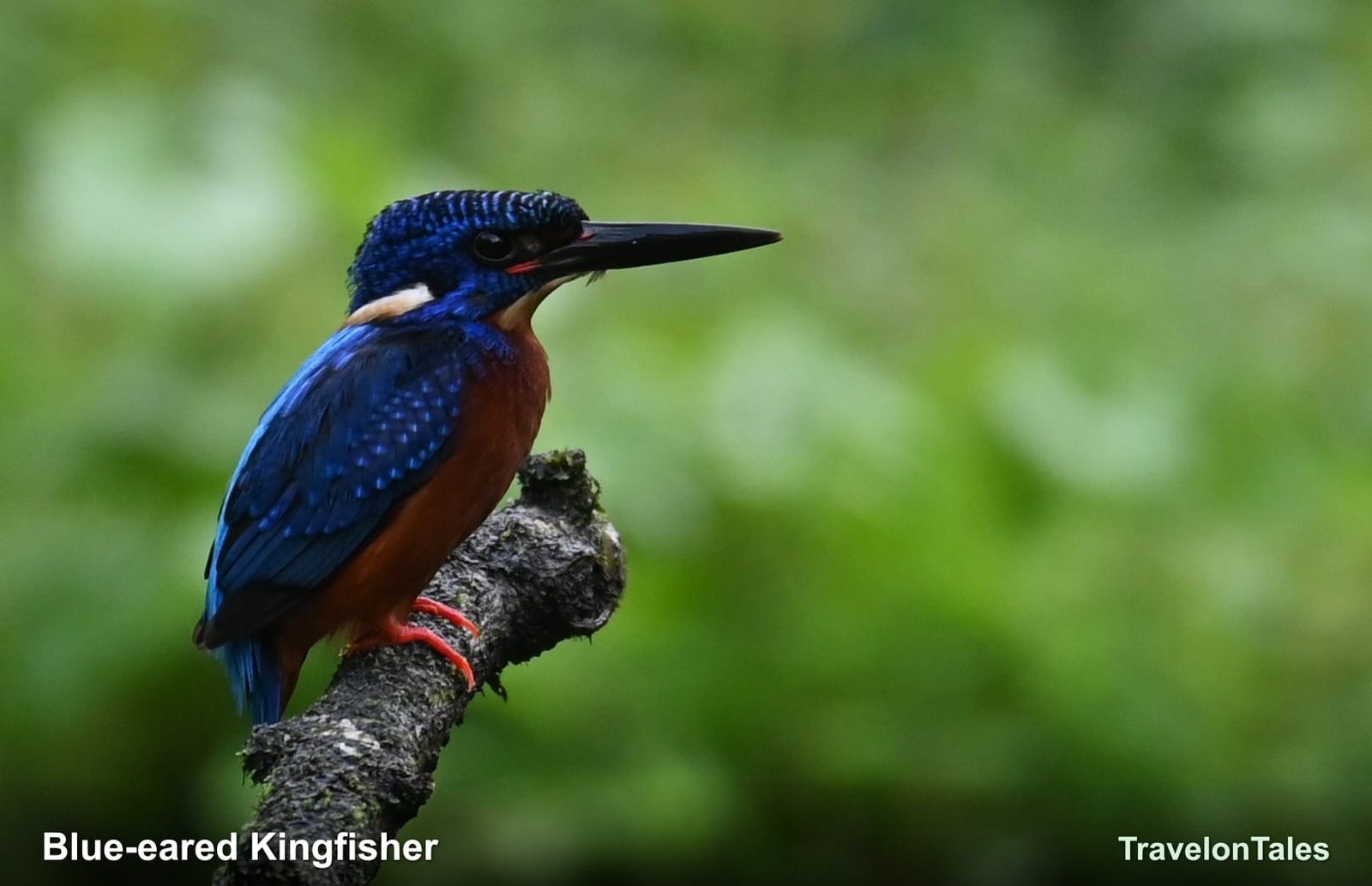
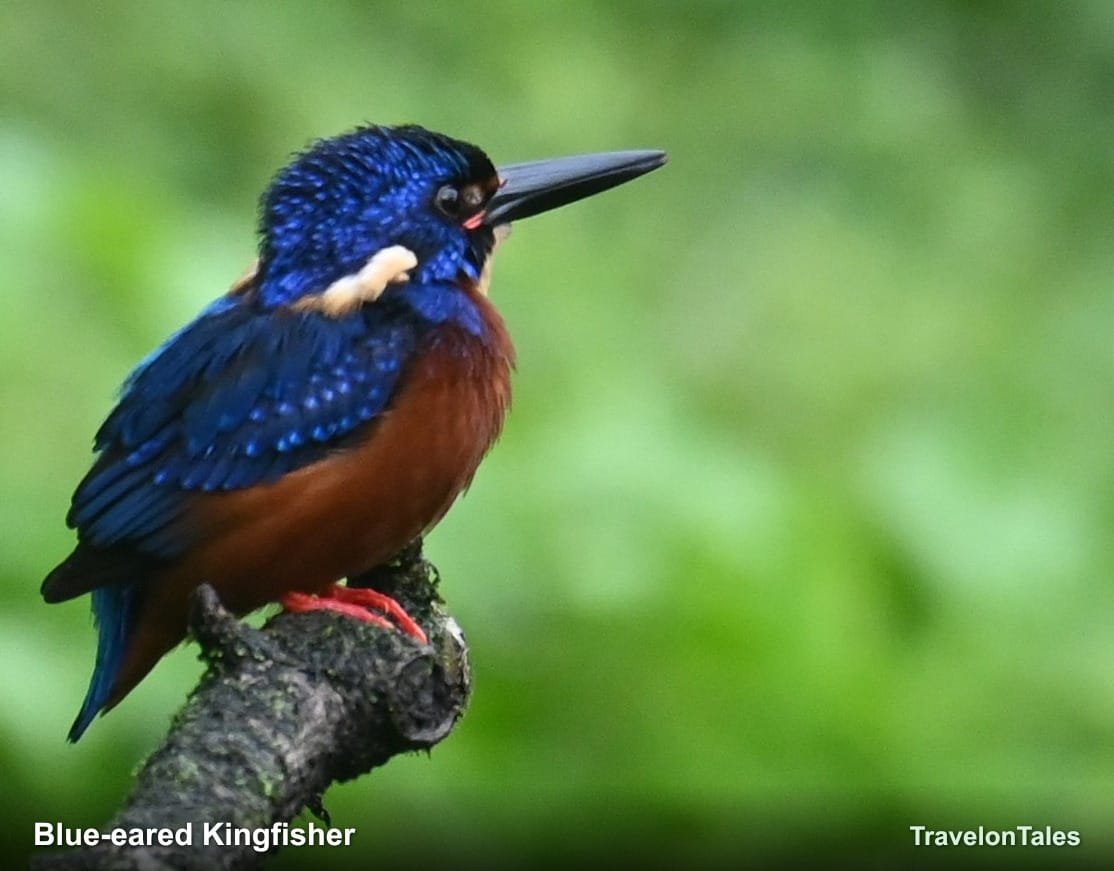
Other birds in the same forest
This kingfisher shares its stream with several other Western Ghats species. On the same trip we recorded:
- Oriental Dwarf Kingfisher
- Brown Wood Owl
- Malabar Grey Hornbill
- Indian Pitta
- Chestnut-headed Bee-eater
- Grey-fronted Green Pigeon
- Crimson-backed Sunbird
How to reach Sindhudurg
- By road from Mumbai: about 8 to 10 hours by car. From Pune it is around 6 to 7 hours.
- By air: Chipi (Sindhudurg Airport) is the nearest. Goa (Dabolim or Mopa) is the larger alternative.
- By train: Konkan Railway, get down at Kudal or Sawantwadi.
- Stay: forest homestays are the best base for birding.
Frequently asked questions
How big is the Blue-eared Kingfisher?
About 16 cm. Slightly bigger than the Oriental Dwarf Kingfisher and a little smaller than the Common Kingfisher.
How is it different from the Common Kingfisher?
The ear patch is blue instead of orange, the blue is darker, and it stays on shaded forest streams instead of open water.
Does it really eat fish?
Yes. Small stream fish, tadpoles and water insects. This is a true fishing kingfisher.
What shutter speed do I need?
1/1600 or faster for the dive. For a perched bird 1/500 is usually enough.
Is it hard to find?
Not if you know the stream. It uses fixed perches and returns to them, so a local guide will put you in the right place quickly.
Related posts: Oriental Dwarf Kingfisher in Sindhudurg, Brown Wood Owl in Sindhudurg and Sindhudurg Monsoon Birding Guide.