
The chinkara is India’s gazelle: small, graceful and the colour of dry grass. At Kadbanwadi, near Bhigwan in Maharashtra, the forest department runs a small tourism area just for it, and we watched a fine male in the evening light.
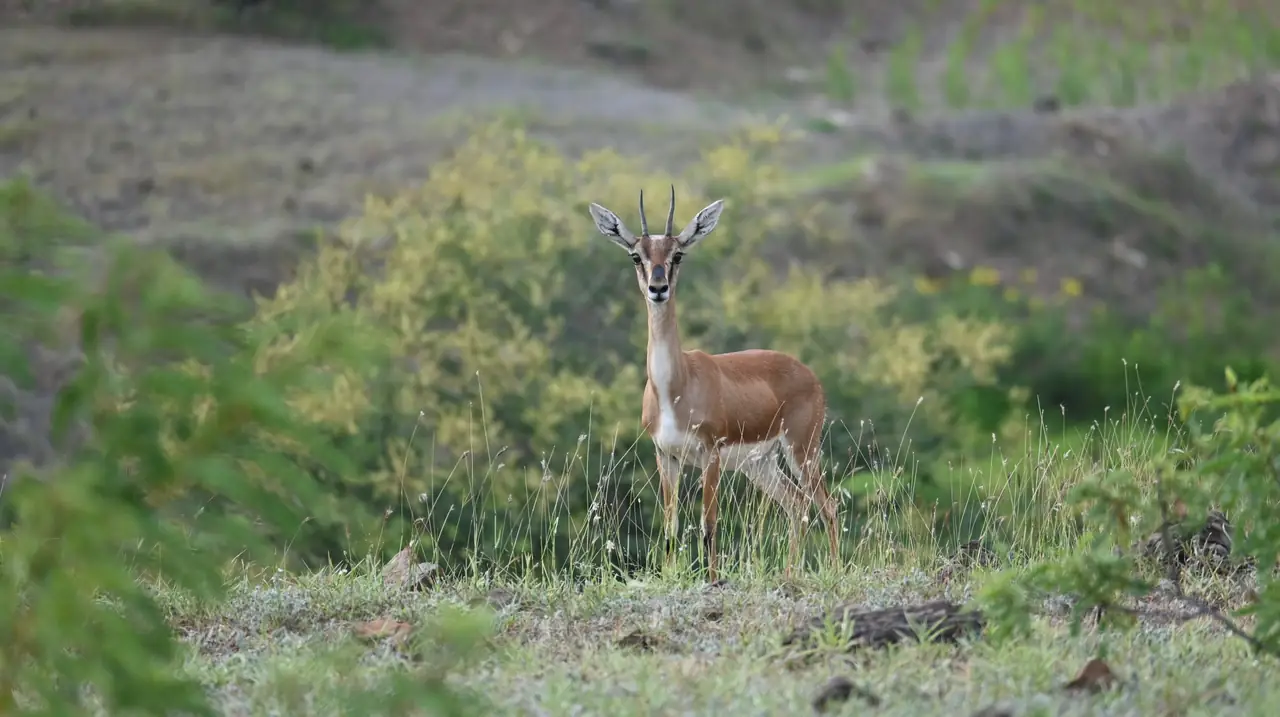
What a chinkara looks like
A chinkara stands about 65 cm tall at the shoulder. Its coat is light reddish-brown above and white below, with a pale stripe down each side of the face. Both males and females have horns. A male’s horns are long, ringed and gently curved, while a female’s horns are short and thin.
Where chinkara live
Chinkara live in dry grasslands, scrub, open forest and desert. They are found in Rajasthan, Gujarat, Madhya Pradesh, Maharashtra and other parts of India. Kadbanwadi’s open grassland is perfect chinkara country.
Food and water
Chinkara eat grass, leaves, flowers and fruit. They are famous for going a long time between drinks. Much of the water they need comes from the plants they eat and from morning dew.
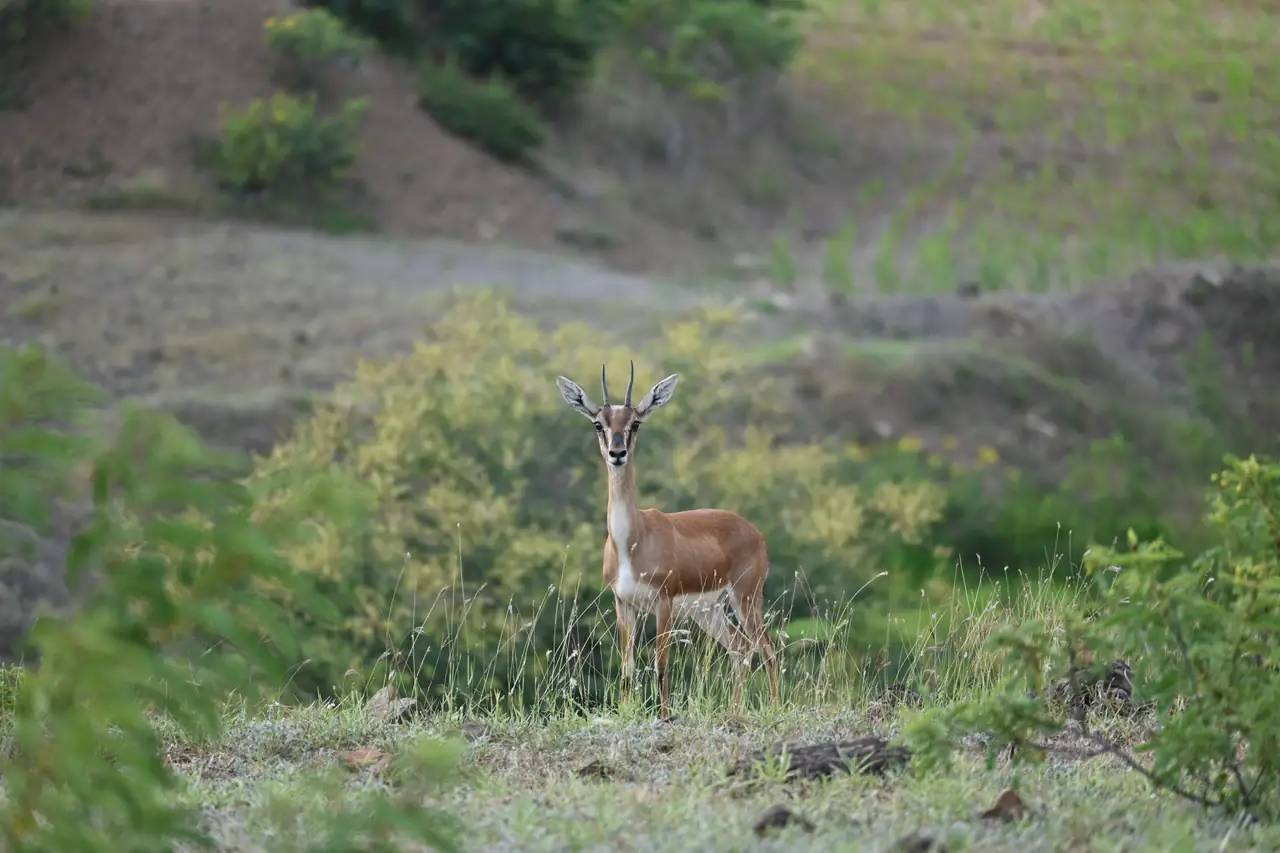
Seeing chinkara at Kadbanwadi
The board at the Kadbanwadi entrance listed these details when we visited:
- Timings: 6 am to 11 am and 4 pm to 7 pm.
- Fees: ₹300 per vehicle, ₹200 per camera and ₹300 for the nature guide.
- Six visitors per vehicle, and eight vehicles a day.
- Carry an ID such as Aadhaar, a voter ID, a driving licence or a passport.
Fees and timings can change, so check before you go. The evening session gave us chinkara, Indian Coursers, European Rollers and an Indian wolf.
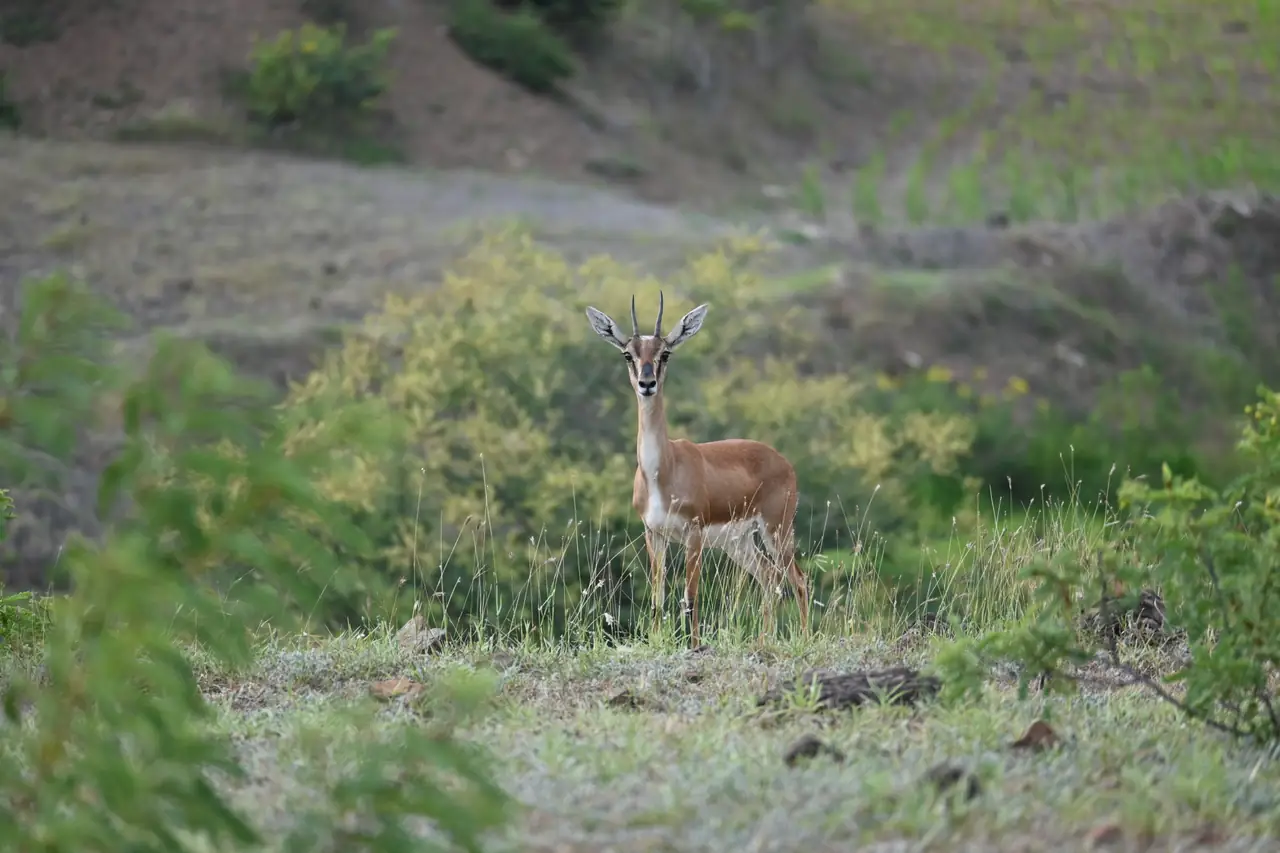
Read about that evening in our Bhigwan trip story, and meet the Indian wolf we saw at dusk.
Chinkara or blackbuck?
Both live in Indian grasslands. A blackbuck male is dark brown or black above with long spiral horns, and the female is hornless. A chinkara is smaller and evenly light brown, and both sexes carry horns. Chinkara also prefer rougher, bushier ground than blackbuck.
How chinkara behave
Chinkara live alone or in small groups. When curious, a chinkara often stands still and watches you, just as our male did. When alarmed, it gives a sharp sneeze-like call, stamps a foot and bounds away in quick, light leaps.
Our evening at Kadbanwadi
We entered at about 4 pm. Within fifteen minutes we had seen an Indian Courser, and at 4.19 pm a chinkara buck stood in the green scrub and watched us. The same evening gave us Yellow-wattled Lapwings, Chestnut-bellied Sandgrouse, European Rollers and, at dusk, an Indian wolf.
Photography tips
- The 4 pm session gives warm, low light from about 5.30 pm.
- Switch the engine off when an animal is close.
- Frame the chinkara with some grassland around it to show its home.
Best time of year
Chinkara are seen all year at Kadbanwadi. After the monsoon the grass is green and fresh; in winter the mornings are cool and pleasant.
How to reach Bhigwan and Kadbanwadi
Bhigwan is on the Pune–Solapur highway (NH65), about 105 km from Pune. The nearest airport is Pune, and Bhigwan has its own railway station (BGVN), with Daund Junction about 26 km away for more trains. State Transport buses from Pune to Solapur stop at Bhigwan. Kadbanwadi is a short drive away, and most homestays in Kumbhargaon arrange transport and local guides.
Frequently asked questions
Do female chinkara have horns?
Yes. Both sexes have horns. The male’s horns are much longer and ringed, and the female’s are short and thin.
Where can I see chinkara near Pune?
At Kadbanwadi near Bhigwan, about two hours from Pune, where the forest department runs a chinkara tourism area.
What are the Kadbanwadi timings?
As listed on the entrance board when we visited: 6 am to 11 am and 4 pm to 7 pm.