
A Bird That Looks Like the Ground
Brown. Buff. Grey. Rust. Speckled. Streaked.
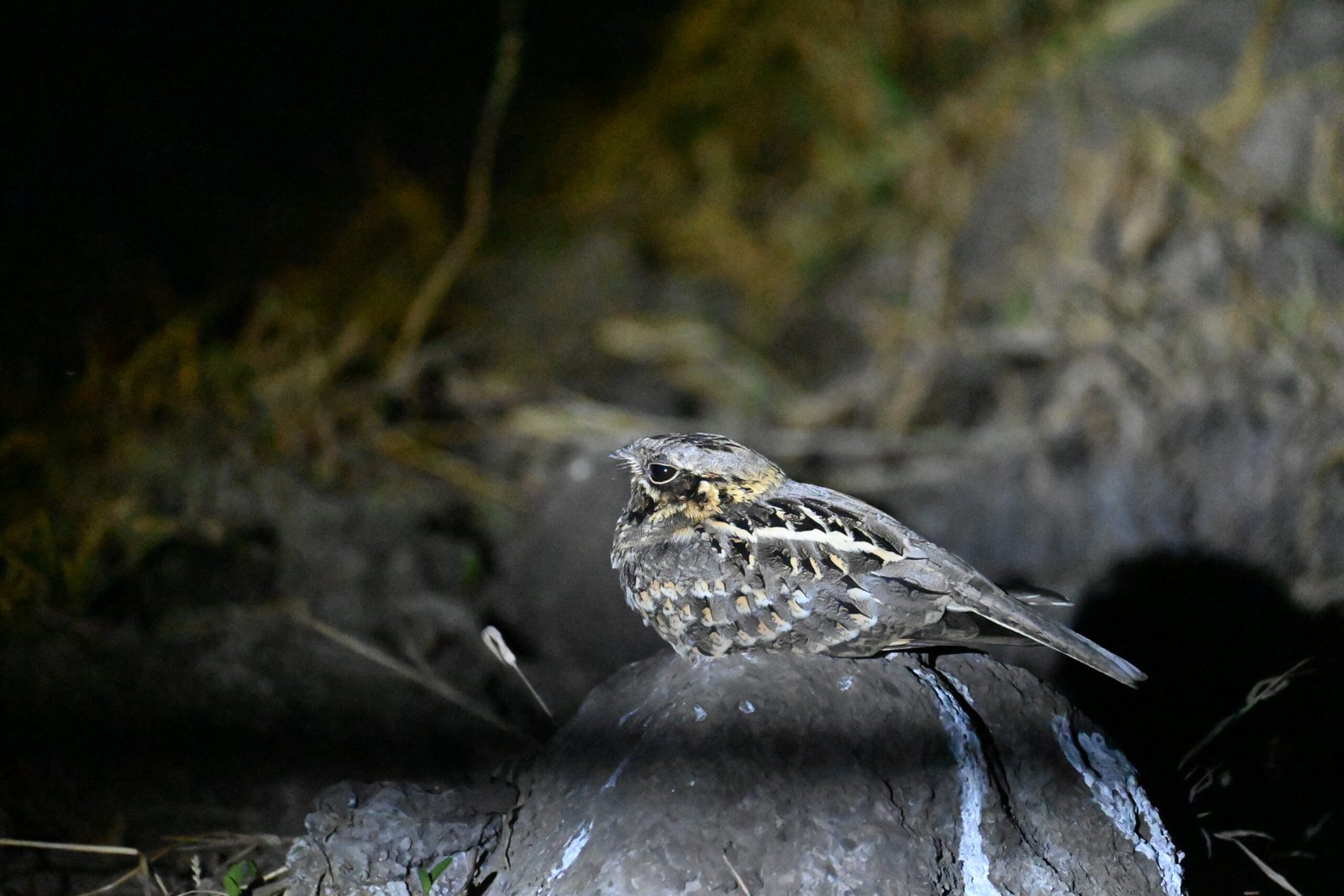
The Indian Nightjar’s feathers are not just one colour — they are a whole painting of the forest floor. Broken bark. Dried leaves. Cracked soil. Shadows between twigs. In fact, every single pattern on this bird exists for one reason: to make you walk right past it.
And it works. Almost every time.
The bird sits flat, pressing itself into the ground. Meanwhile, it keeps its eyes half closed. Even its outline — the shape that normally gives a bird away — is broken up by the patterning, so your eyes keep sliding off it, looking for something that actually looks like a bird.
In other words, this is not hiding. This is vanishing.
Daytime — It Simply Does Not Exist
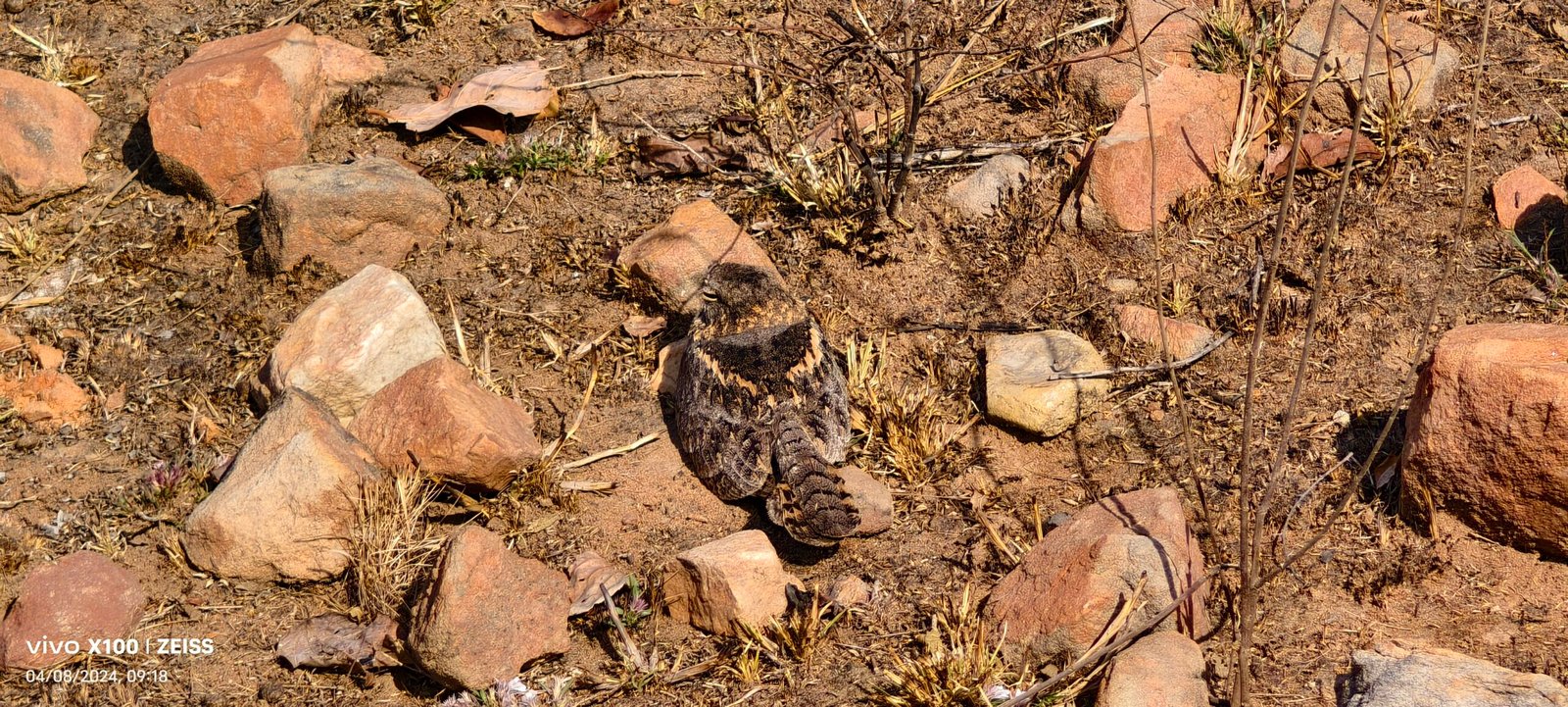
During the day, the Indian Nightjar finds a patch of ground, a flat branch, or a rocky ledge — and it simply becomes part of it.
It does not move. There is no call, no rustle, no giveaway. Even its eyelids are barely open.
You could walk within two feet of one and never know. Experienced guides spot them by a particular shape in the leaf litter, a slightly wrong texture on a branch. For the rest of us, however, we find them mostly by luck — looking at something else entirely, and then suddenly realising one patch of ground has two tiny orange eyes.
You are not looking for a bird. You are looking for a pair of eyes that are already looking at you.
Dusk — The Whole Bird Changes
When the last light leaves the sky, something switches on.
Suddenly the nightjar lifts off the ground — silent, effortless, completely unhurried — and becomes a different creature entirely. Long wings. A slightly forked tail. A buoyant, dipping flight like a big moth that has learned to move with intention.
As a result, the white patches on the tail and throat flash now, visible only in flight, only in this light, only for a few minutes. Then darkness takes everything, and the bird becomes a sound.
The Sound
Above all, the call of the Indian Nightjar is one of those things that is difficult to describe and impossible to forget once you have heard it.
It is a churring, rattling sound — low, continuous, mechanical. Some people say it sounds like a stone skipping on ice. Others compare it to a distant engine idling. Still others say it is simply the sound of dusk itself, the forest exhaling.
Moreover, it goes on and on without pausing. The bird sits on a branch or a rock, throat vibrating, and produces this endless rhythm for minutes at a stretch. Sometimes you hear it before you can see anything. Other times you hear it and never find the bird at all.
But when you do find it — in the beam of a torch, eyes glowing soft orange in the dark — the sound and the creature click together in a way that stays with you long after you leave.
Where It Lives
The Indian Nightjar loves the in-between places.
Not deep jungle. Not open field. Instead, it lives on the edges — where scrub meets grassland, where dry forest meets river, where the trees thin out and the ground opens up. It needs insects flying above, bare ground below, and enough broken cover to disappear into at a moment’s notice.
Because of this, it turns up across India in dry riverbeds, rocky hillsides, the margins of wetlands, and fallow land between villages and jungle. It is common. It is widespread. And yet it is almost always invisible.
Two Places Where I Found It
🦩 Bhigwan — The Scrub Between the Flamingos
Most people come to Bhigwan for the flamingos. Pink clouds on a grey lake. That is the headline.
But walk the dry scrub paths around the reservoir as the sun drops, and you enter nightjar territory. The stony ground, the low thorny bushes, the patches of bare earth between the grass — this is exactly what the bird needs. In fact, our guide Abhishek from Wildagram spotted one mid-path on a morning walk, sitting absolutely still while I had been watching painted storks in the distance. The bird had been there the whole time. We simply had not earned our eyes yet.
🦩 Complete Bhigwan Bird Sanctuary Guide
Flamingos, shorebirds, nightjars — and everything else the Ujani reservoir offers. Full guide to timing, boat safaris, and where to walk at dusk.
Read the Full Bhigwan Guide → Book a Bhigwan Tour on Viator →🐯 Panna — The Sound in the Dark Forest
Panna is tiger country. The Ken River cuts through teak and dry mixed forest, and at dusk the whole jungle shifts tone — lighter birdsong fades, heavier sounds rise, and finally the nightjar begins.
We heard it before we saw it. That churring, coming from somewhere low and close, completely still in the leaf litter near the forest edge. First, the torch picked up the eyes — two small orange glows sitting absolutely level with the ground. Then the rest of the bird slowly assembled itself around those eyes, and there it was. Unhurried. Unbothered. Entirely at home.
🐯 Complete Panna Tiger Reserve Safari Guide
One of India’s most underrated wildlife destinations — tigers, vultures, gharials, and yes, nightjars. Everything you need for a Panna safari.
Read the Full Panna Guide → Book a Panna Safari on Viator →A Few Things Worth Knowing
| Scientific Name | Caprimulgus asiaticus |
|---|---|
| Size | About the size of a Common Myna |
| Active | Dusk, through the night, pre-dawn |
| Diet | Moths, beetles, flying insects |
| Nest | No nest — eggs laid directly on bare ground |
| Best time to find it | 30–60 minutes after sunset |
| Best season | February to May |
| How to find it | Listen for the churring call, scan the ground with a torch |
| IUCN Status | Least Concern |
One Last Thing
The Indian Nightjar will not come to the impatient.
Instead, it rewards the people who slow down, who walk quietly, who look at the ground instead of the sky. Those who listen when the forest gets strange and low and the churring starts from somewhere they cannot place.
So go to Bhigwan. Go to Panna. Give yourself an hour at dusk with nothing to do except pay attention.
Somewhere out there, in the dry leaves, in the gathering dark, a bird is watching you arrive. It has been there the whole time, and yet it is waiting to see if you are worthy of finding it.