
Some birds you go looking for. Kingfishers tend to find you. Going back through the photo folders from our trips, the same flash of blue kept turning up: on a bamboo stake by a stream at Saguna Baug, high in a shady tree at Alibaug, on a low perch beside a forest track in Bandhavgarh, along monsoon streams in Sindhudurg, and over the water at Jawai. Five trips, six different kingfishers, and each one taught us something about where to look and how long to wait.
This is every kingfisher frame from those trips in one place, cropped close so you can see the birds properly, with a few notes from the field.
Kingfishers in this post
- Common Kingfisher, Saguna Baug, near Neral (monsoon morning)
- White-throated Kingfisher, Alibaug (winter afternoon)
- Stork-billed Kingfisher, Bandhavgarh (summer safari)
- Oriental Dwarf Kingfisher, Sindhudurg (monsoon)
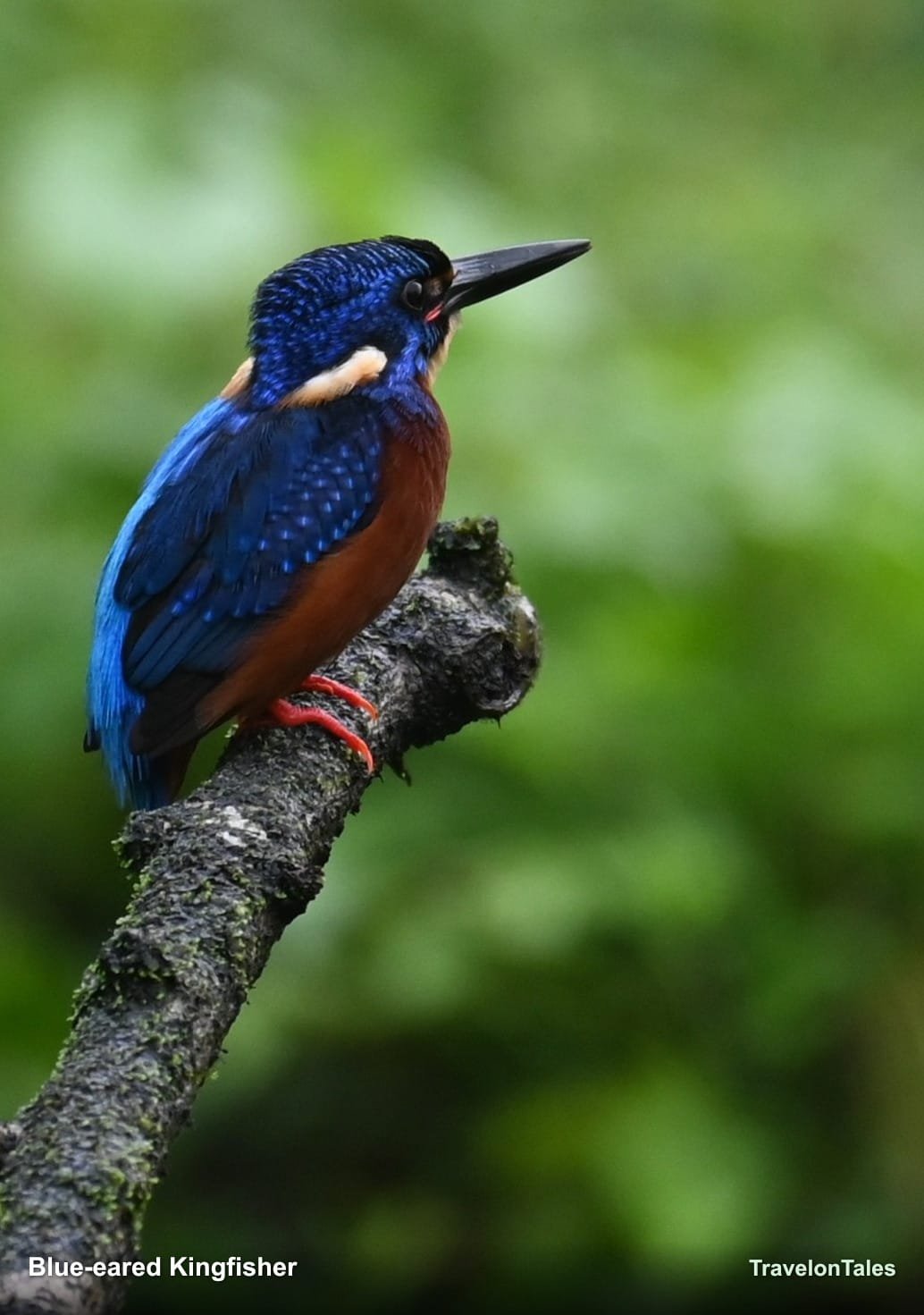
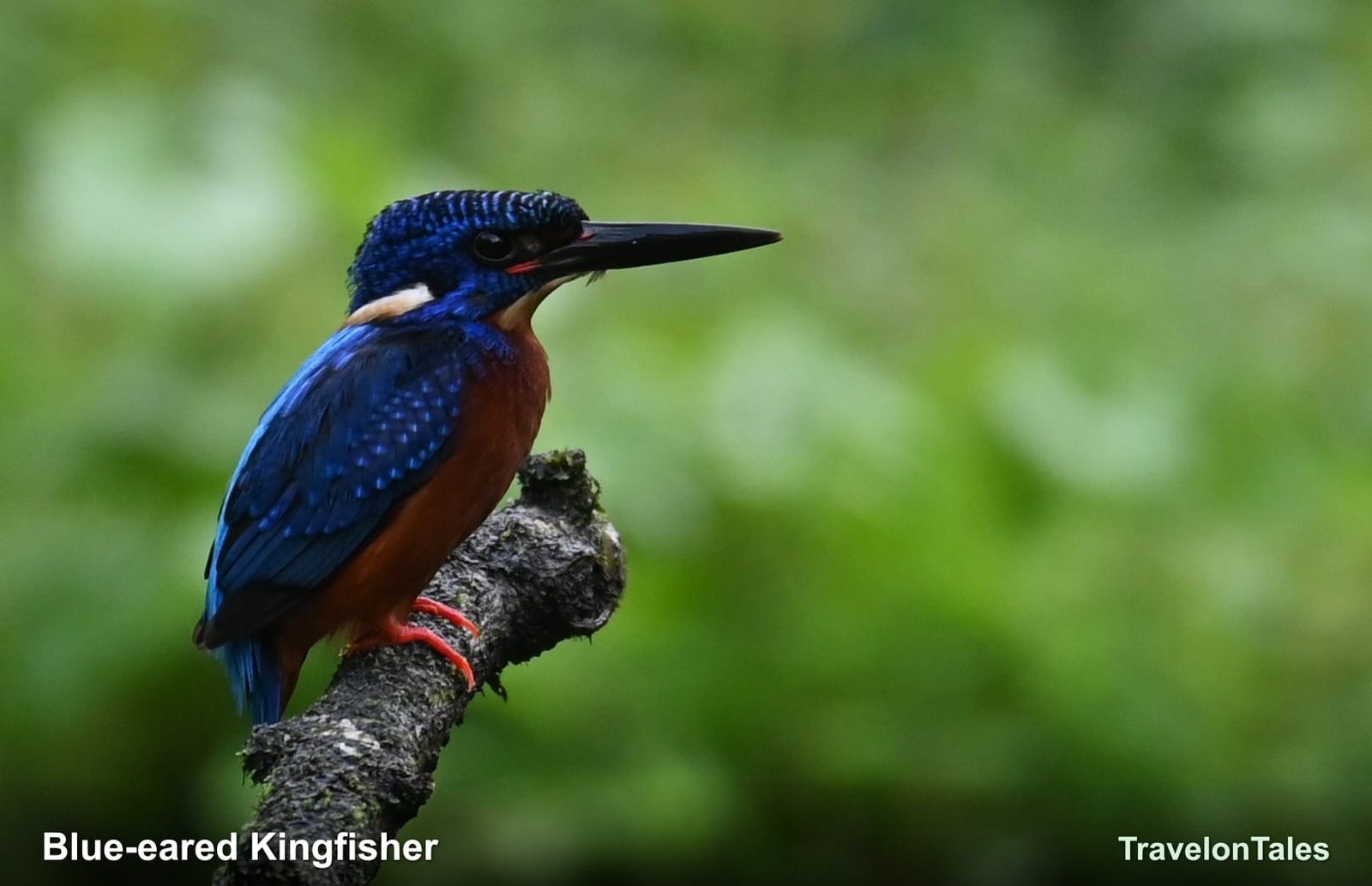
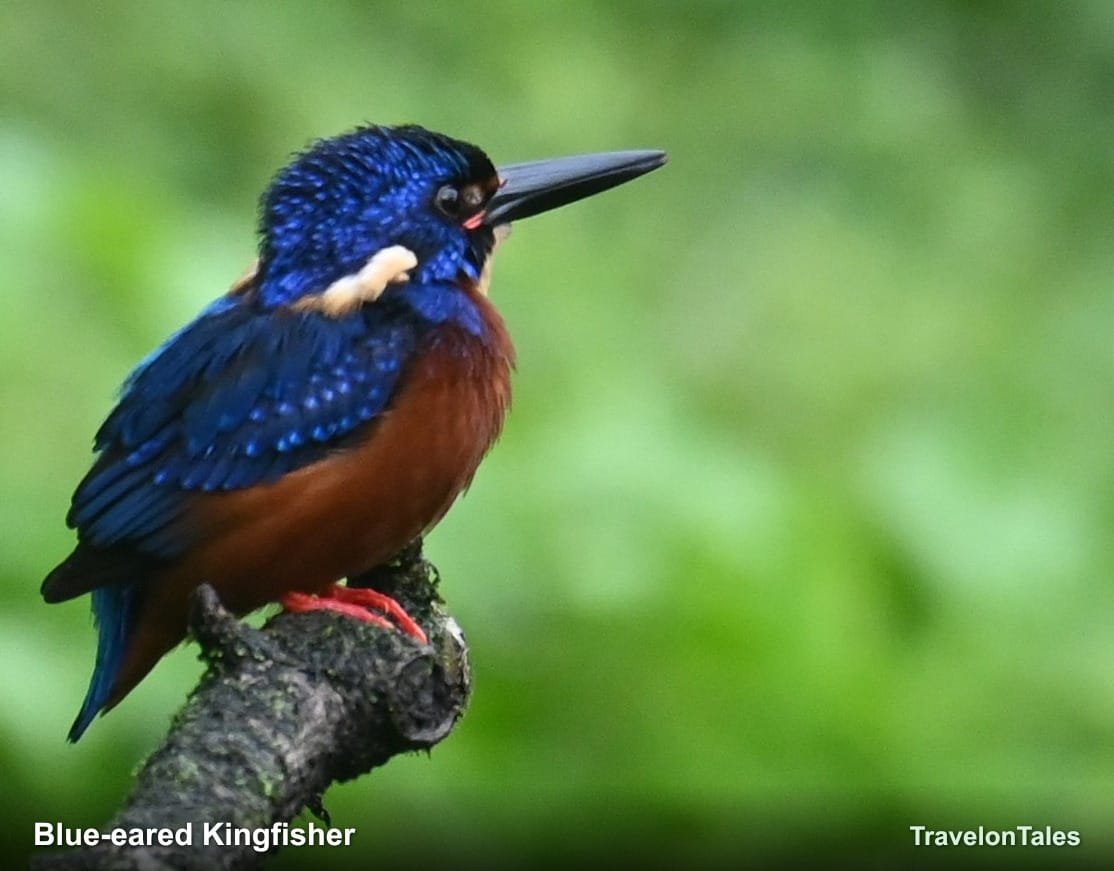
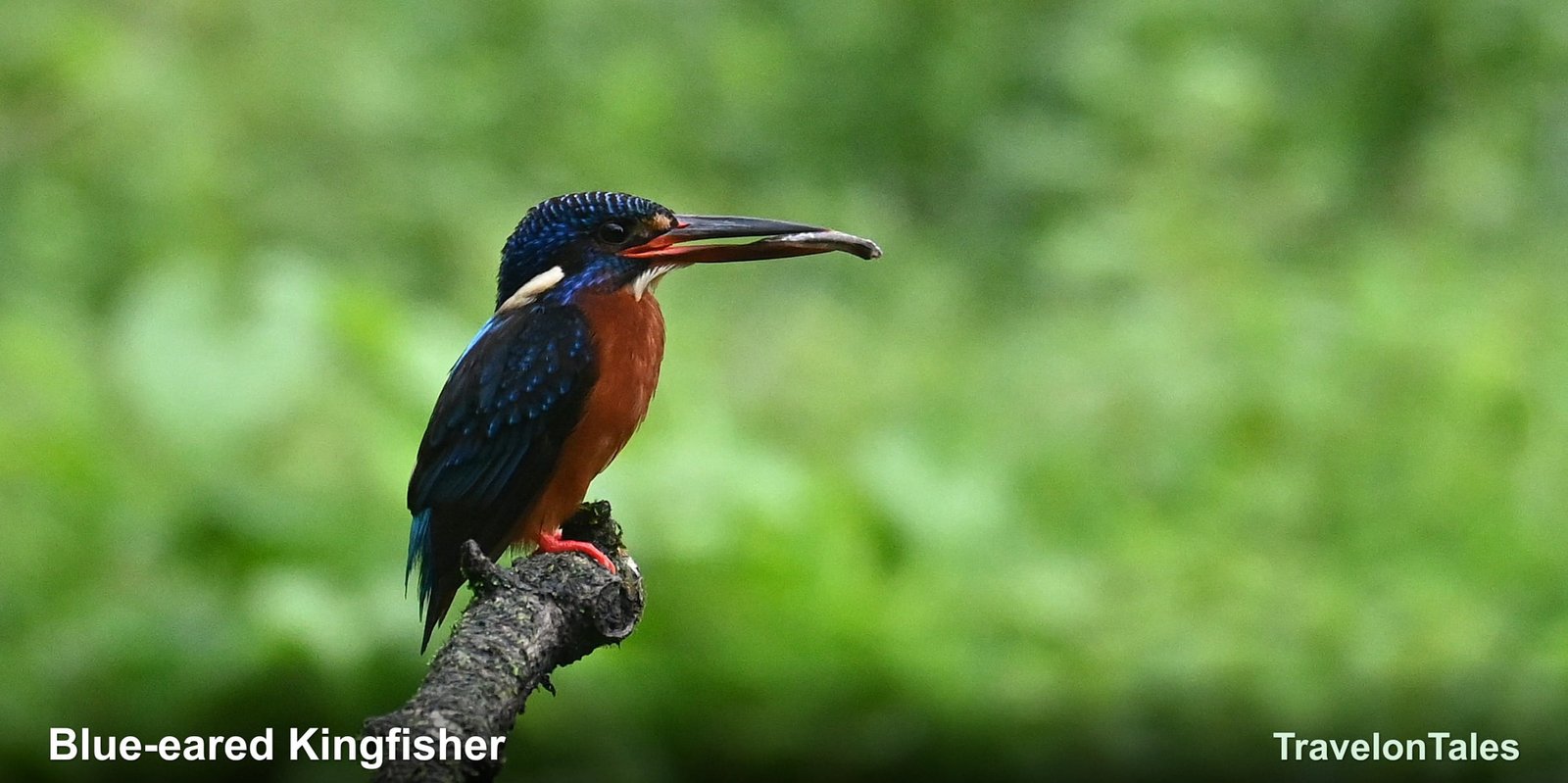
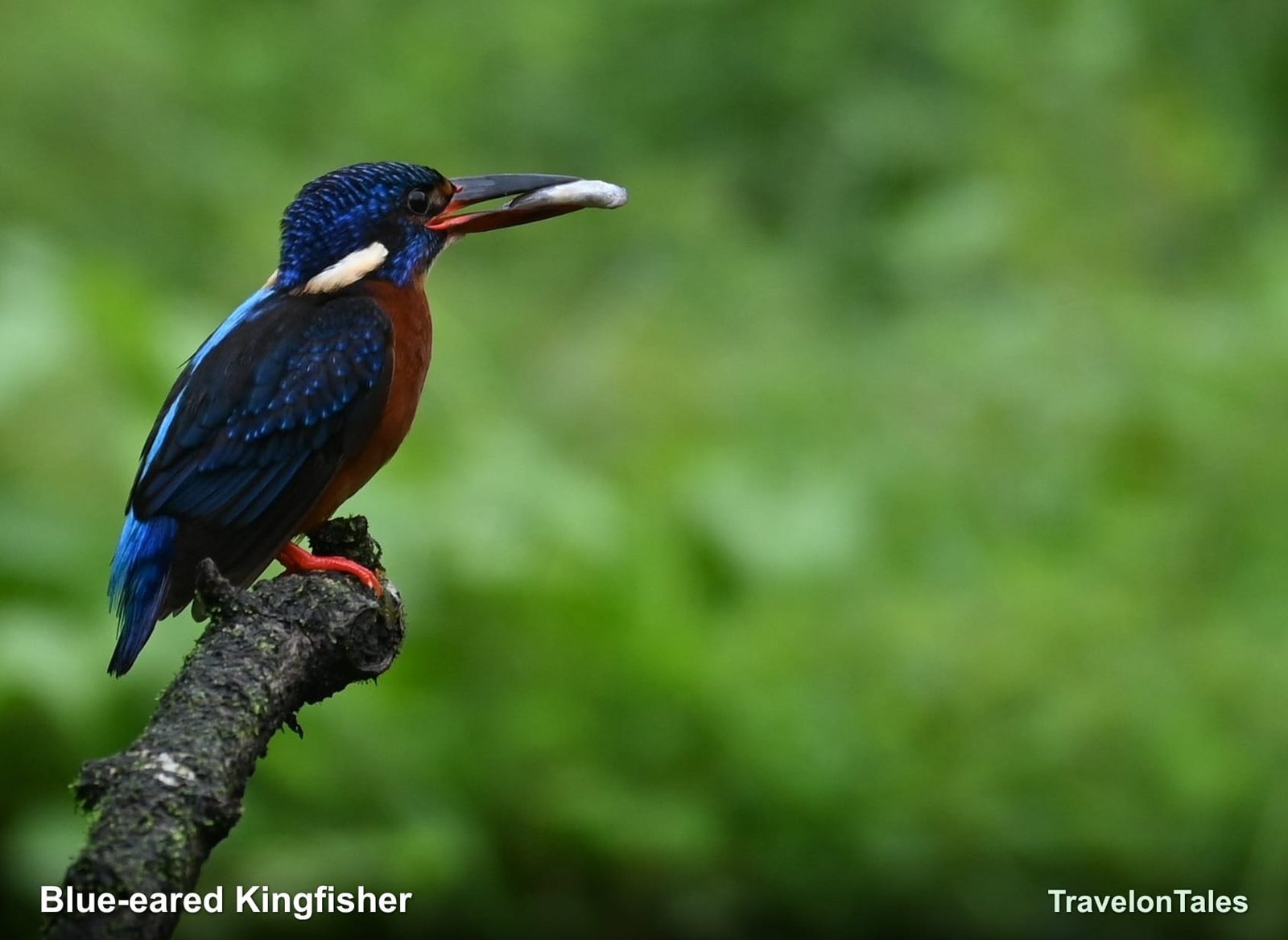
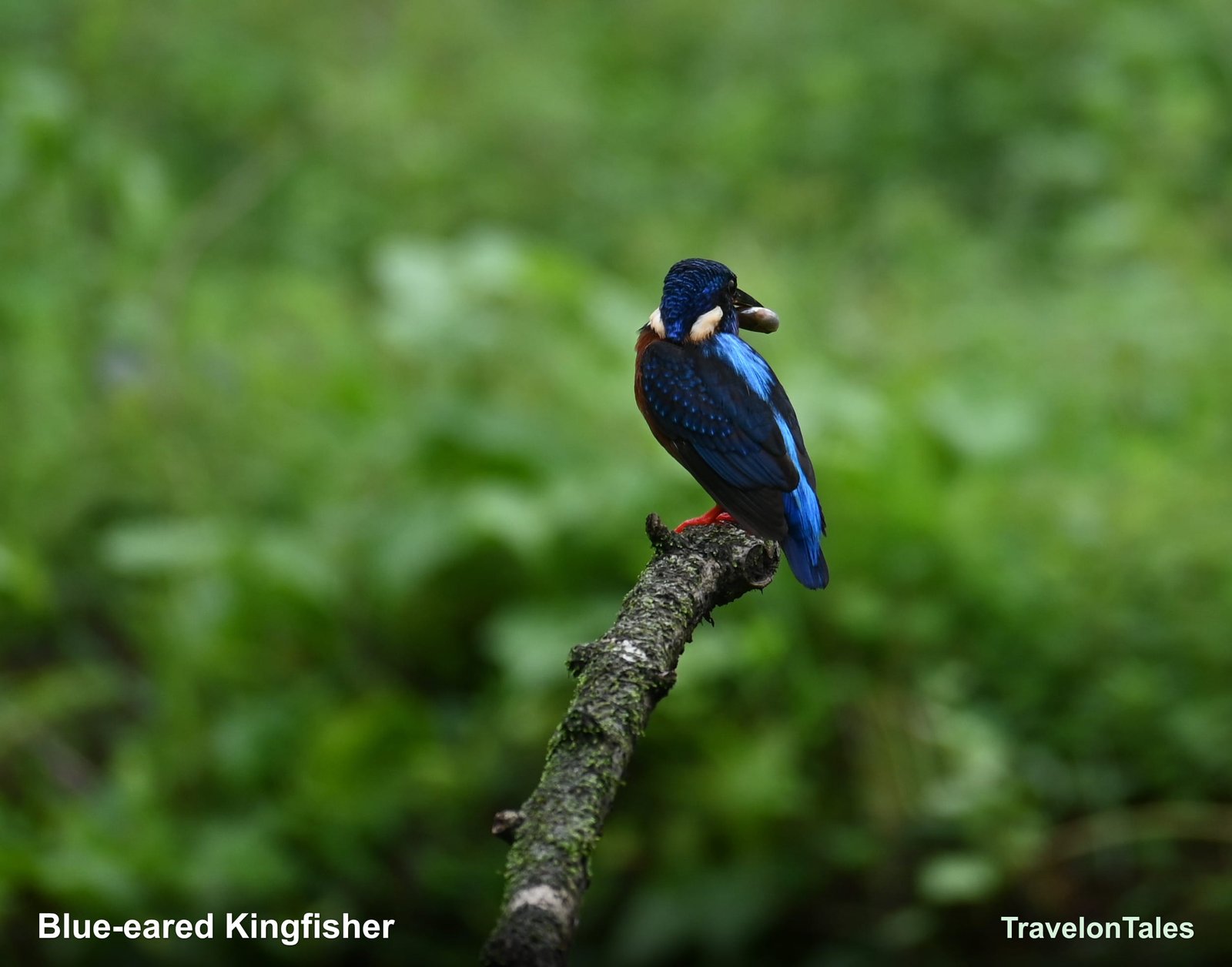
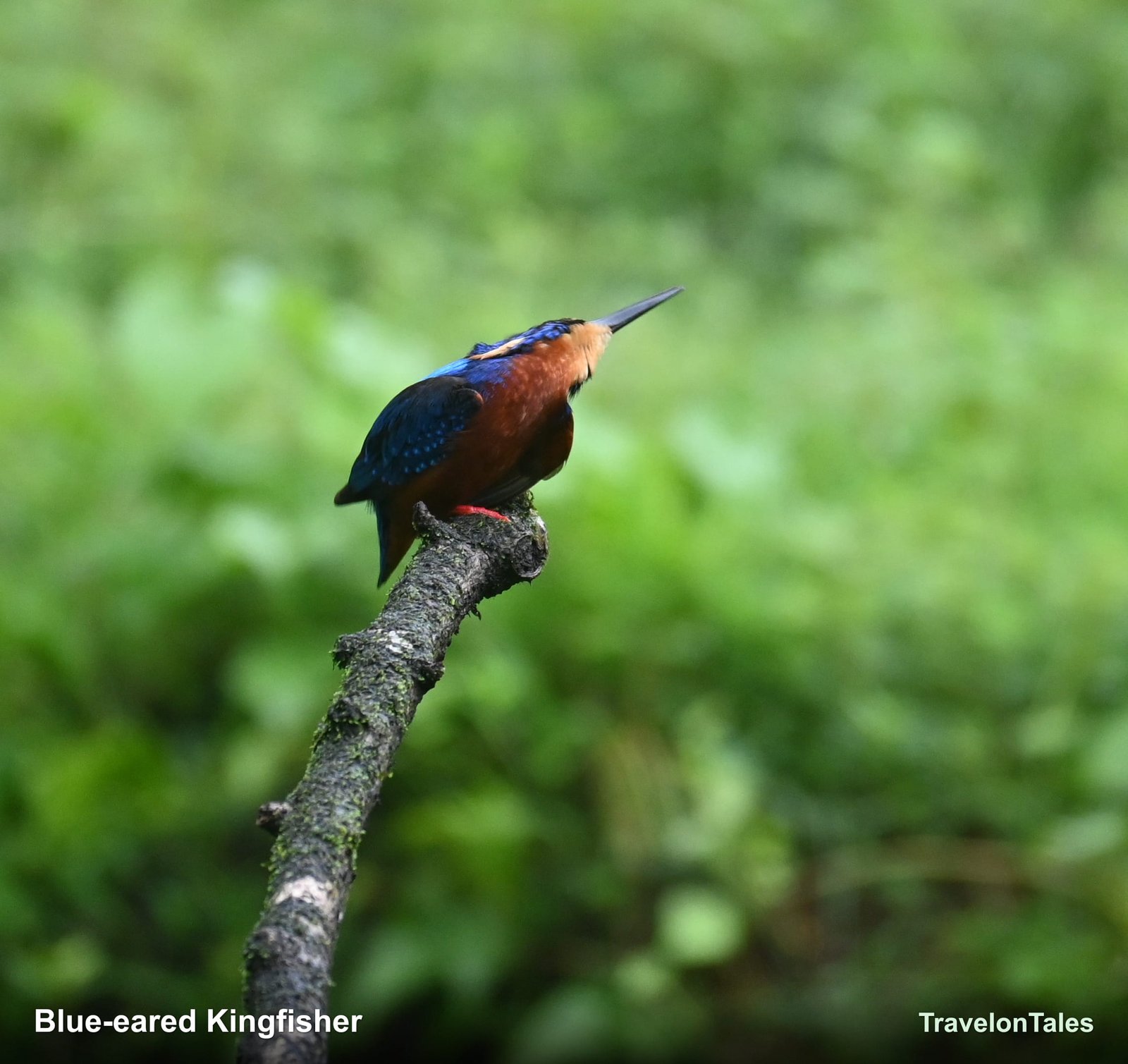
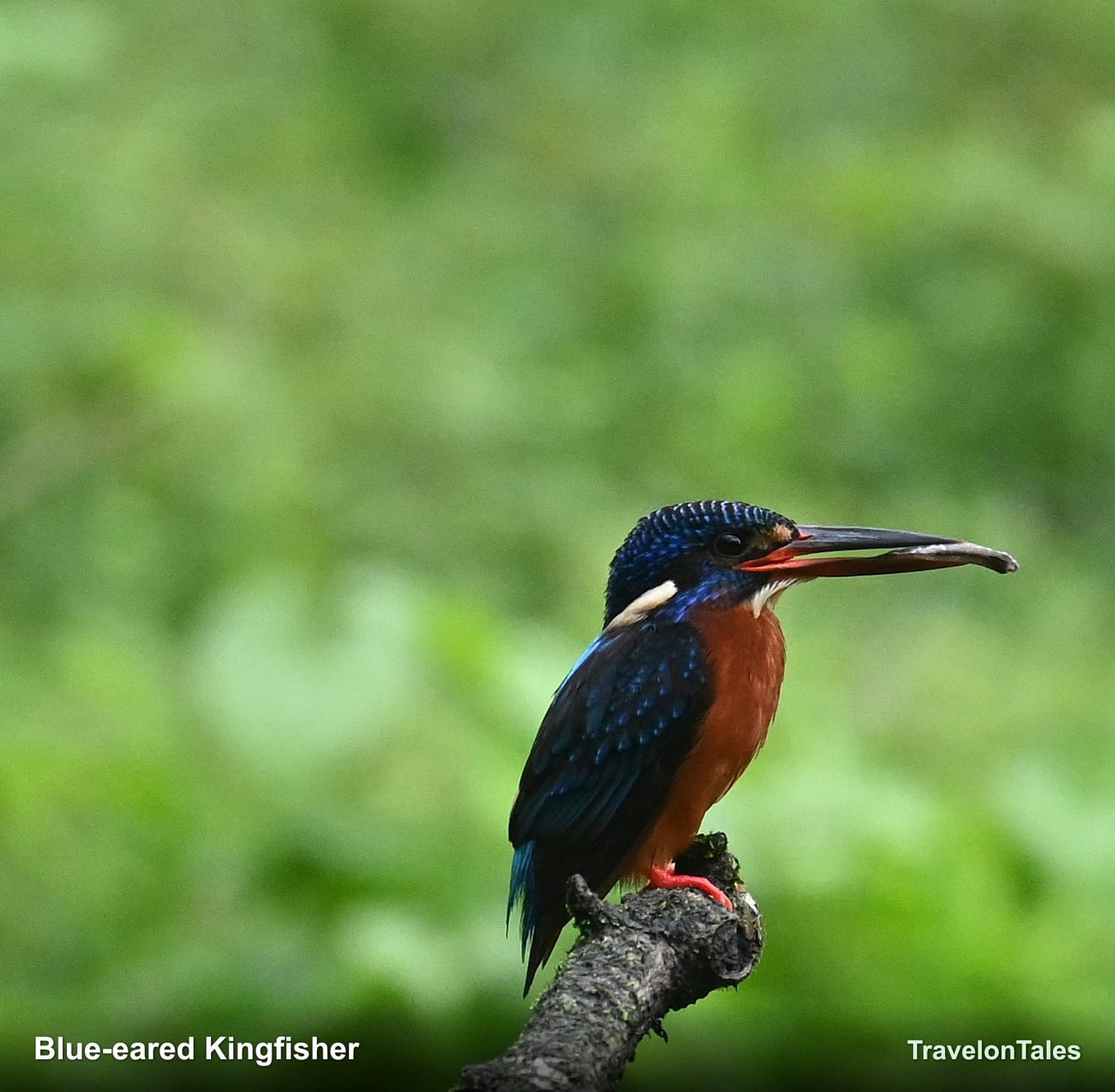
- Blue-eared Kingfisher, Sindhudurg (monsoon)
- Pied Kingfisher, Jawai, Rajasthan
Common Kingfisher at Saguna Baug: a morning in the rain
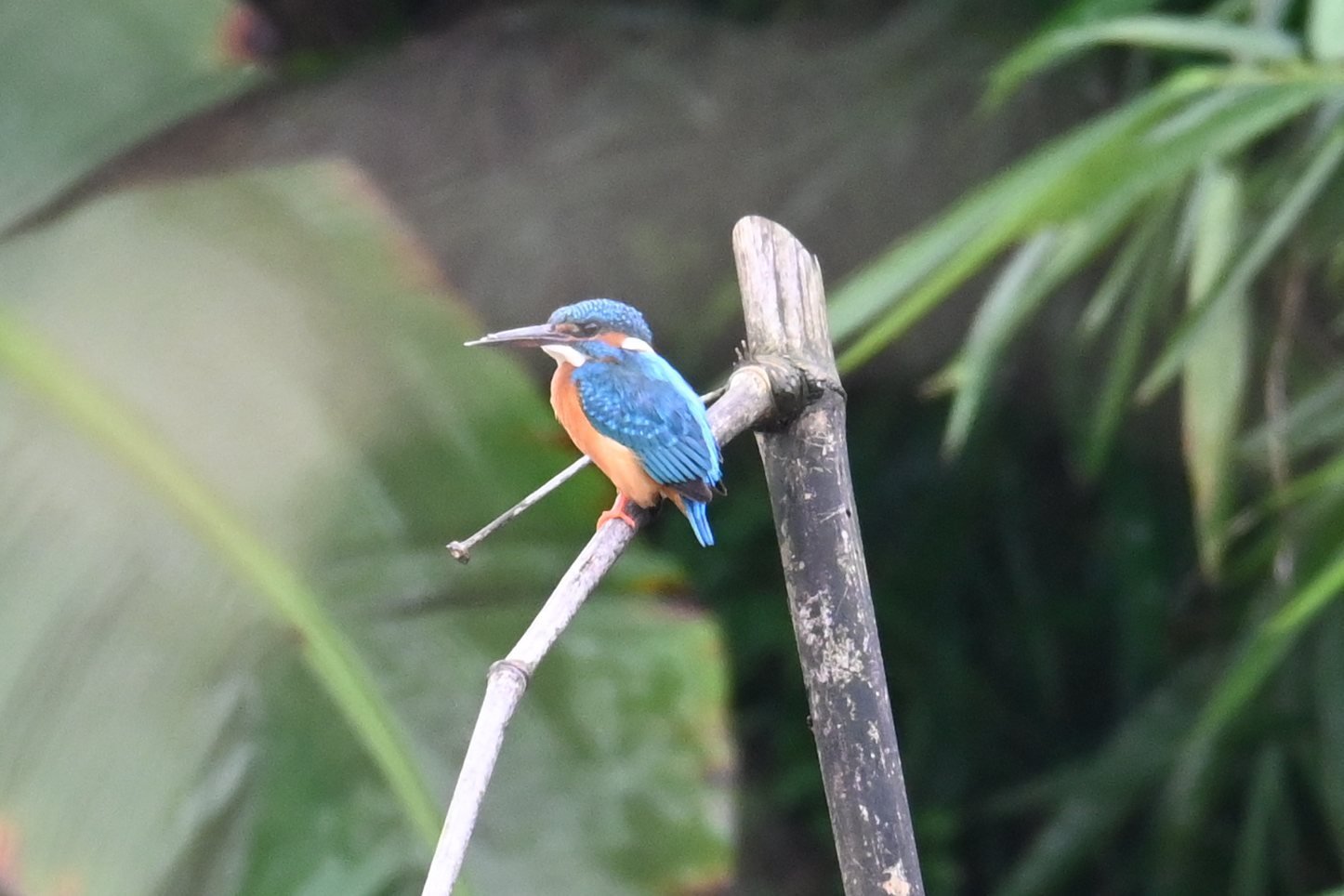
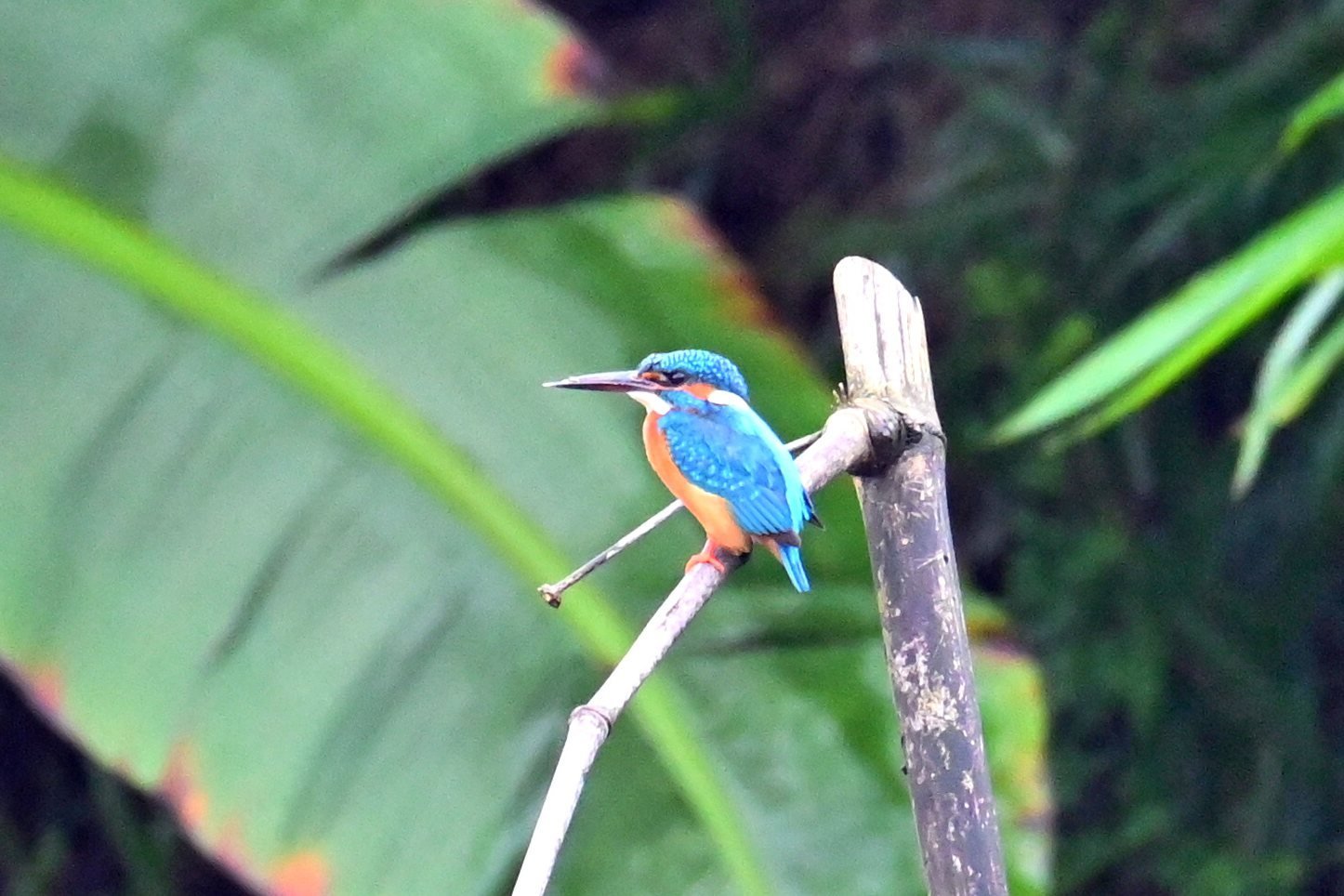
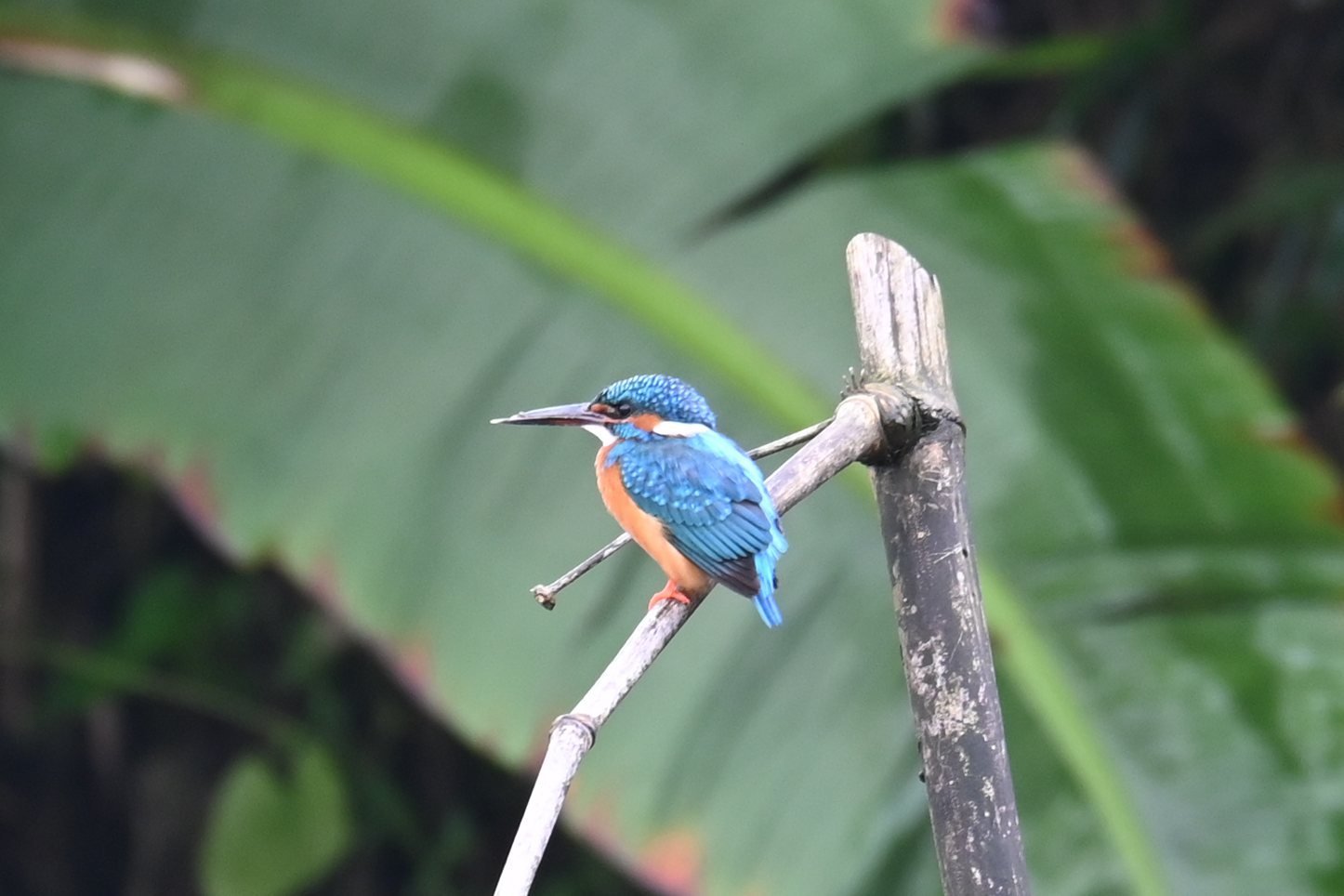
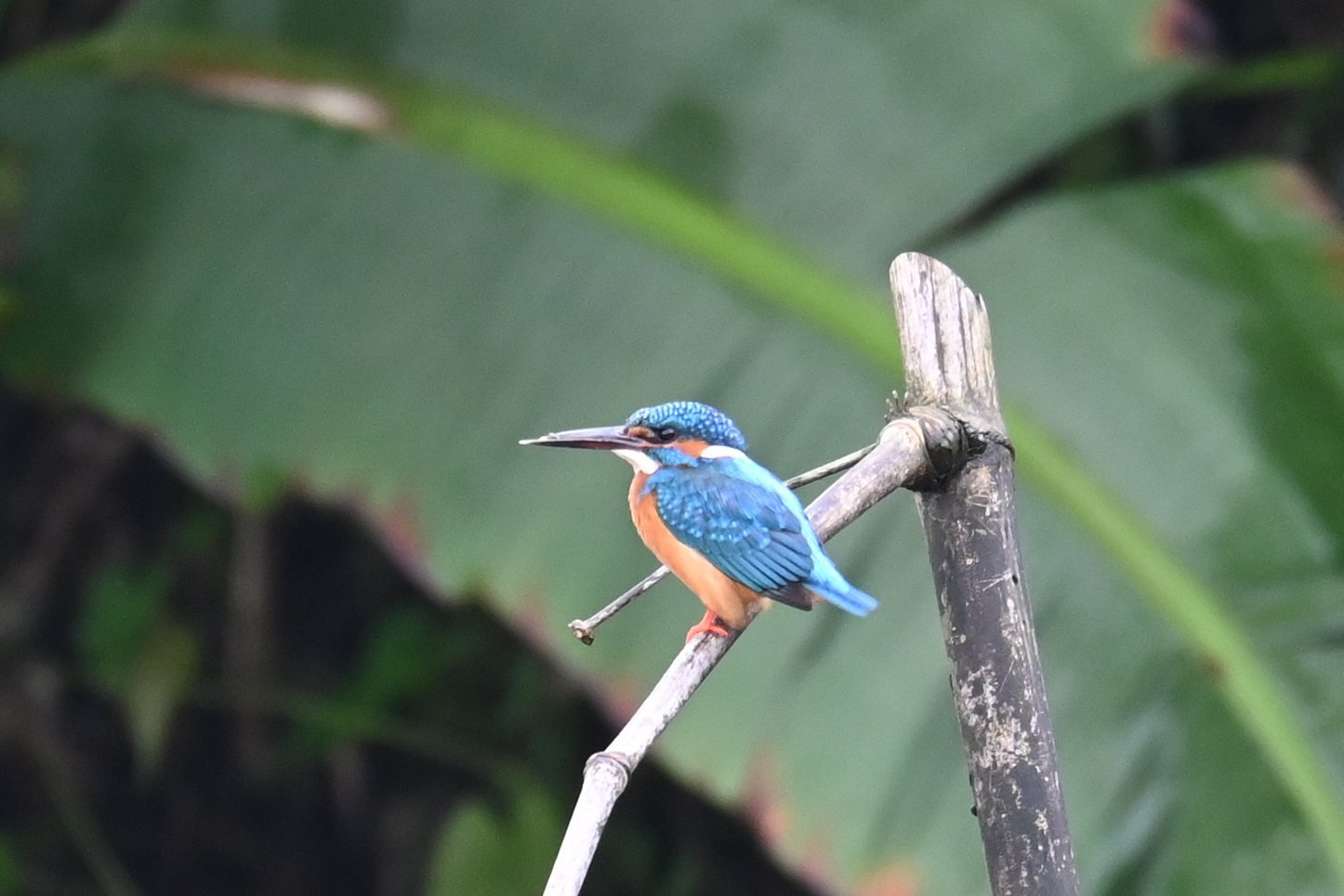
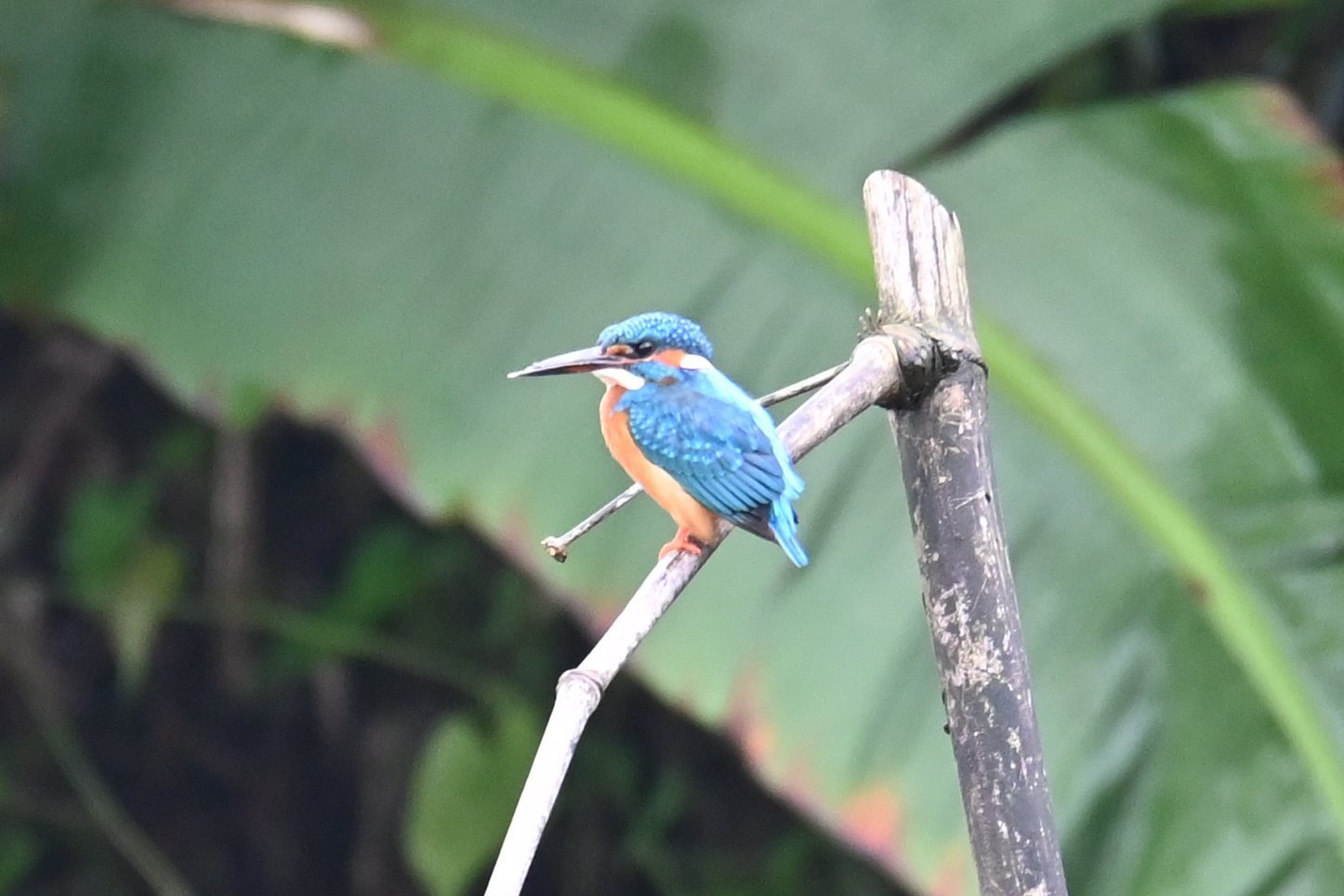
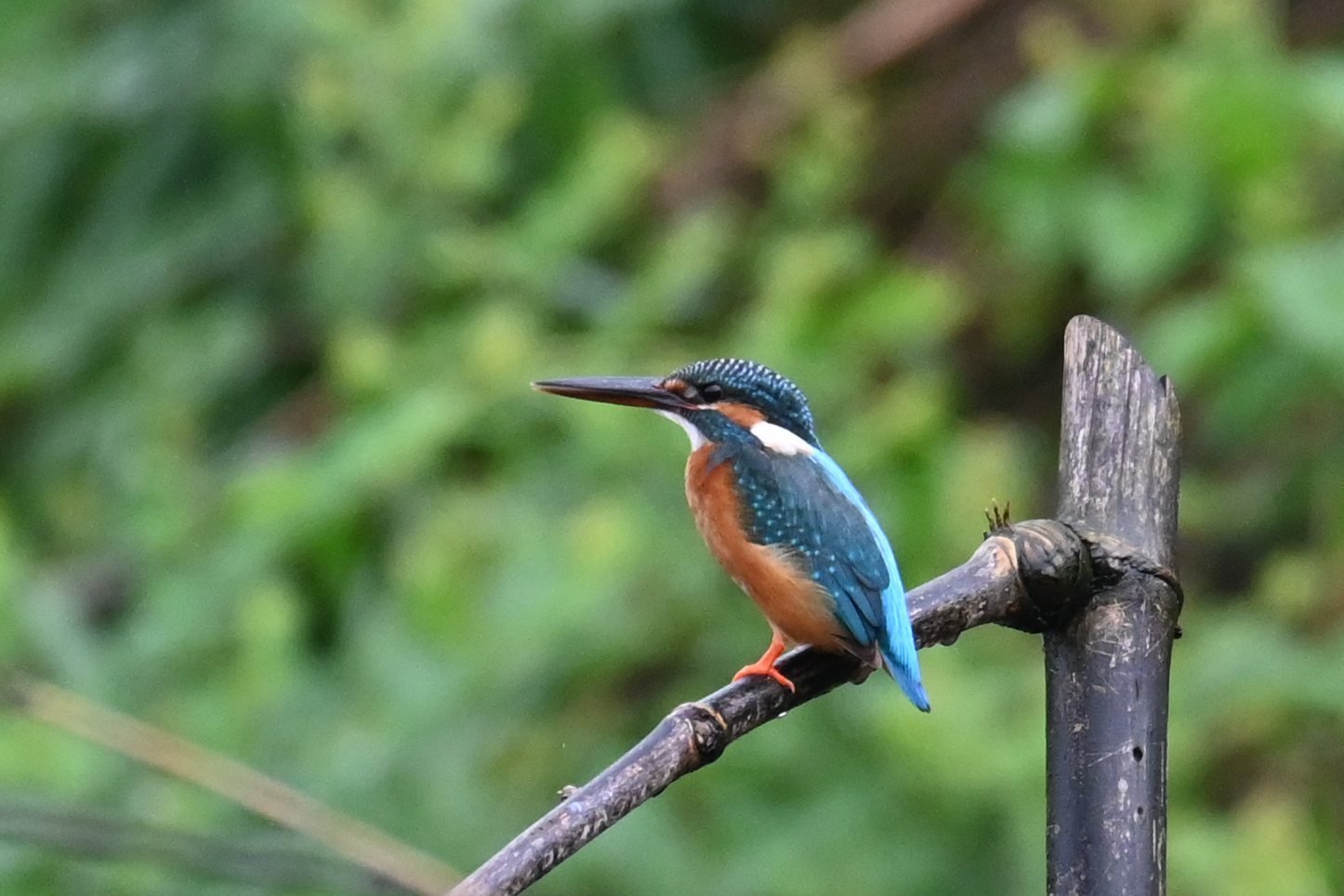
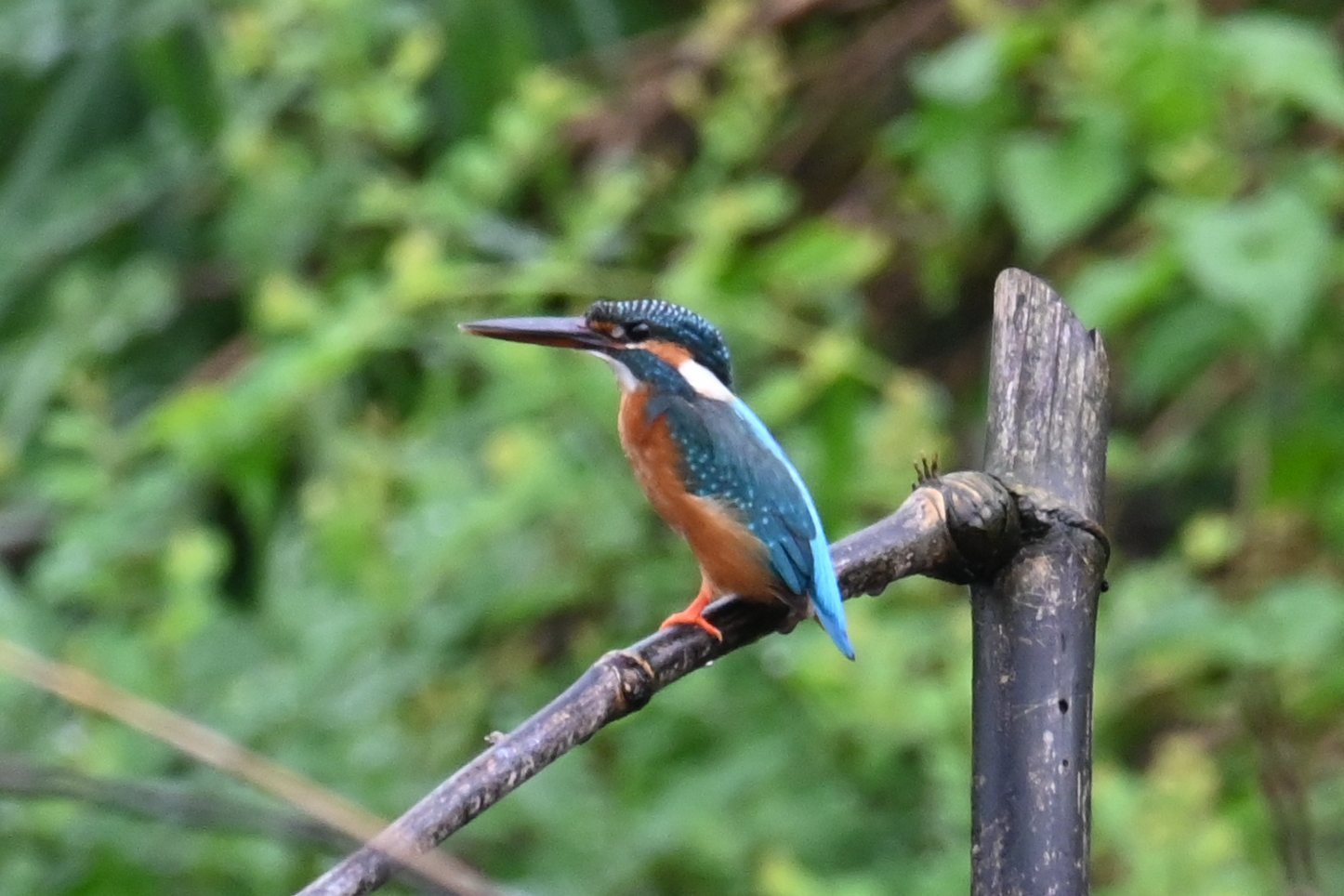
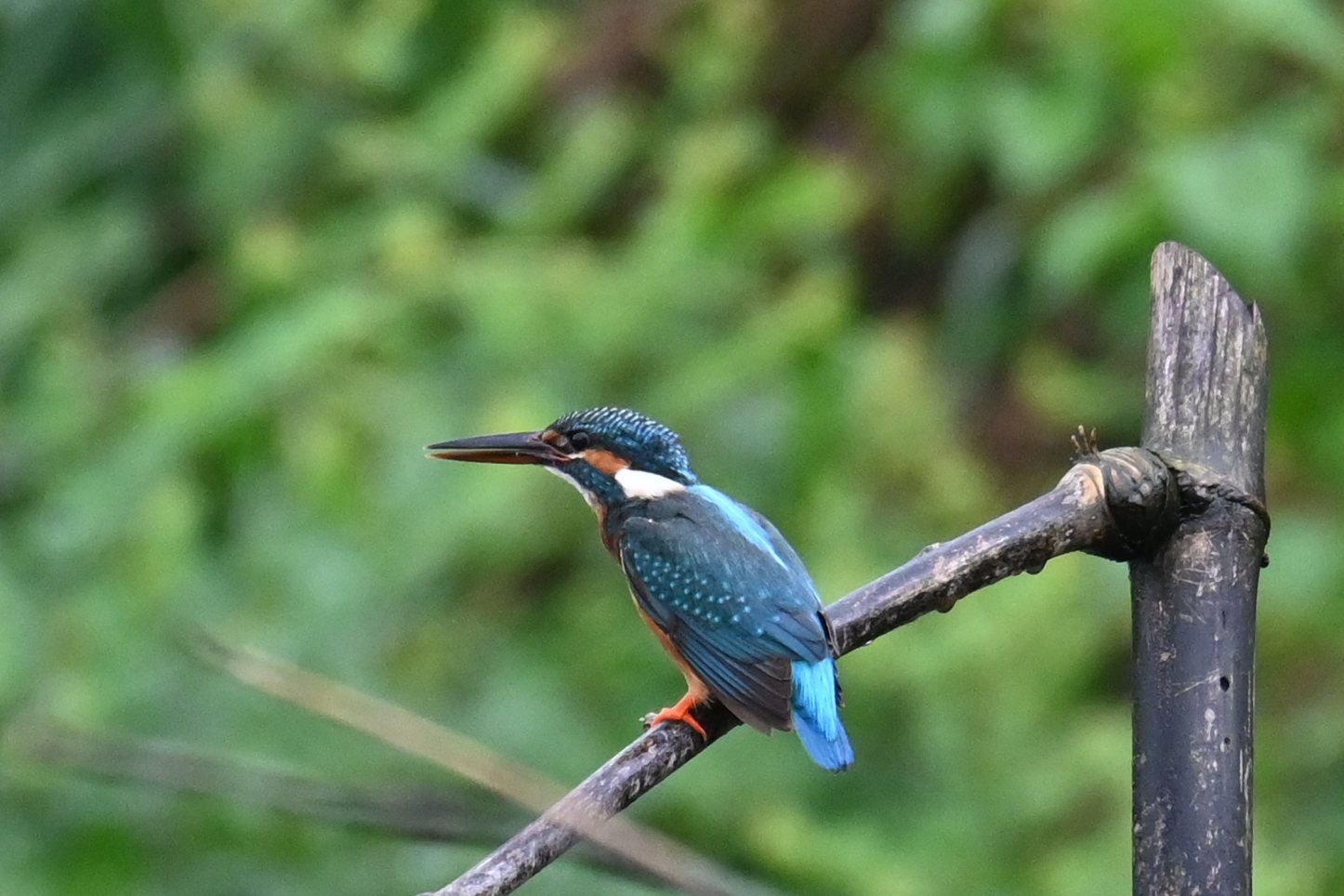
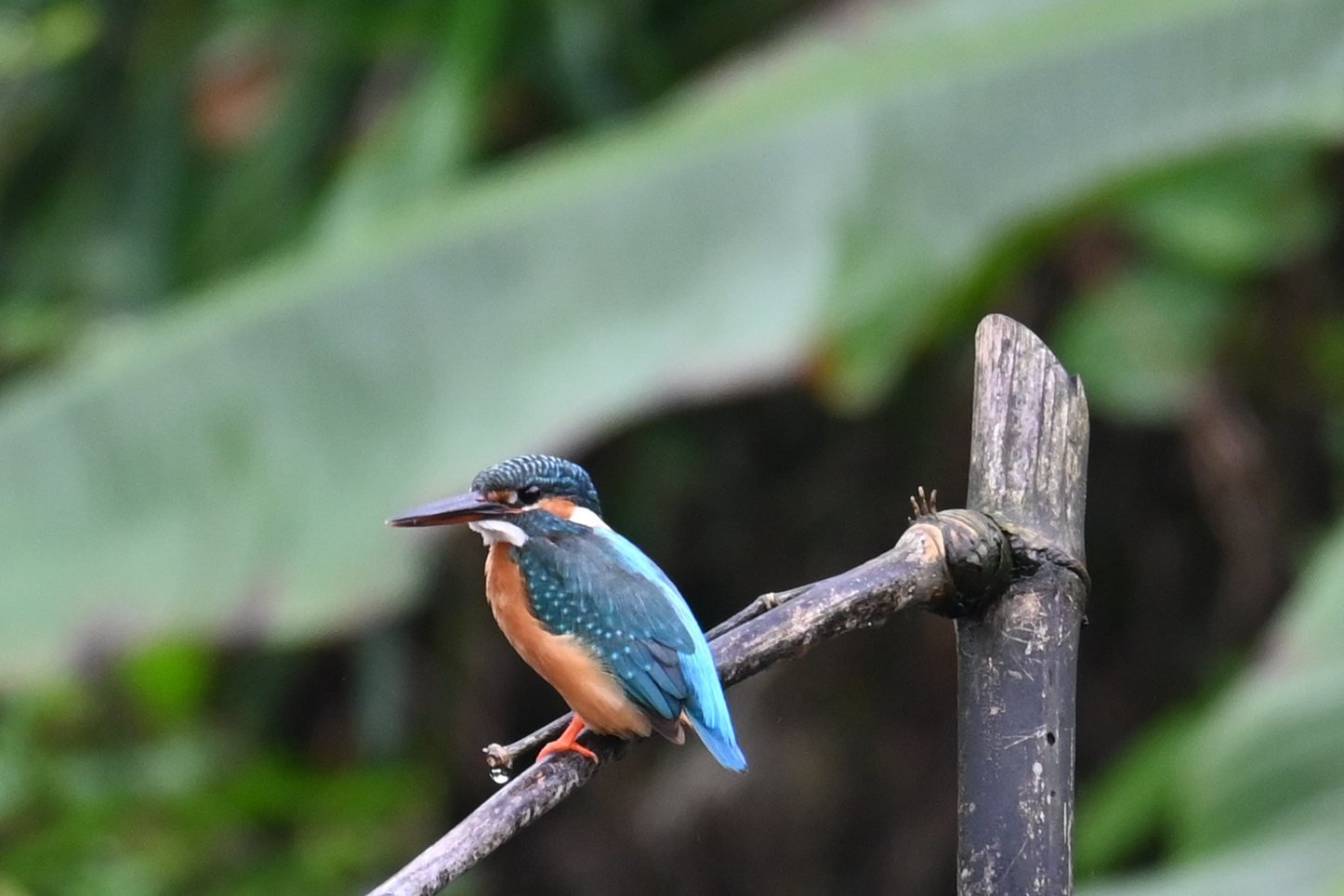
Saguna Baug in August is all water: rain on the banana leaves, a stream running fast below the farm, bamboo bent low with the weight of the wet. Just before ten in the morning a small blue bird landed on a cut bamboo stake at the edge of the stream, right in front of a wall of banana leaves. It was a Common Kingfisher, one of the smallest in this post, hardly bigger than a sparrow.
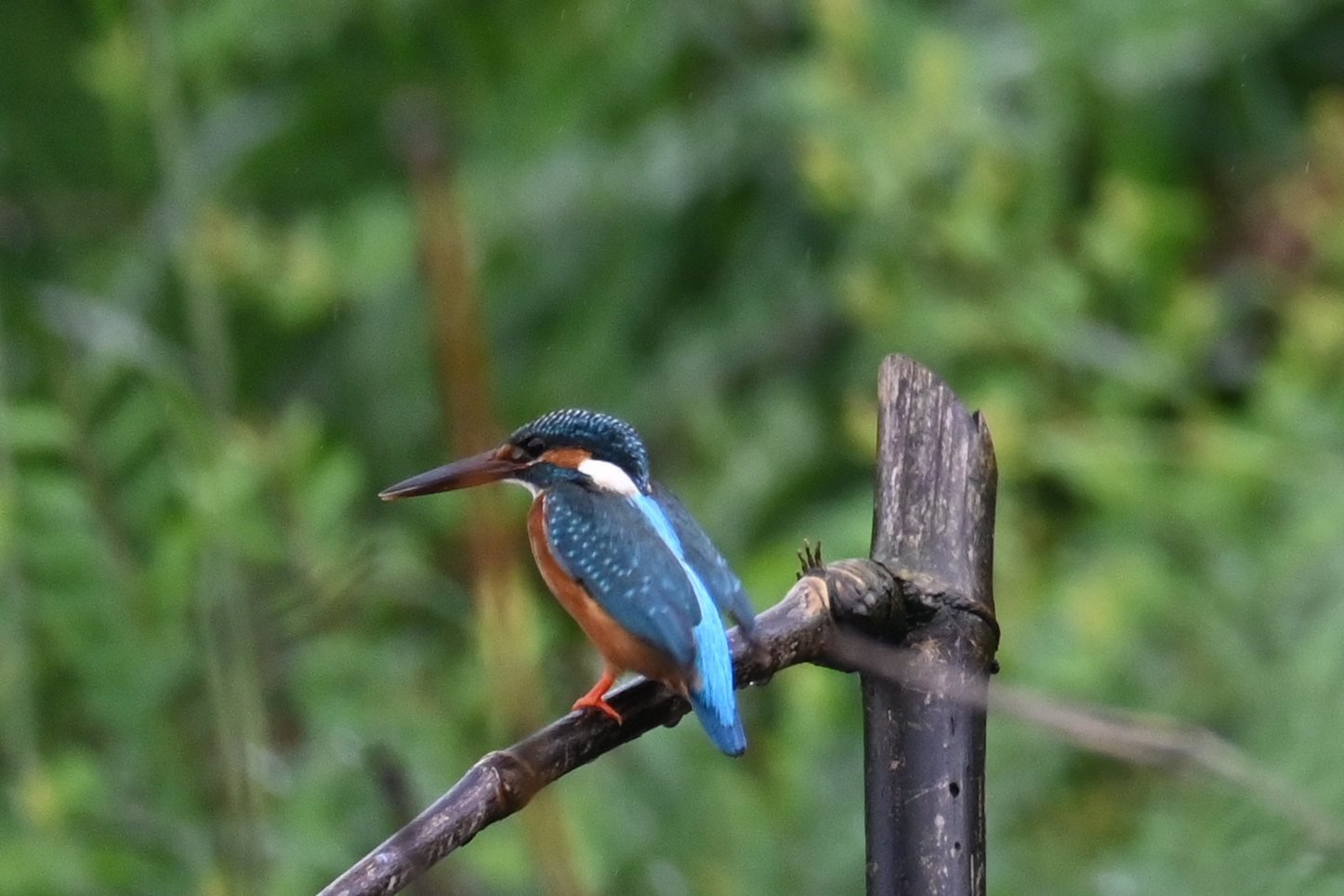
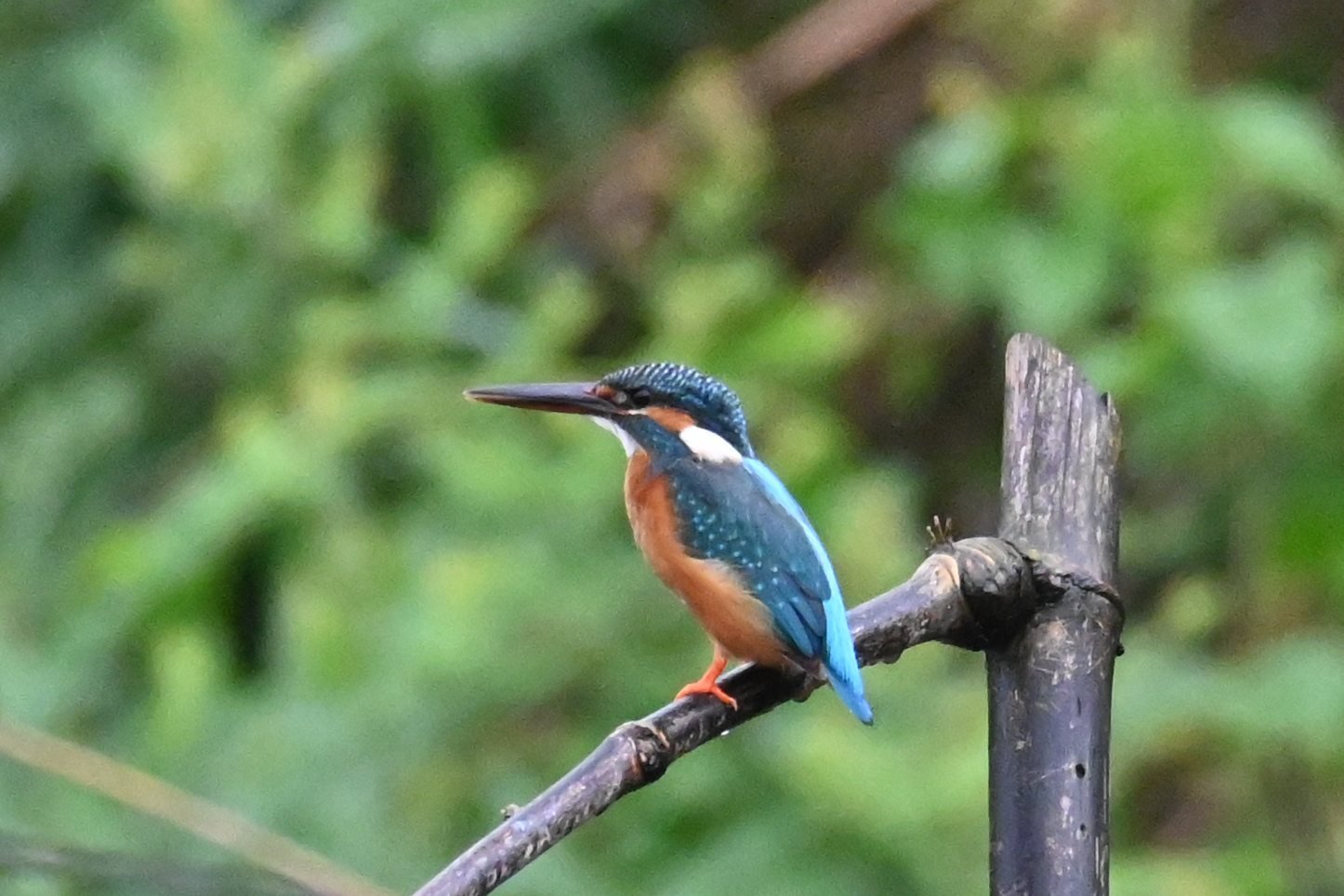
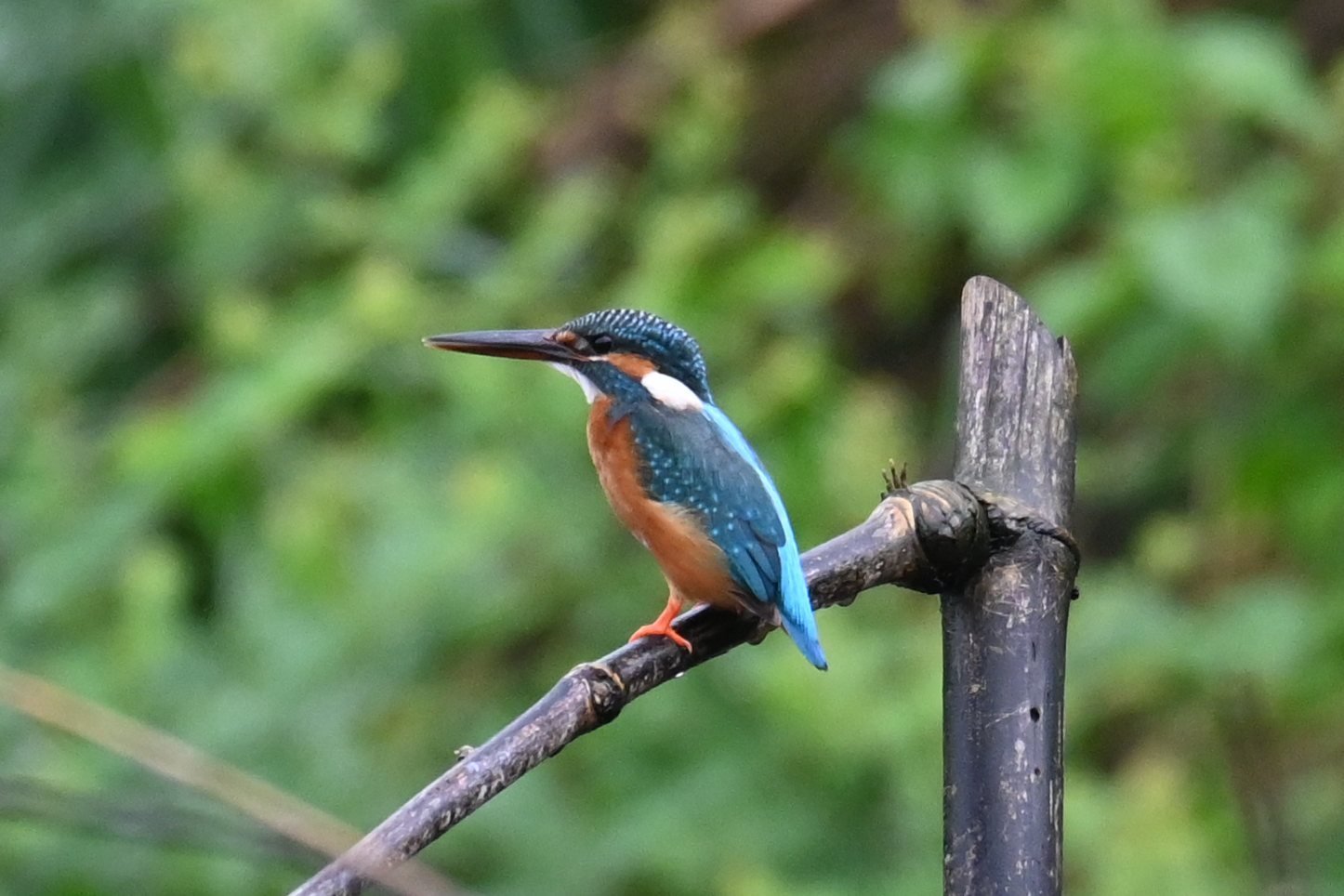
The bamboo stake
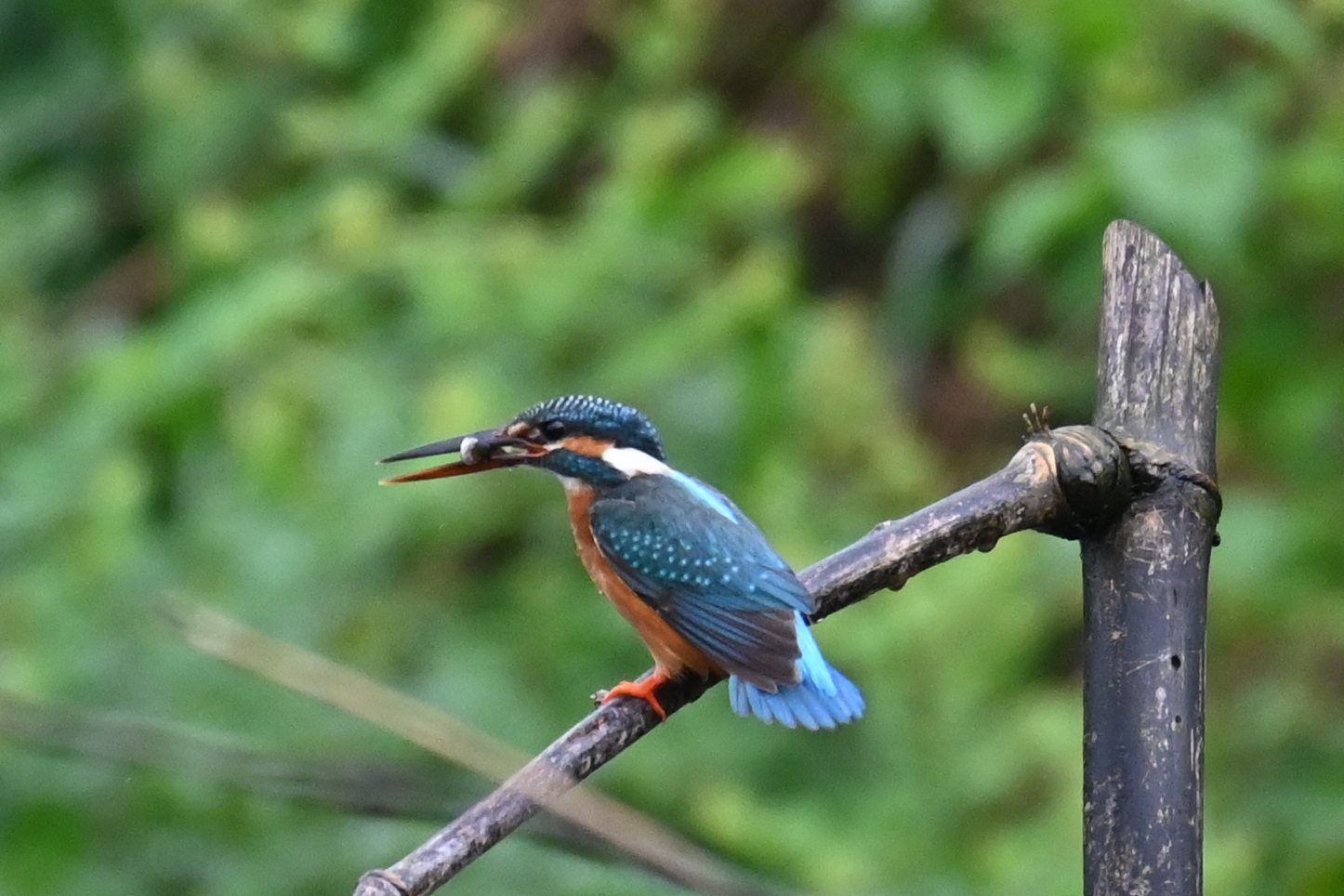
The bird used that stake like an office chair. It would sit, stare at the water, drop, come back, and sit again. Over five minutes we watched it turn on the same spot, giving us its profile, its back and its orange front in turn.
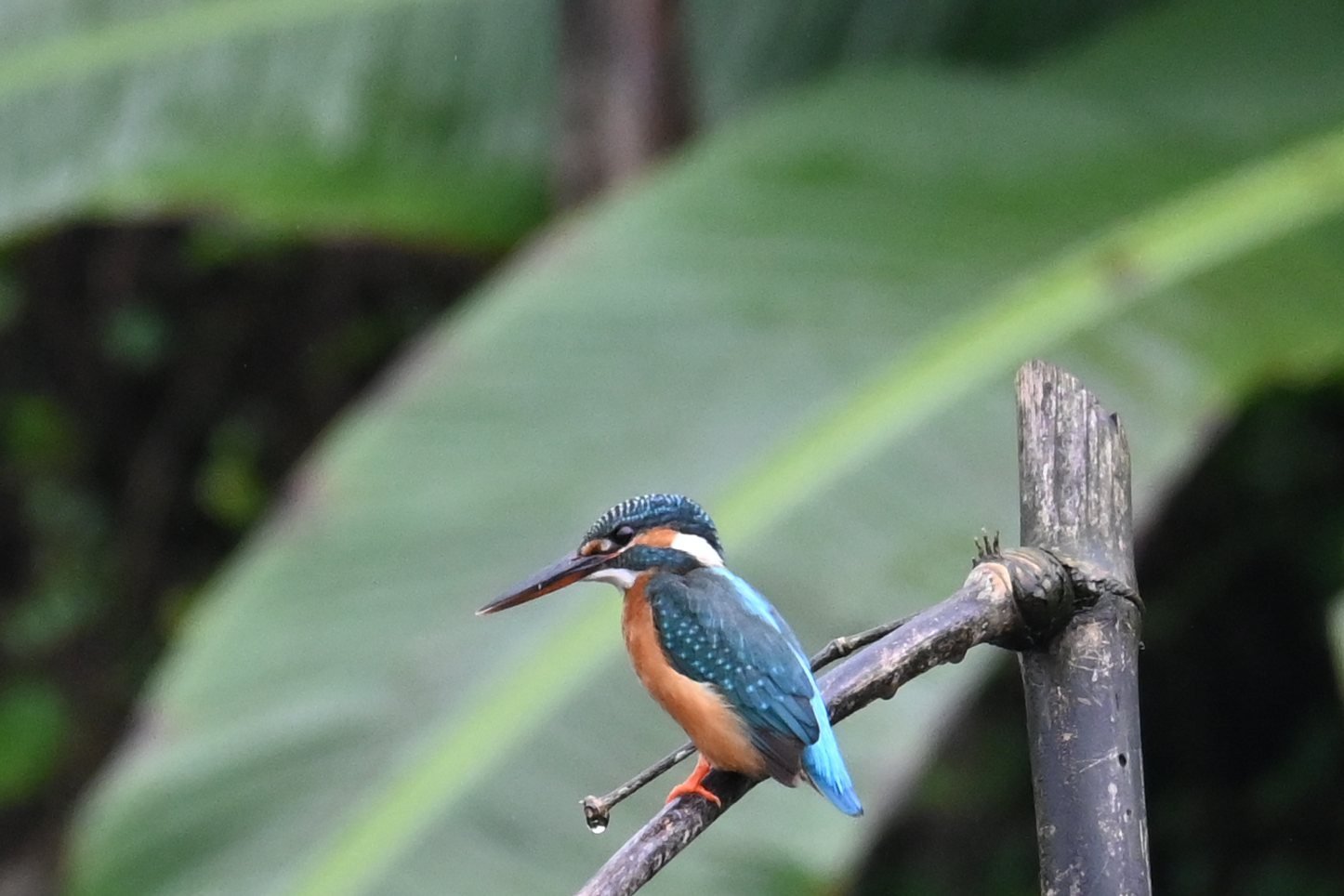
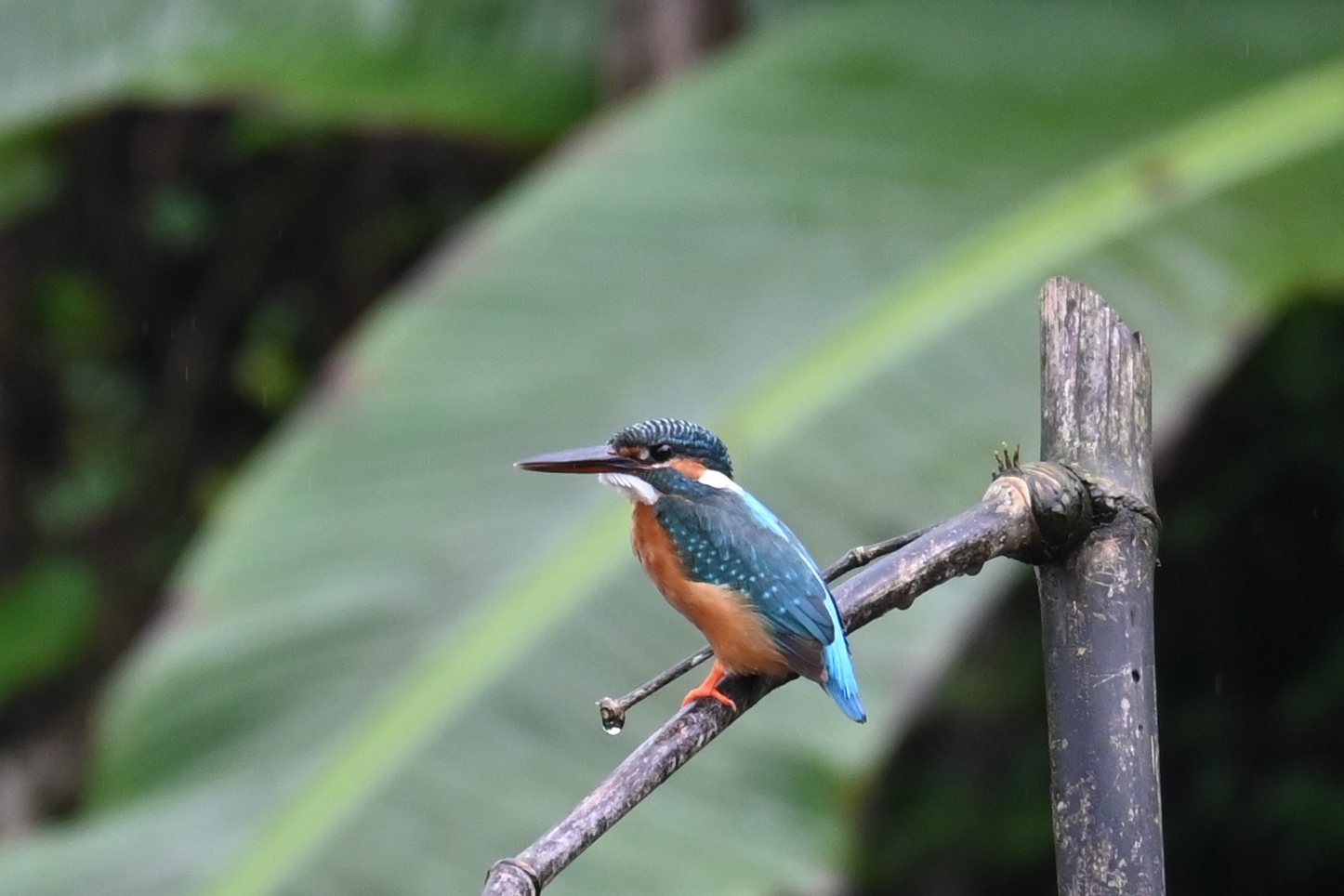
Raindrops on the branch
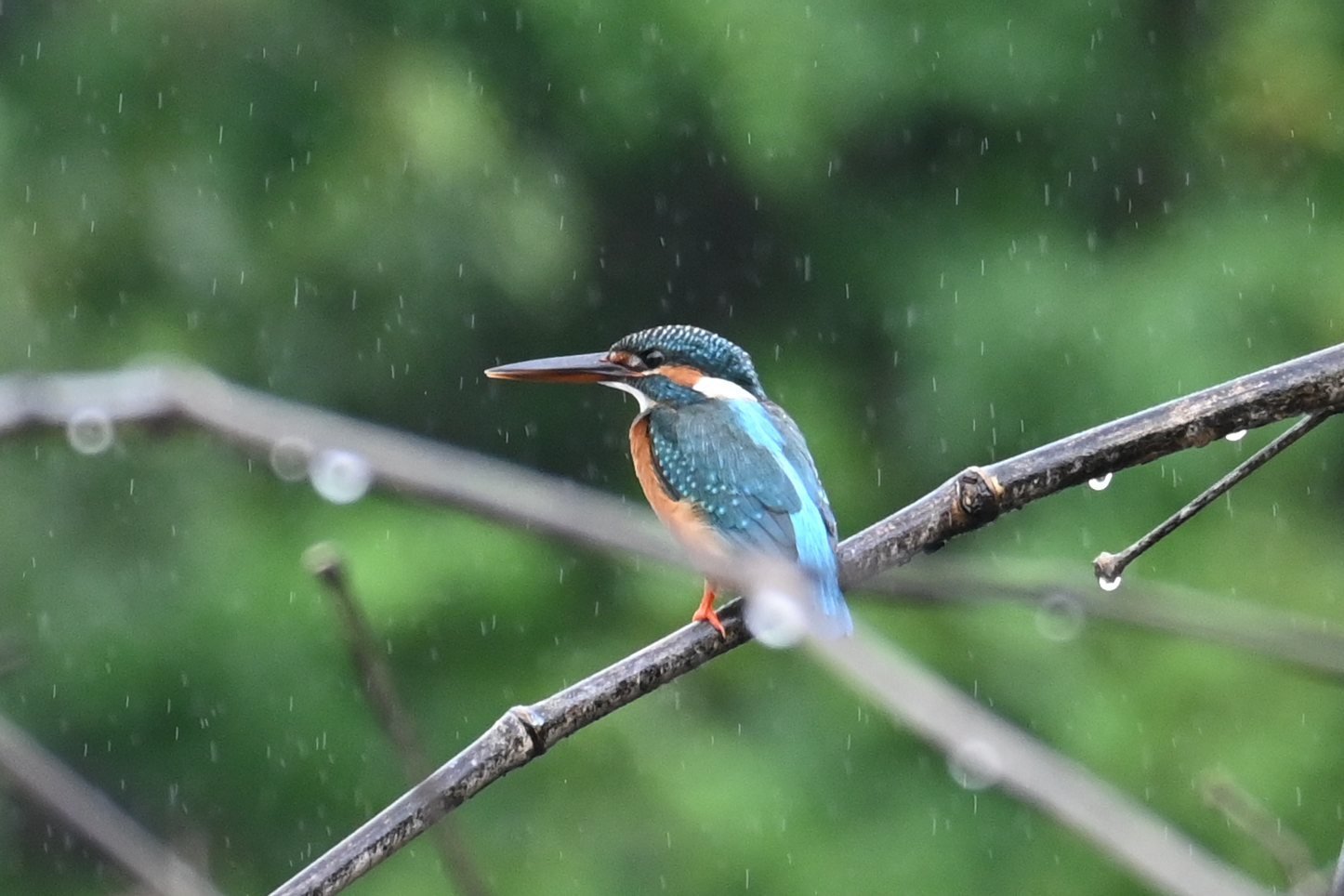
An hour later it was on a bare branch hung with raindrops, with the green of the far bank as a soft background. This is where the white neck patch and the long dagger bill show up best.
The green bamboo shoot
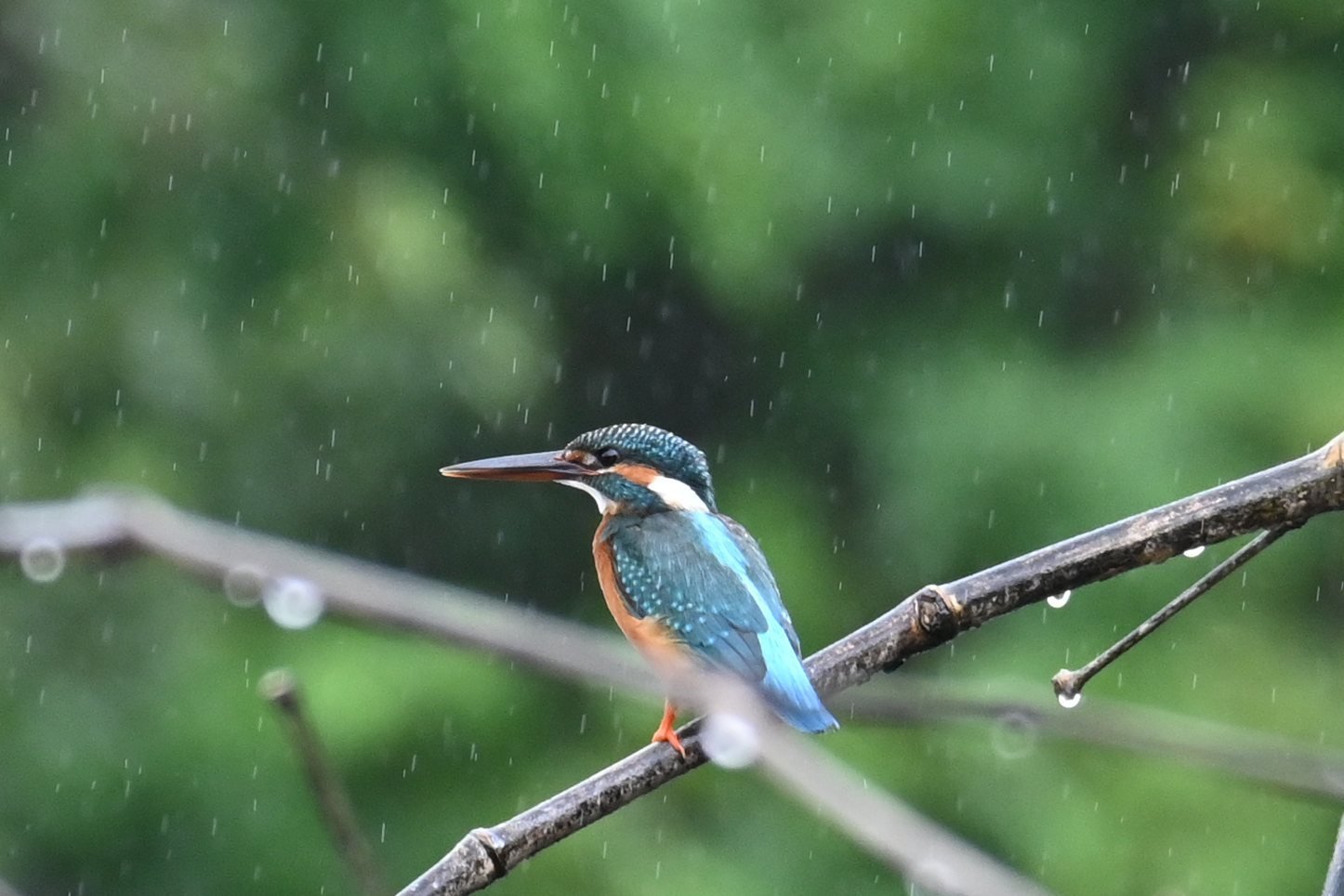
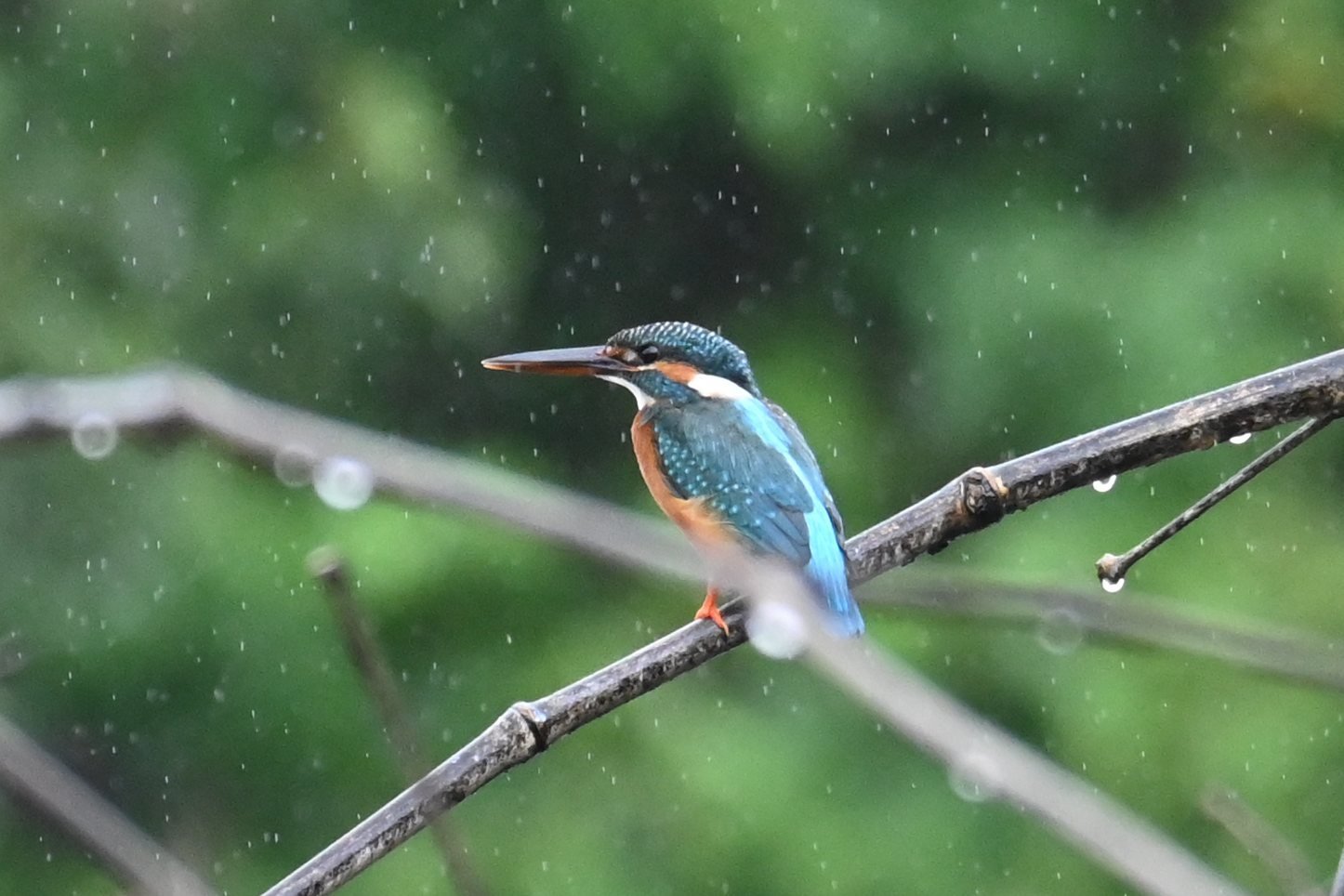
Then the rain picked up, and the best pictures of the morning happened. The bird flew to a single green bamboo shoot bending over the stream and sat there, turned towards us, with the rain coming down in streaks all around it.
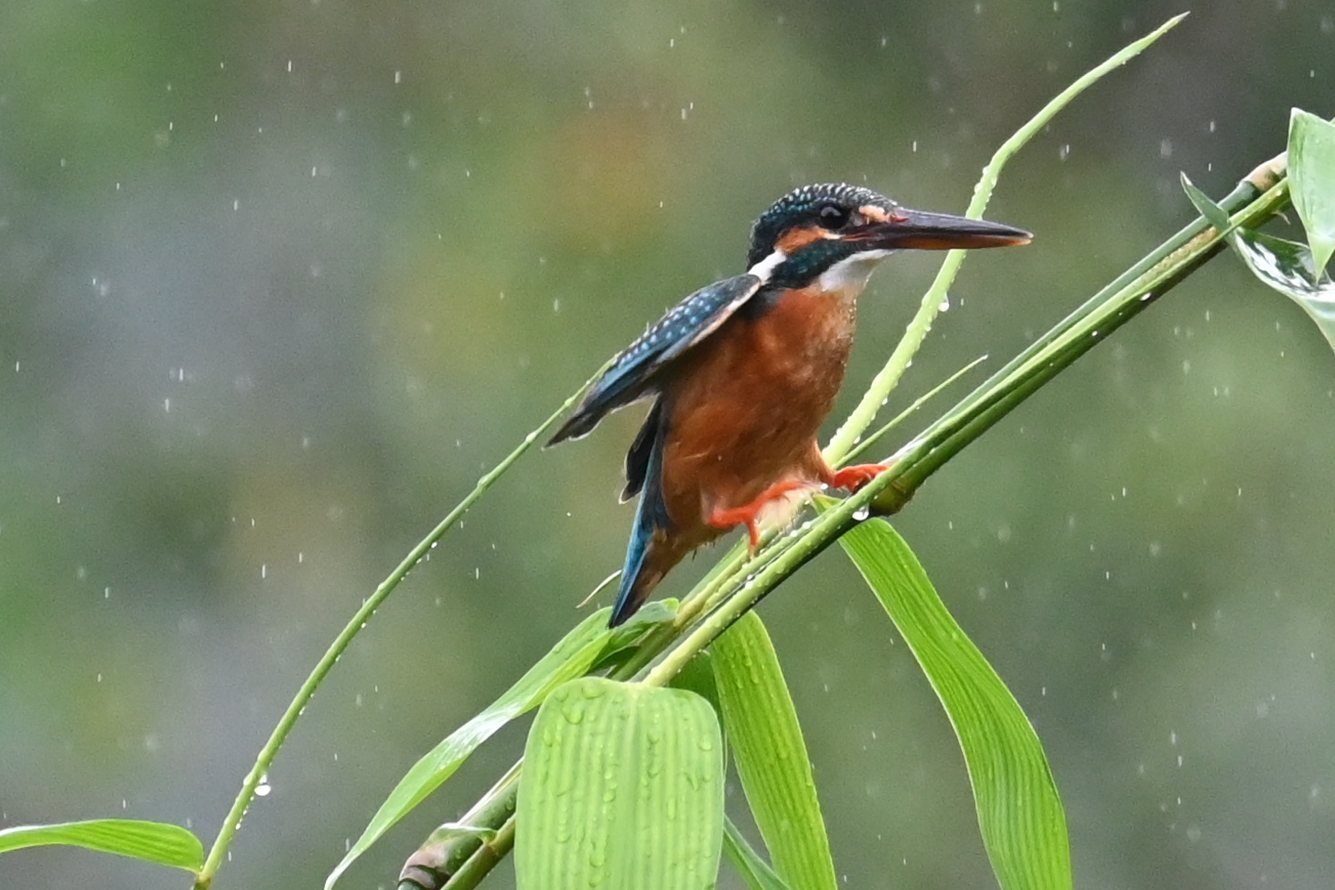
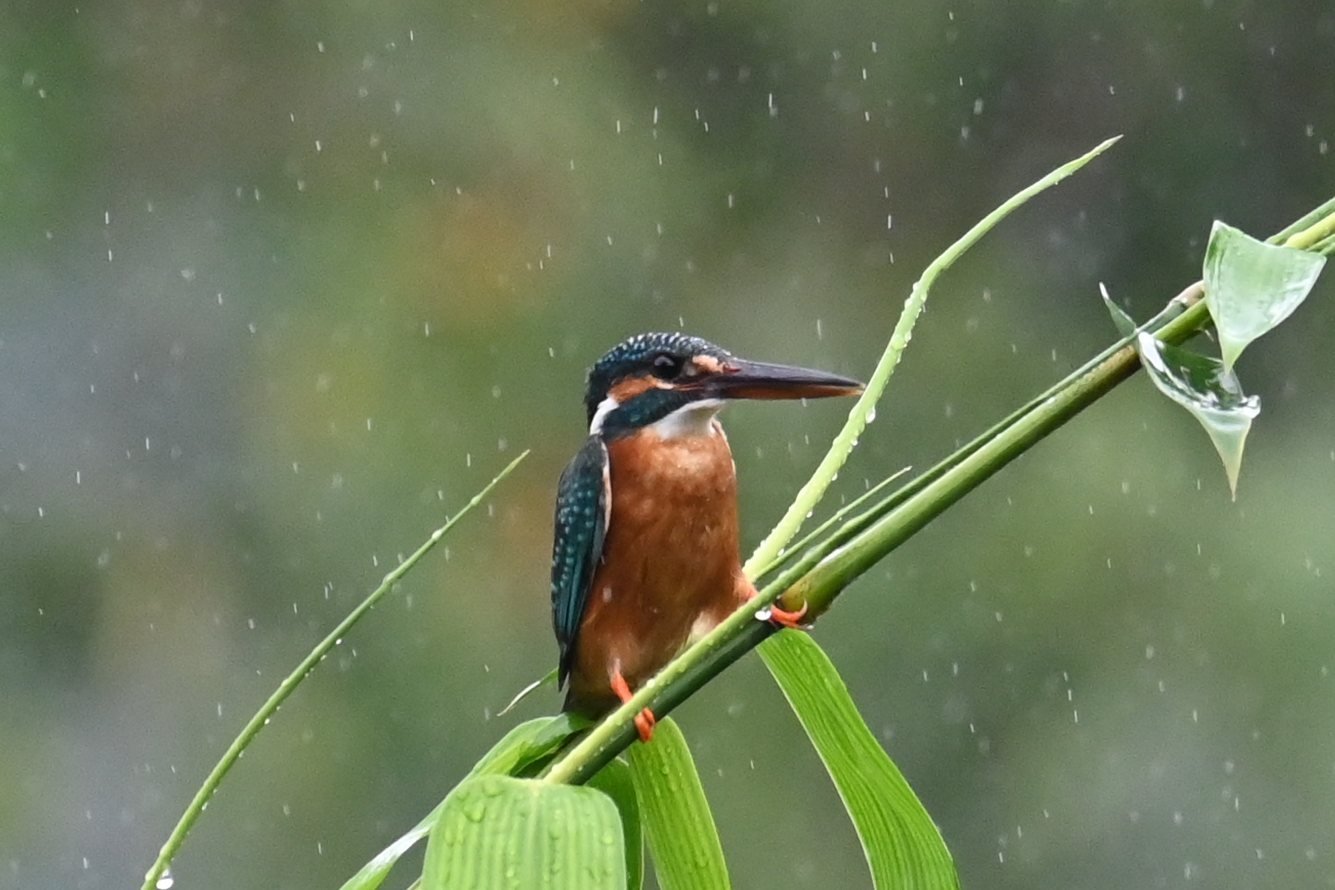
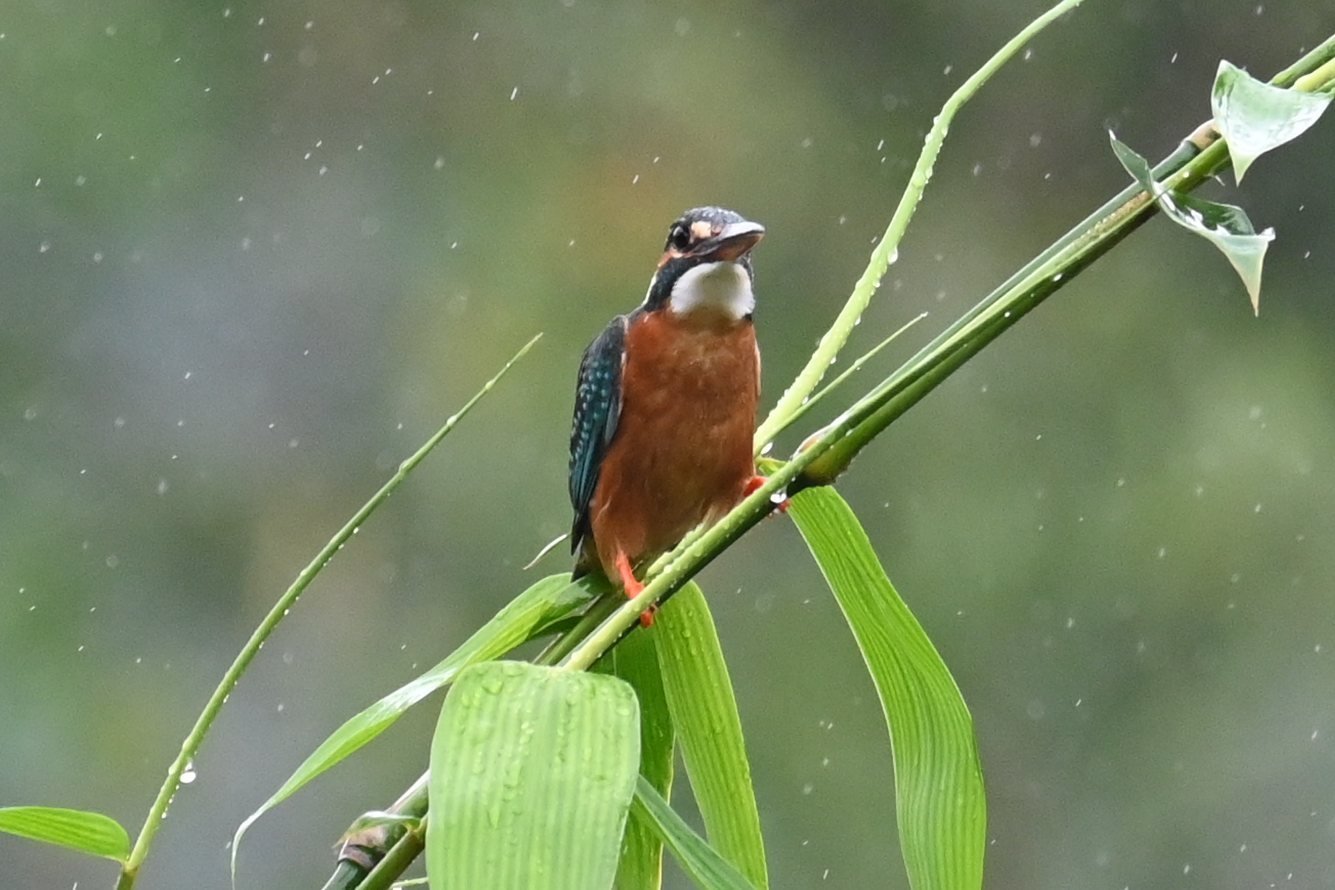
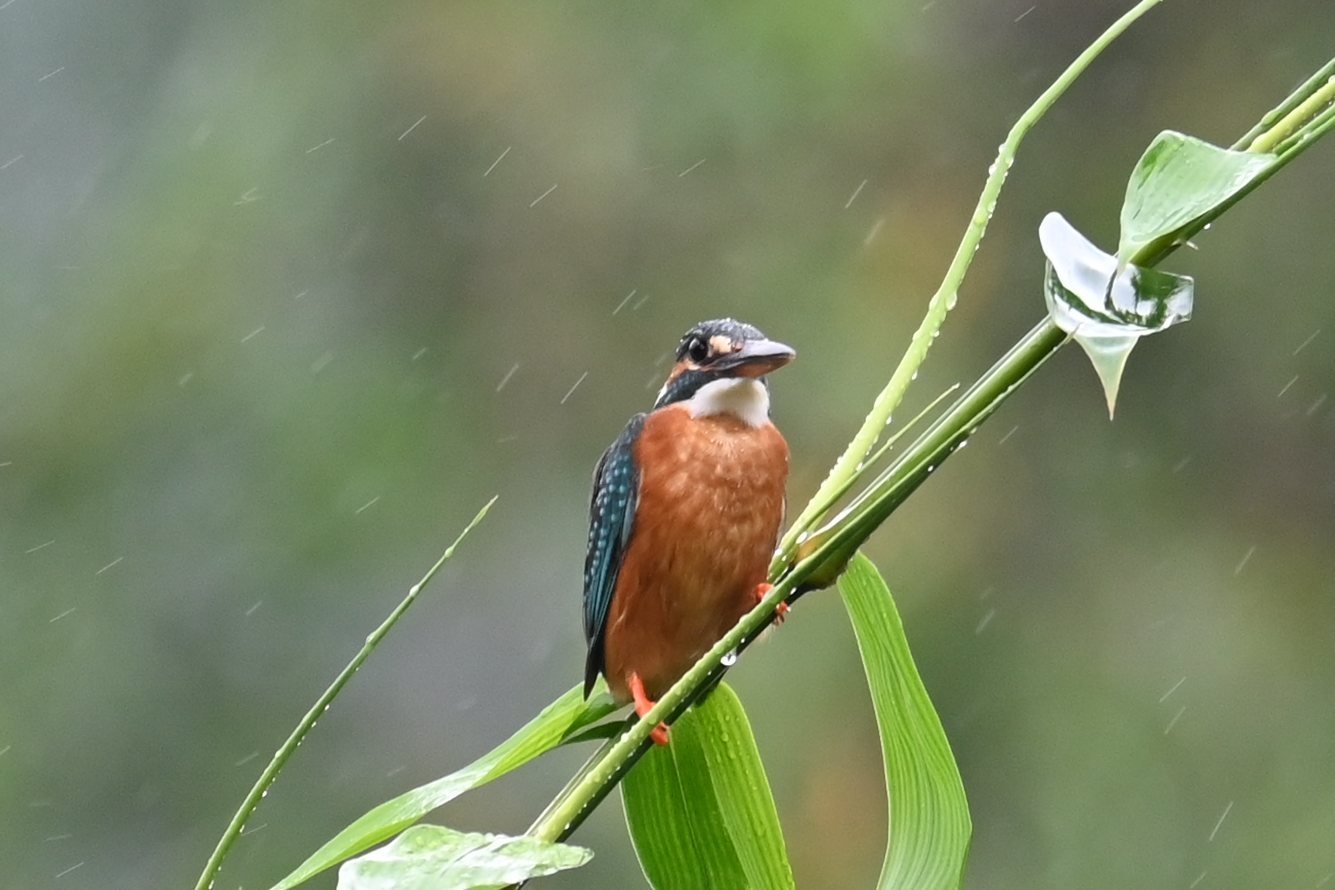
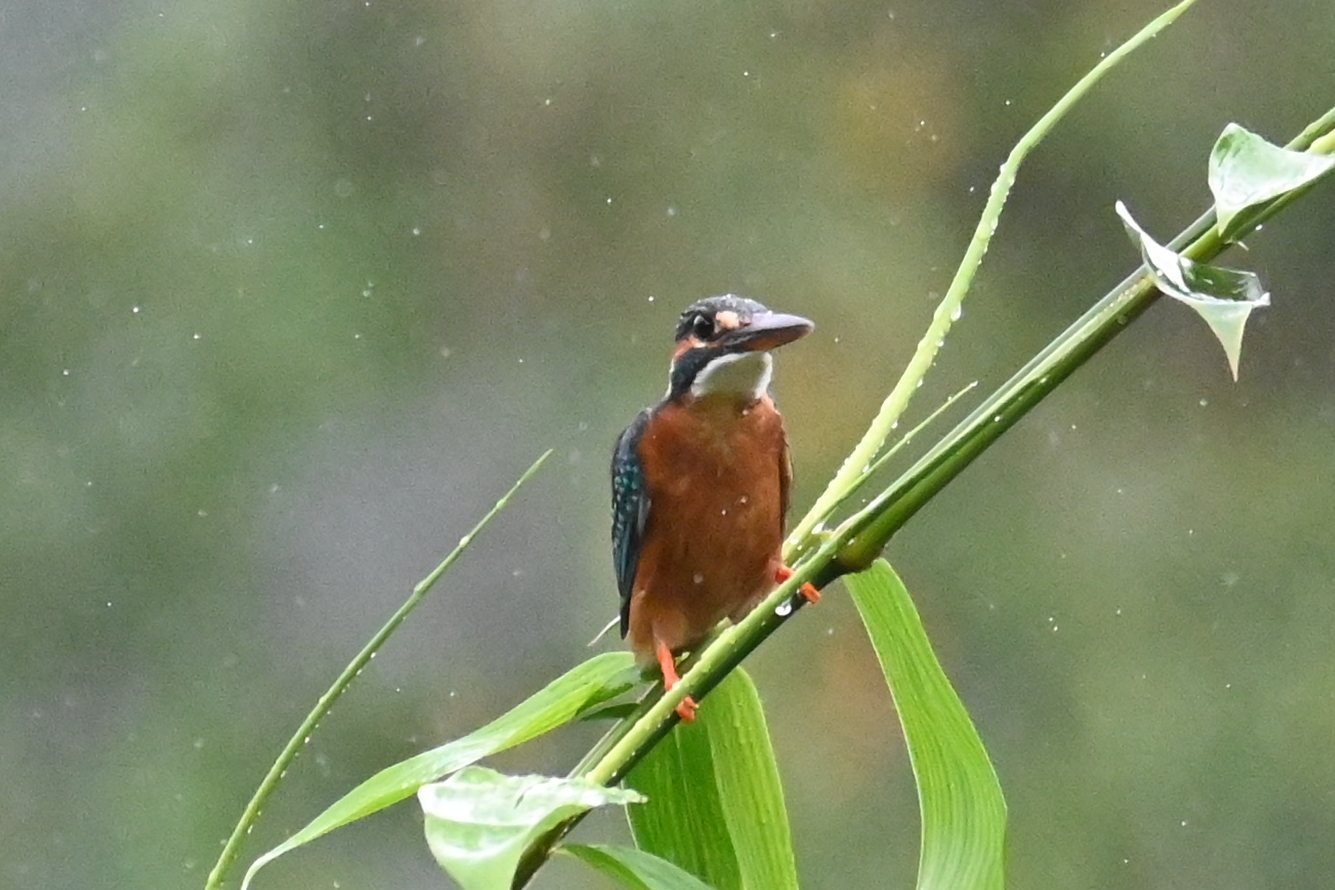
Common Kingfishers are not put off by rain at all. Fish still move in the stream, and the bird still needs to eat, so wet mornings are some of the best times to watch one.
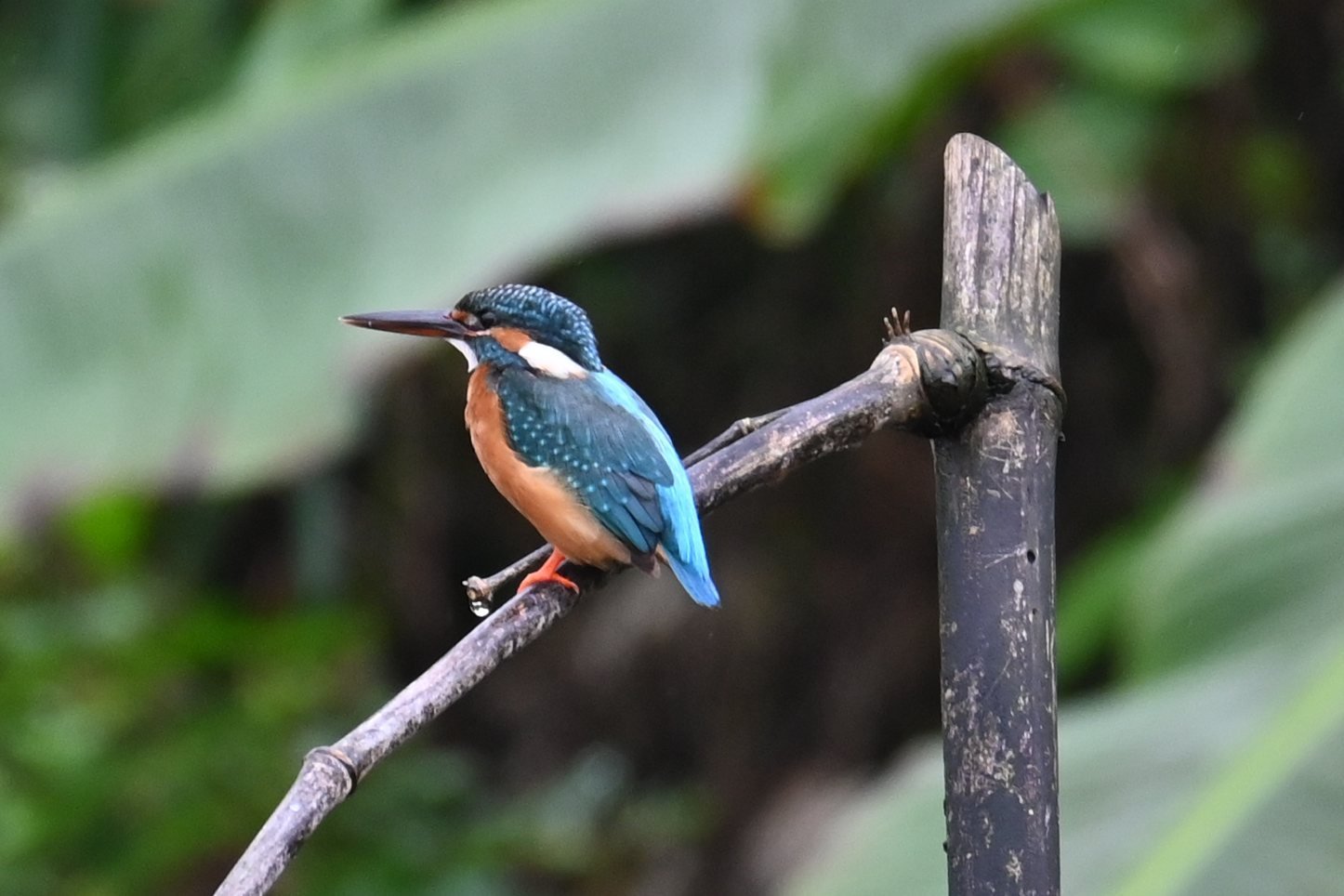
Back to the stakes
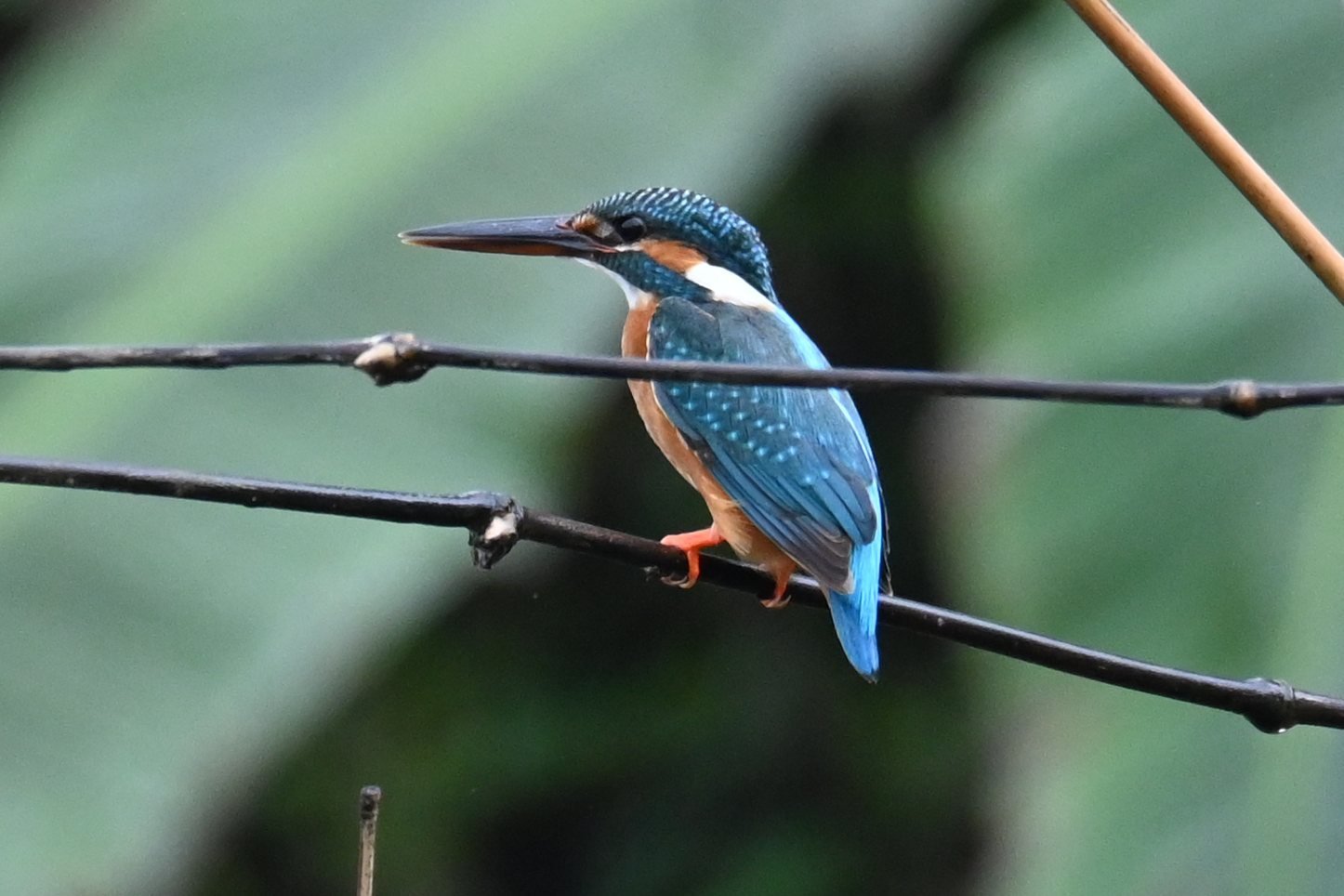
Before leaving, it worked along a line of old bamboo stakes and a wire across the stream. It was the same routine at each one: land, look, wait.
What worked at Saguna Baug
- Stay put once you find a perch. The bird came back to the same stakes again and again.
- Rain is a gift. The light is soft, the greens glow, and the birds keep hunting.
- Keep the camera covered and the lens hood on. A 250 mm lens on a Nikon Z 50 was plenty at this distance.
White-throated Kingfisher at Alibaug: the one that does not need water
The White-throated Kingfisher is the one most people in India have seen without knowing it: the big chocolate-and-blue bird with a red bill that sits on wires along the highway. It eats lizards, frogs, large insects and the odd small bird as happily as fish, so you find it far from any pond.
On a January afternoon in Alibaug, one sat for us in a big shady tree, with an orange iron frame cutting across the view. We moved around it for five minutes, finding gaps in the branches.
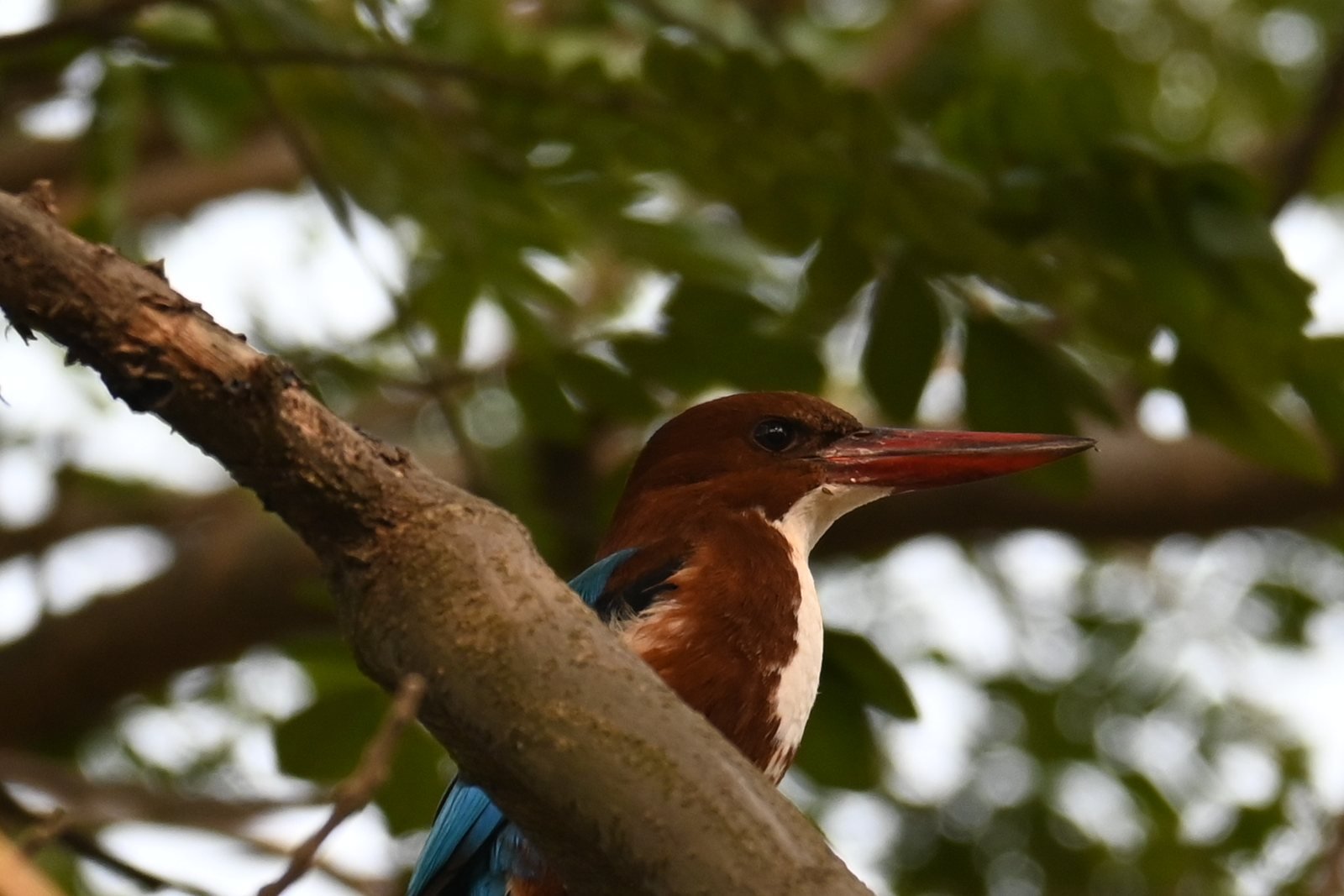
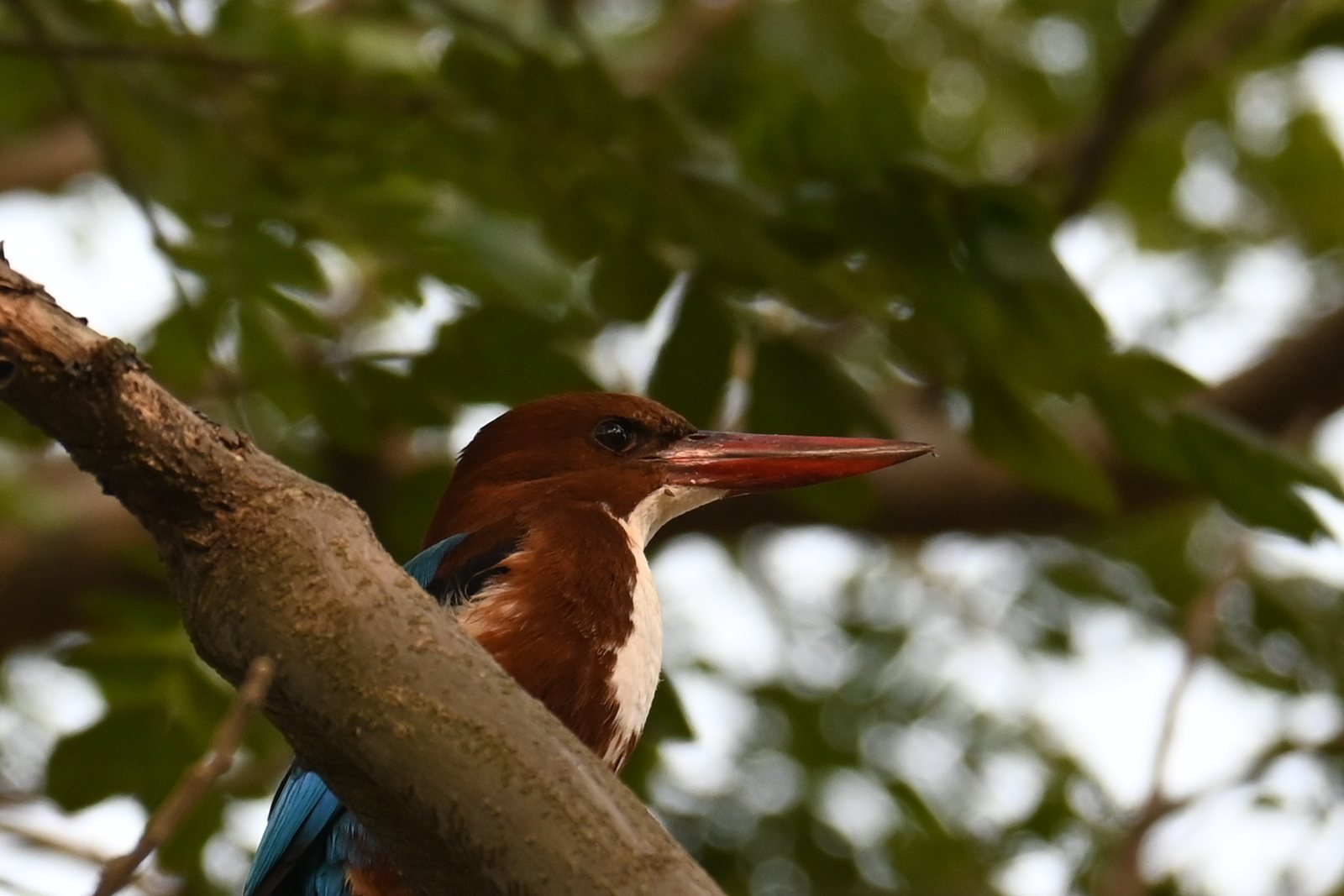
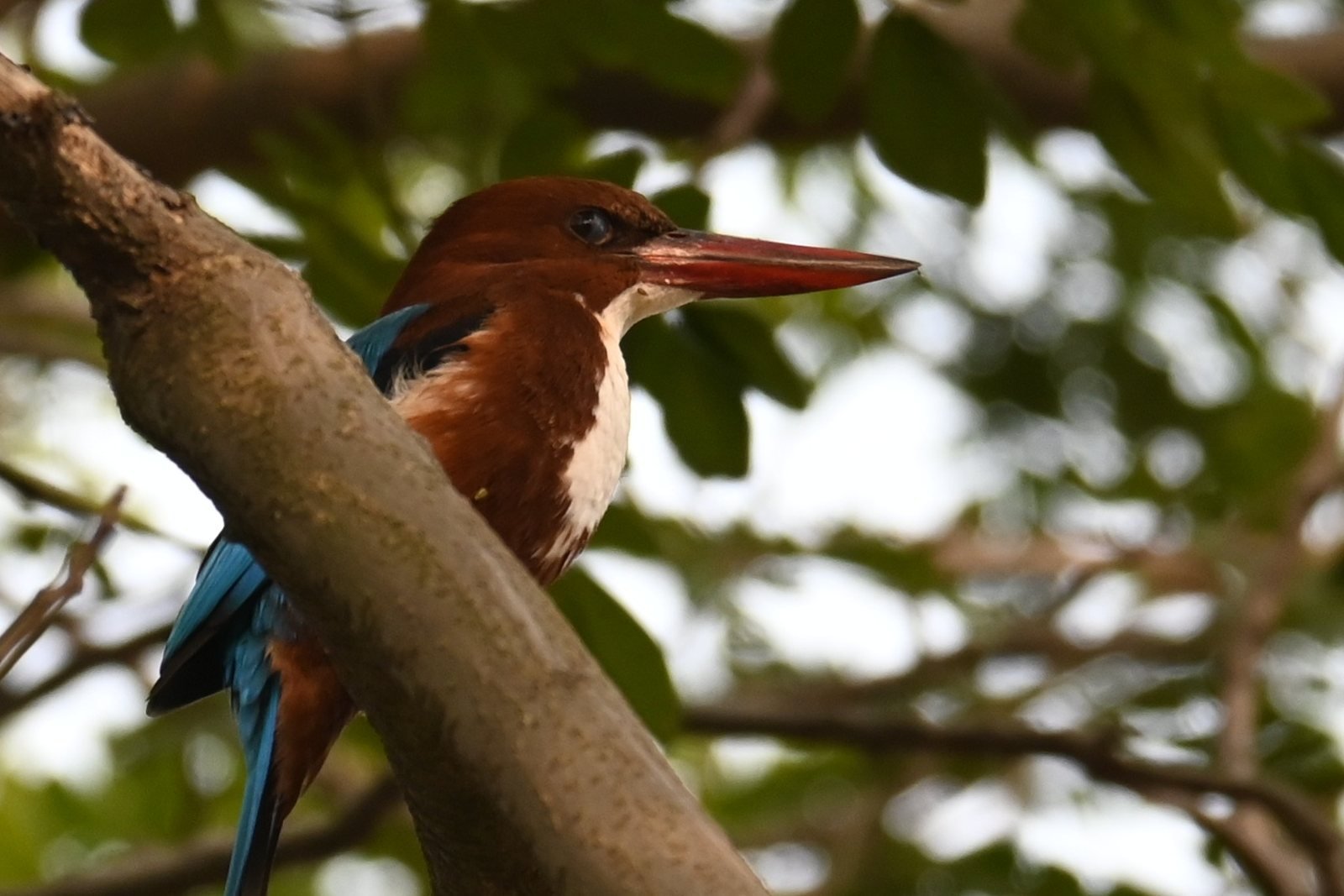
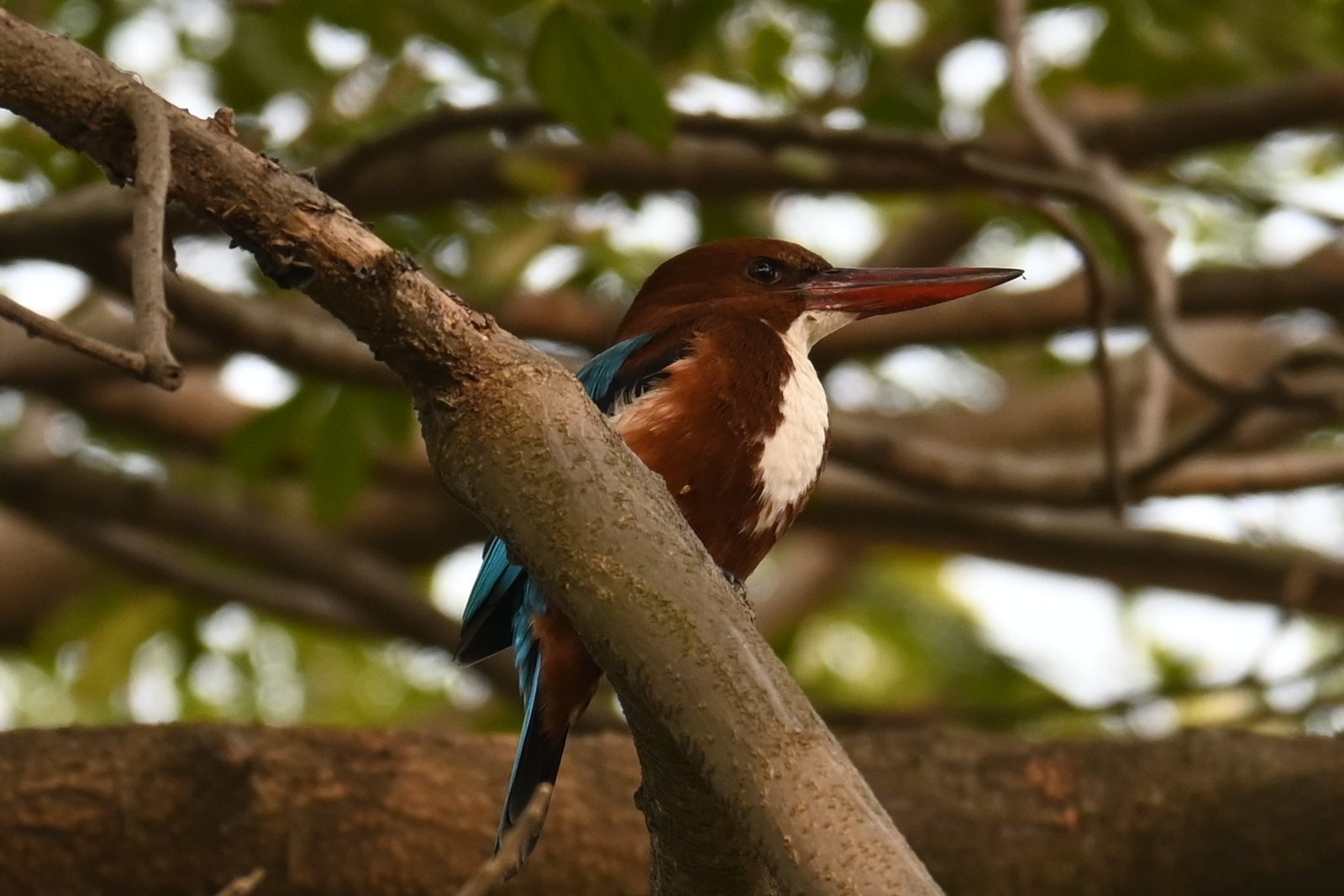
If you hear a loud, laughing, descending rattle from a tree near a field, look up. This is the bird making it, and it calls often, which makes it one of the easiest kingfishers to find by ear.
Stork-billed Kingfisher at Bandhavgarh: the giant
Bandhavgarh is tiger country, and everyone in the jeep is scanning the grass for stripes. On an April afternoon safari, the driver slowed for something else: a huge kingfisher sitting quietly on a low branch beside the track. The Stork-billed Kingfisher is the largest kingfisher in India, with a massive red bill that looks almost too big for the bird.
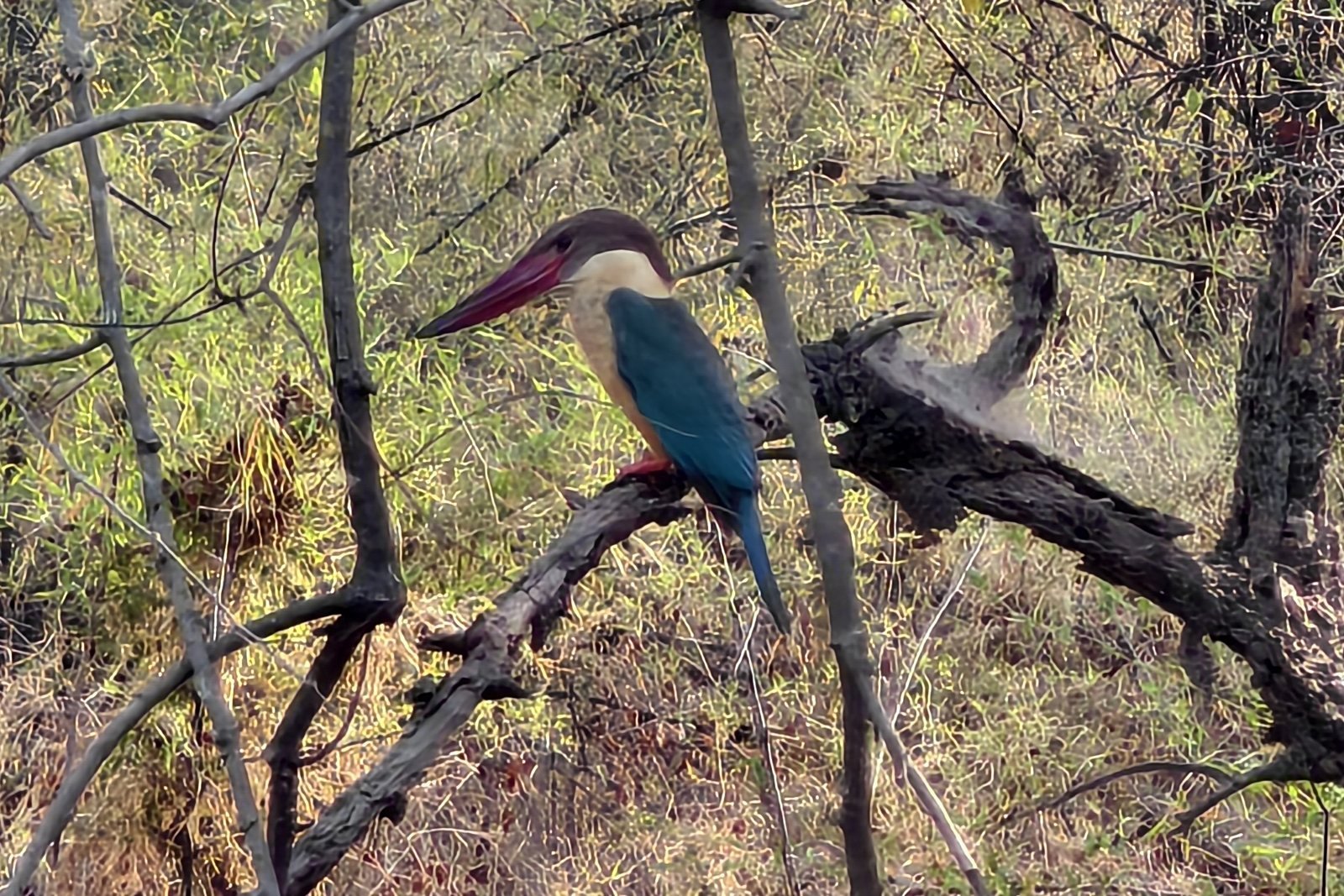
This frame was taken on a phone, not the big camera, and it works because the bird sat still and close. It is a good reminder that on safari the best camera is the one already in your hand.
Sindhudurg in the monsoon: three kingfishers in two days
The Konkan coast in the monsoon is kingfisher country. In two wet days around Sindhudurg we photographed two beauties up close: the tiny Oriental Dwarf Kingfisher and the dark Blue-eared Kingfisher. The full trip stories are in our Oriental Dwarf Kingfisher and Blue-eared Kingfisher posts; here are all the photos together.
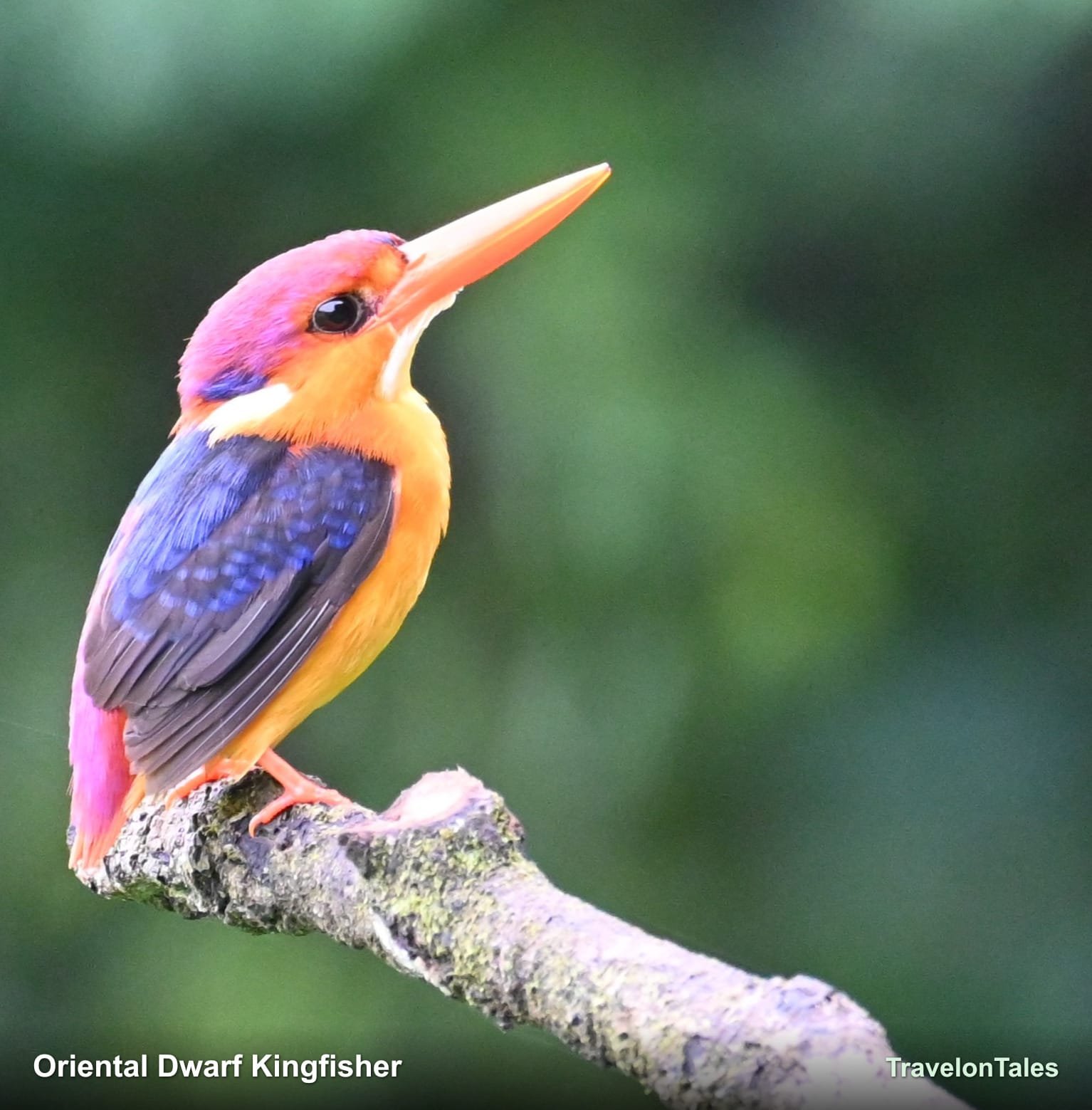
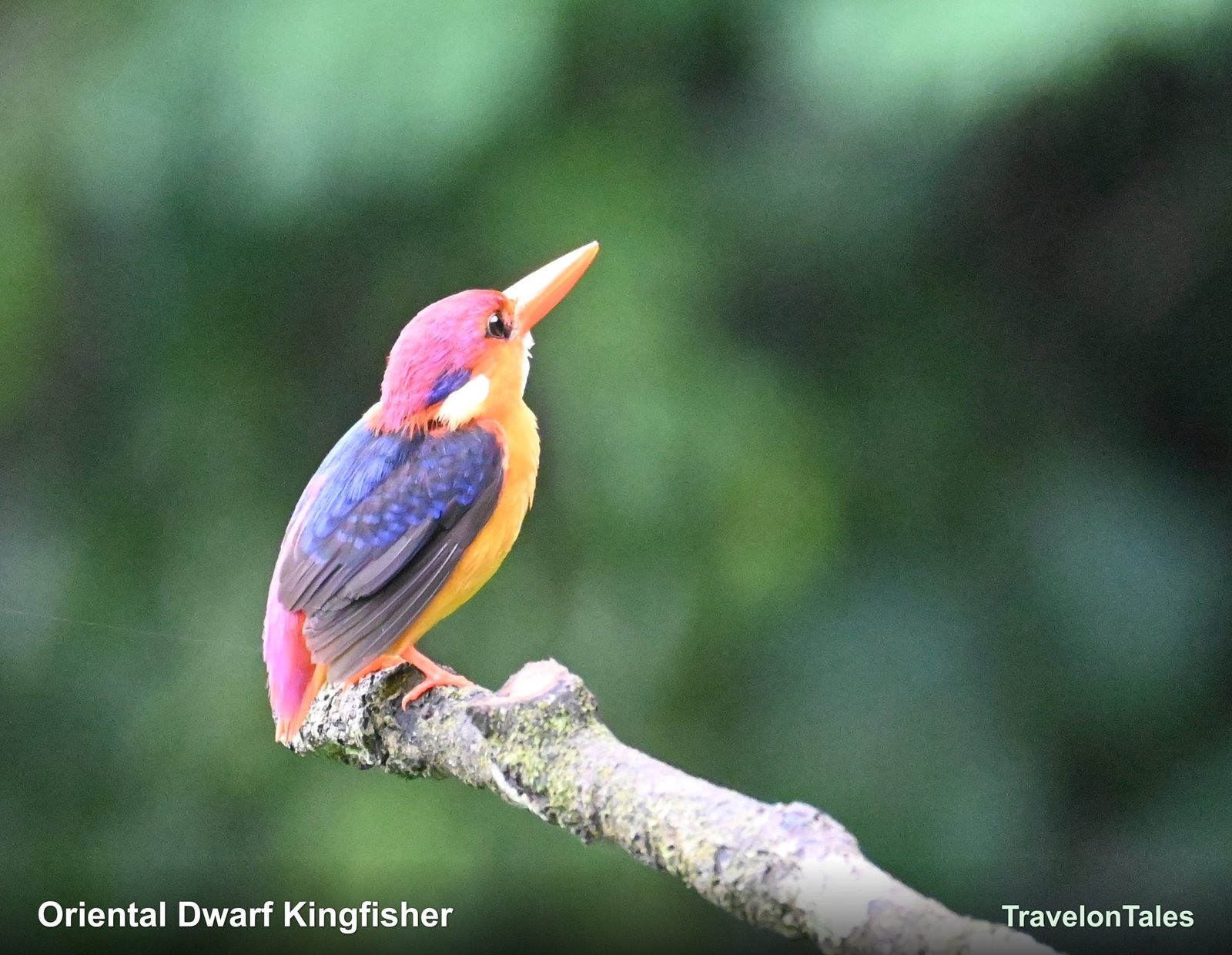
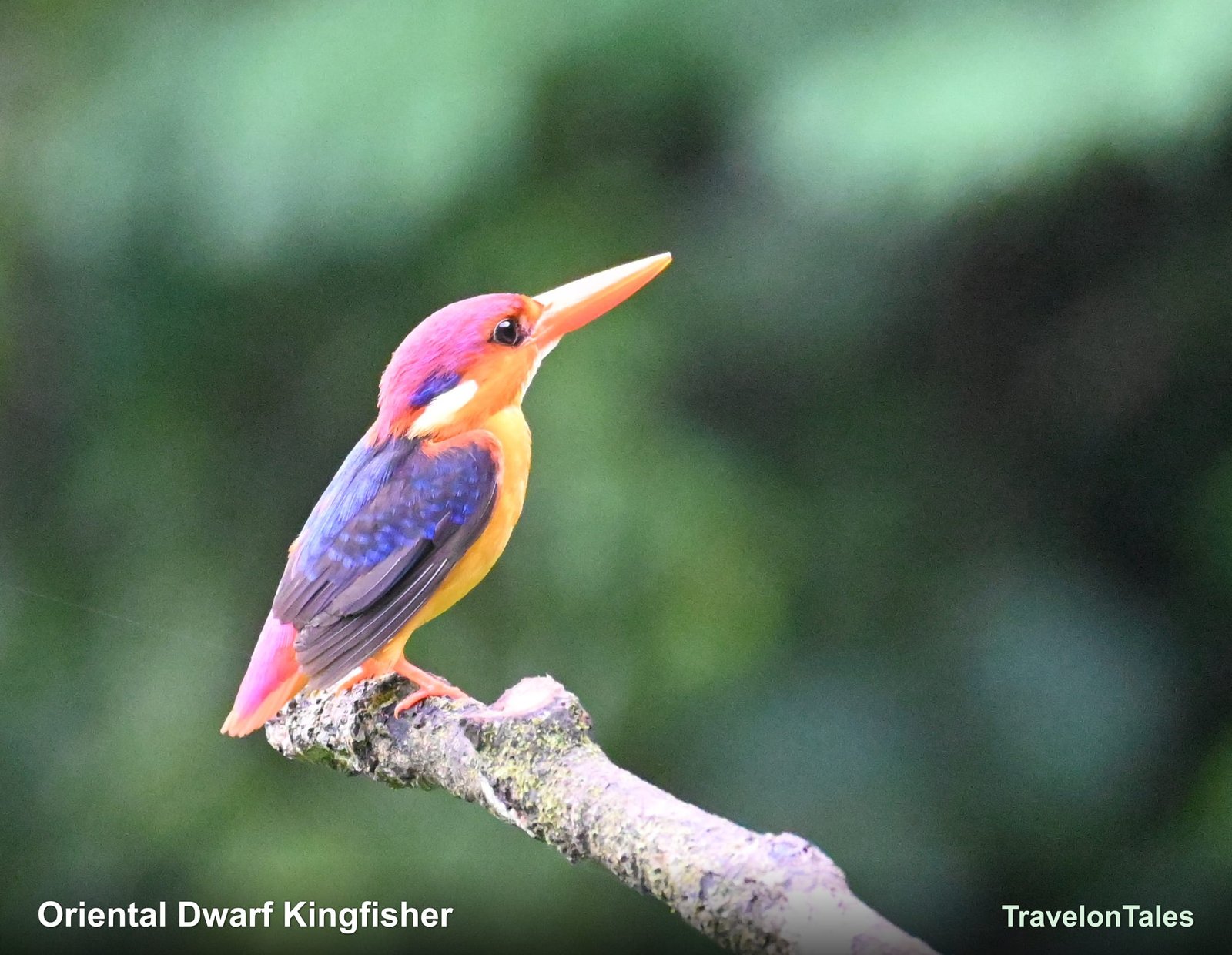
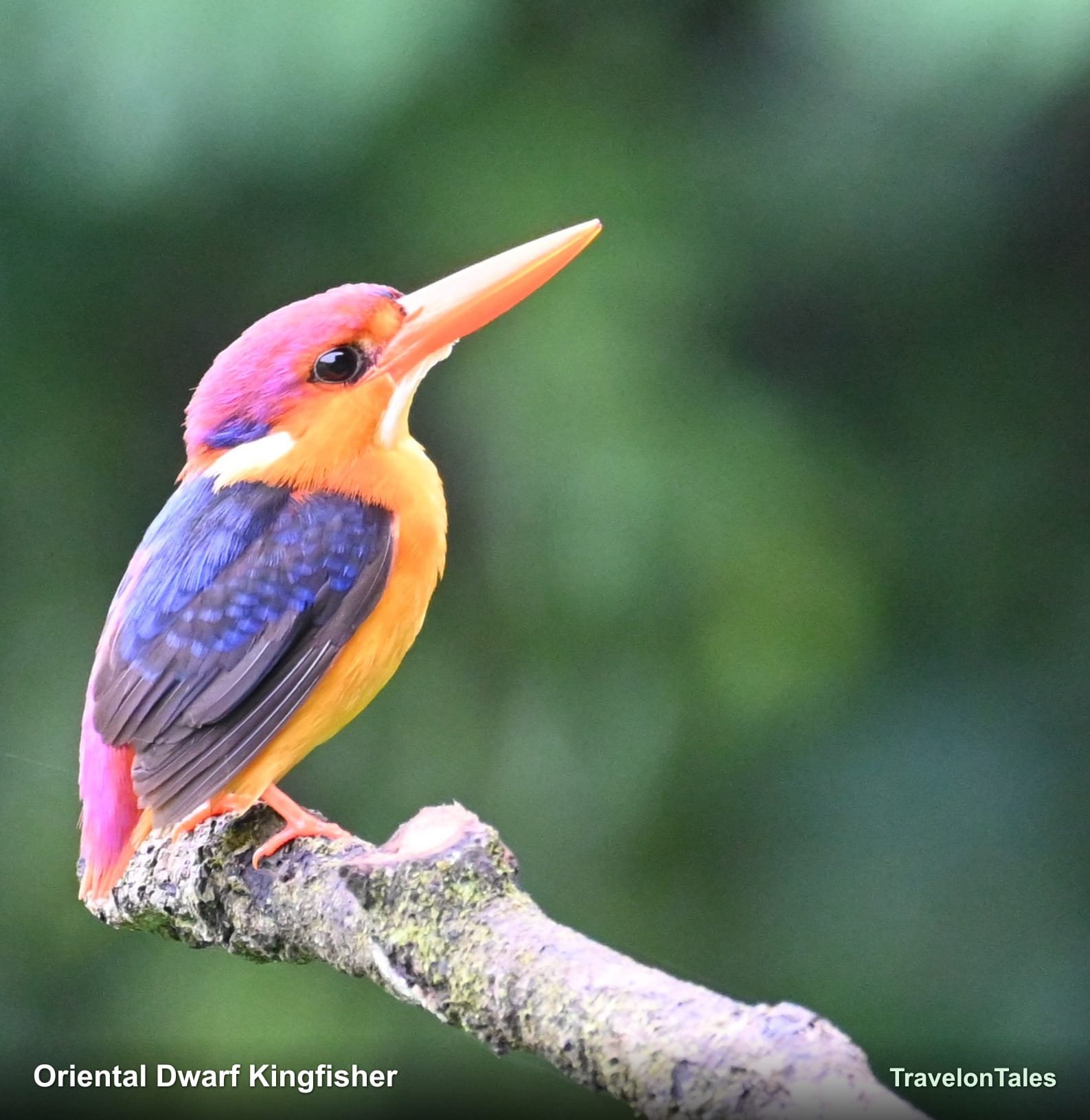
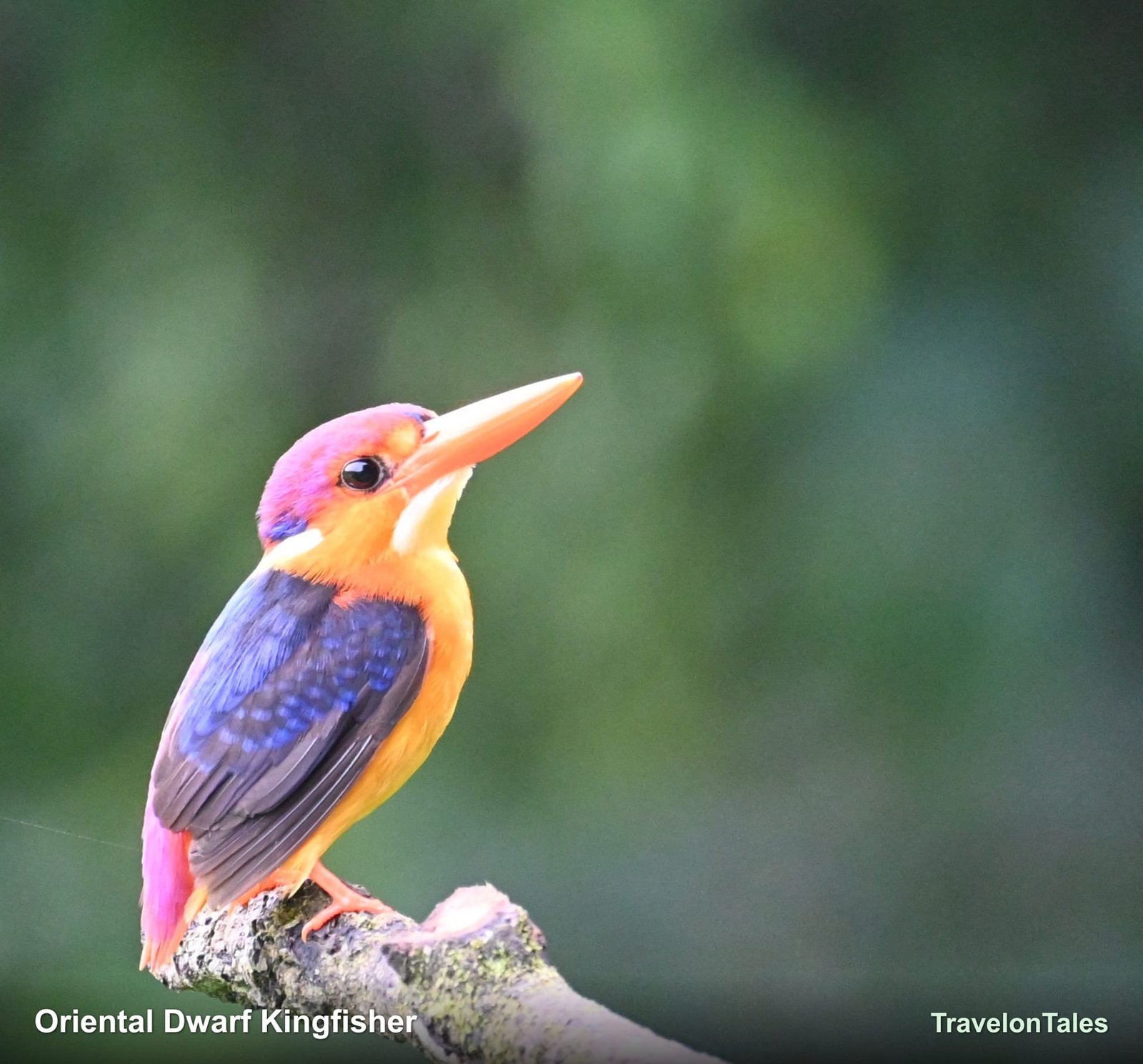
Oriental Dwarf Kingfisher
The smallest and brightest kingfisher in India: about the size of a sparrow, with a lilac back, orange body and a coral-red bill. It lives in shady forest streams and shows up in the Konkan during the monsoon, when it comes to breed.

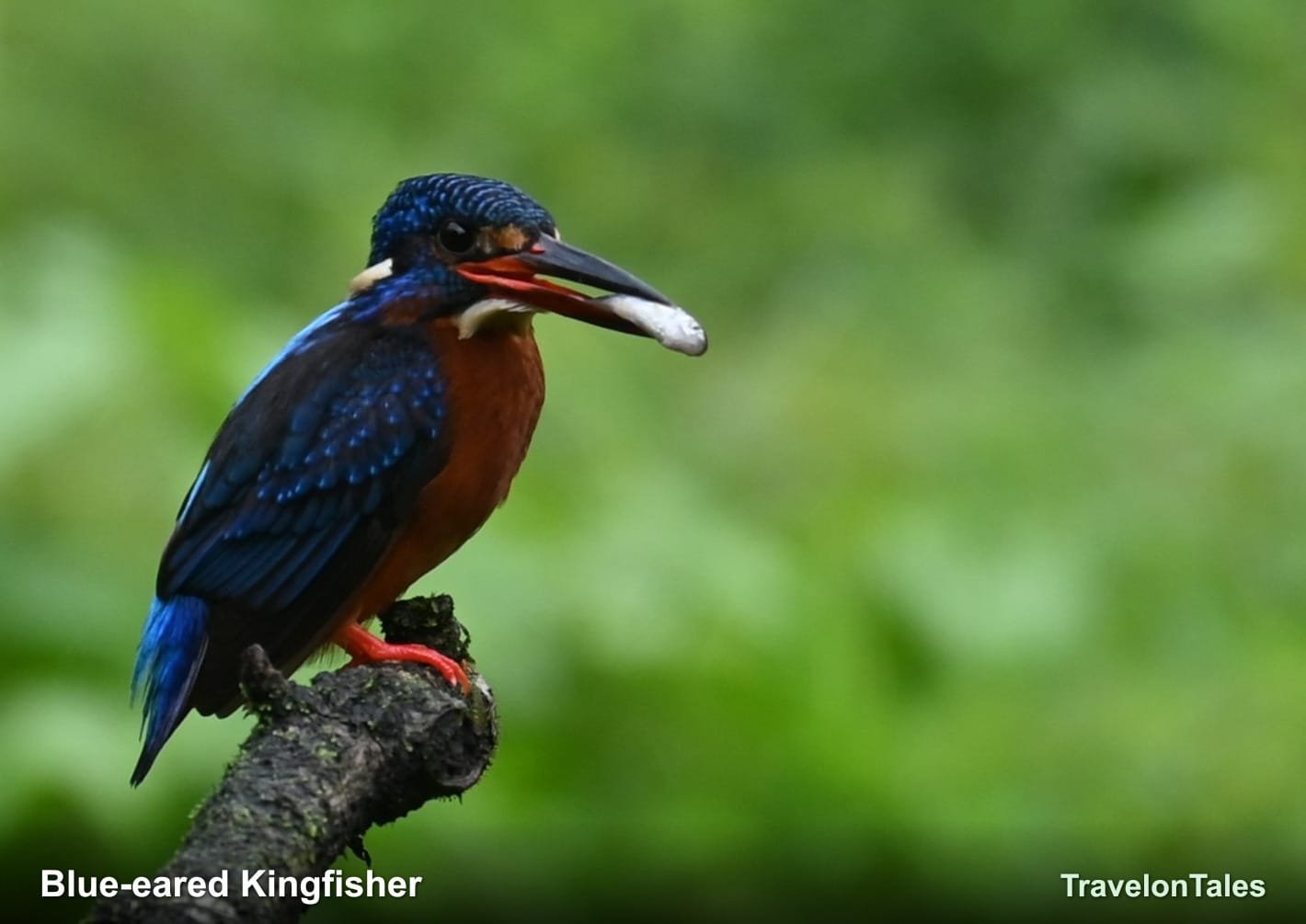
Blue-eared Kingfisher
At first glance it looks like a dark Common Kingfisher, but the ear patch is deep blue instead of orange, and the whole bird is darker and richer. It hunts from low perches in shaded forest streams.

Where they nest
Kingfishers dig tunnels in earth banks to nest. These holes, in a laterite wall and a mud bank, were found on the same trip.


Pied Kingfisher at Jawai: the black-and-white hoverer
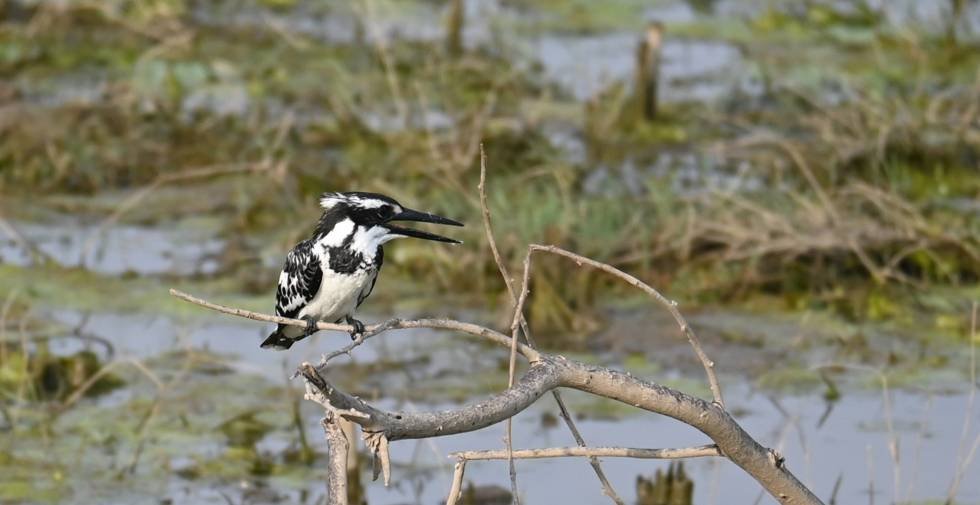
At Jawai in Rajasthan, the leopards get the attention, but the dam is full of birds. The Pied Kingfisher is the only black-and-white kingfisher in India, and it fishes in a way no other does here: it hovers over open water, then drops straight down. Between dives it rests on bare branches at the water’s edge. More in our Pied Kingfisher in Jawai post.
More kingfishers on TravelOnTales
Each of these has its own story on the site too:
- Oriental Dwarf Kingfisher in Sindhudurg
- Blue-eared Kingfisher in Sindhudurg
- Pied Kingfisher in Jawai
- Sindhudurg monsoon birding: kingfishers, owls and more
Quick tips for photographing kingfishers
- Find the perch first. Kingfishers return to the same stake, branch or wire. Wait near it instead of chasing the bird.
- Use the background. A banana leaf or soft green distance makes the blue jump out.
- Do not fear rain or cloud. Our best Common Kingfisher frames were taken in steady rain.
- Focus on the eye. On a small bird, a sharp eye matters more than a sharp tail.
- Crop afterwards. Every photo here is a crop. Shoot a little wide, keep the bird sharp, and frame it later.
- Keep your phone ready on safari. Big kingfishers like the Stork-billed often sit close to the track.
FAQs
Which is the largest kingfisher in India?
The Stork-billed Kingfisher, at around 35 cm, with a heavy red bill. It lives along forest streams and wooded water edges.
Do all kingfishers eat fish?
No. The White-throated Kingfisher eats lizards, frogs, insects and small birds too, which is why you often see it on wires far from water.
When is the best time to see kingfishers near Mumbai?
All year. Common and White-throated Kingfishers are resident. The monsoon is especially good at places like Saguna Baug, where streams are full and the birds are active through the morning.