
How a Bee-eater Eats a Bee Without Being Stung
A bee-eater beats the sting out of its prey against a branch before swallowing it. A bee-eater in the dry country behind Bhigwan, how they hunt, and why they nest in tunnels.
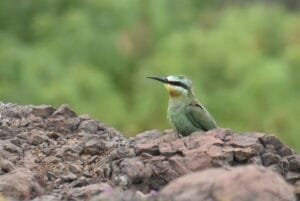
A bee-eater beats the sting out of its prey against a branch before swallowing it. A bee-eater in the dry country behind Bhigwan, how they hunt, and why they nest in tunnels.
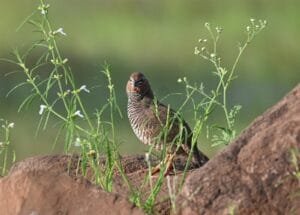
A covey sits tight until you are a few feet away, then goes up all at once. Rock Bush Quail on the dry slopes behind Bhigwan — how to tell them from Jungle Bush Quail, and why they roost in a circle.
When the Ground Explodes: Bush Quail on the Stony Slopes Read Post »
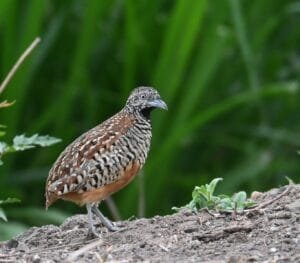
In the Barred Buttonquail the female is bigger, brighter, louder and takes several mates. The male incubates alone and raises the chicks alone. Finding one on the dry ground behind Bhigwan.
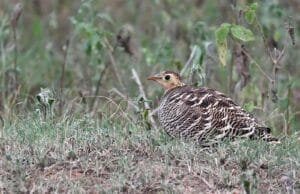
A male sandgrouse soaks his belly feathers and flies water home to his chicks. Finding a female Painted Sandgrouse in the dry grassland behind Bhigwan — and why almost everyone walks straight past them.
Painted Sandgrouse at Bhigwan: Photos and Field Notes Read Post »
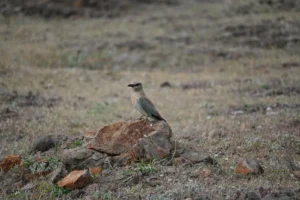
Original roller photographs from Bhigwan, with habitat notes and a cautious look at the bird’s field marks.
Roller at Bhigwan: Photos and Field Identification Notes Read Post »
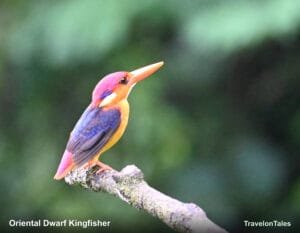
We drove nine hours in the rain for a bird the size of a matchbox, and it stayed for less than a minute. A diary of two monsoon days in the Sindhudurg forest — the waiting, the leeches, the owl, and the pitta we never saw.

Drongos, kingfishers and hawk-eagles all hunt the same way — sit high, watch, drop. Once you scan perches instead of scenery, they become the easiest birds in India to find and photograph.
Birds on Wires: How Perch Hunters Work, and Why It Makes Them Easy to Photograph Read Post »

The loudest bird of an Indian summer is one few people have seen. The Common Hawk-Cuckoo, the Grey-bellied Cuckoo, and the seven-gram prinias and bulbuls that end up raising their chicks.
The Cuckoo Con: India’s Monsoon Brood Parasites and Their Hosts Read Post »

Find a fruiting fig, sit down, and stay there. Why a fig tree is the most productive spot in an Indian forest, what turns up at one, and how to photograph birds in a canopy.
Sit Under a Fig Tree: The Easiest Way to See Forest Birds Read Post »

Most people leave Bhigwan by nine, once they have their flamingo photographs. Here are six birds from the rest of the same morning — River Tern, Painted Stork, Montagu’s Harrier, Brahminy Kite, Asian Openbill and Bluethroat.
Six Birds After the Flamingos: A Winter Morning at Bhigwan Read Post »
Related: BirdingSite – photo community for Indian bird photographers