
Prinias are small brown warblers that most people ignore. They are worth a second look. Two of them are common in Sindhudurg and they are easy to mix up: the Ashy Prinia and the Grey-breasted Prinia.
Here is how to tell them apart, with photographs of both from the same monsoon week near Vanoshi.
Tap any photo to view it full size.
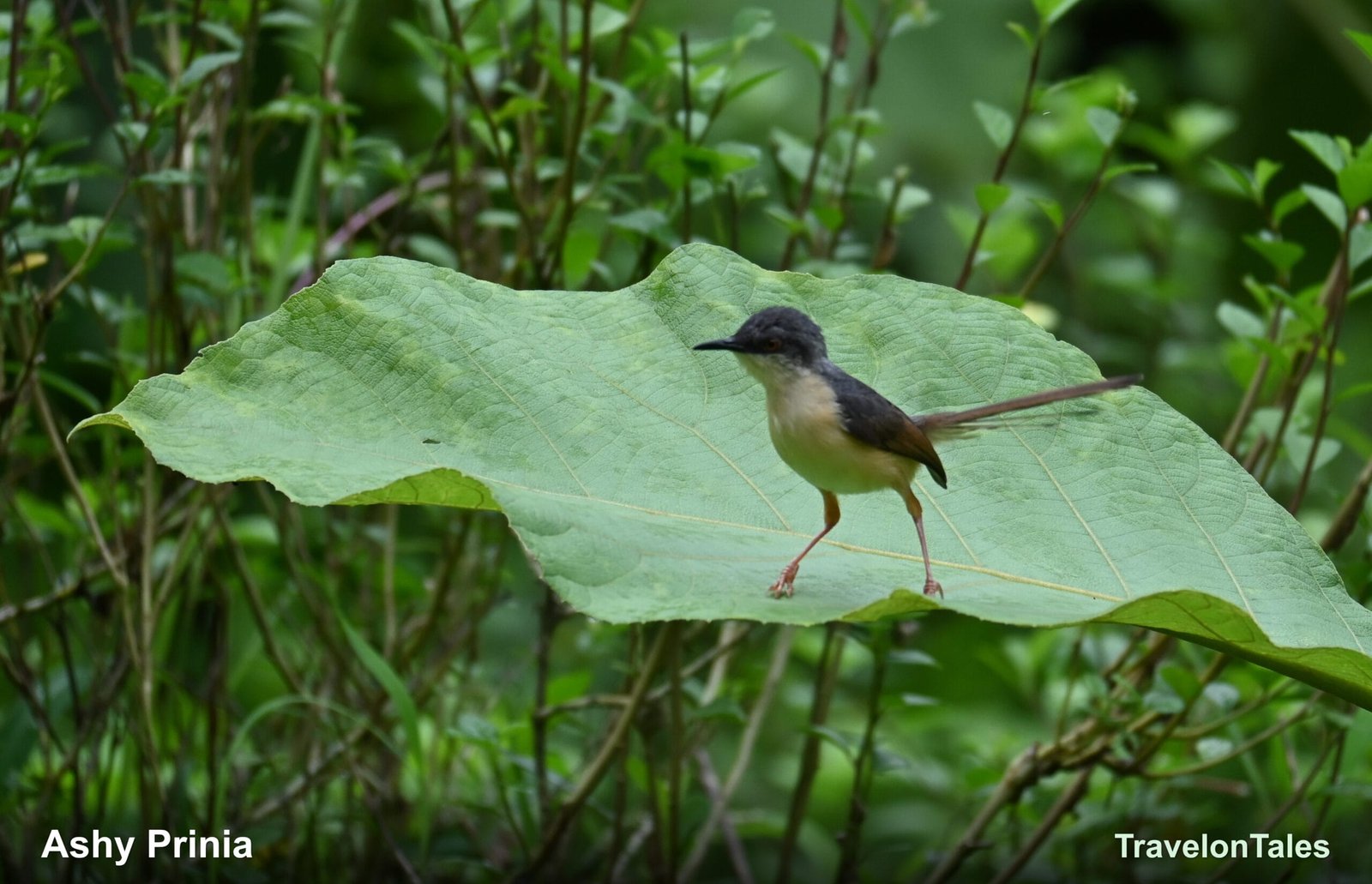
Quick answer
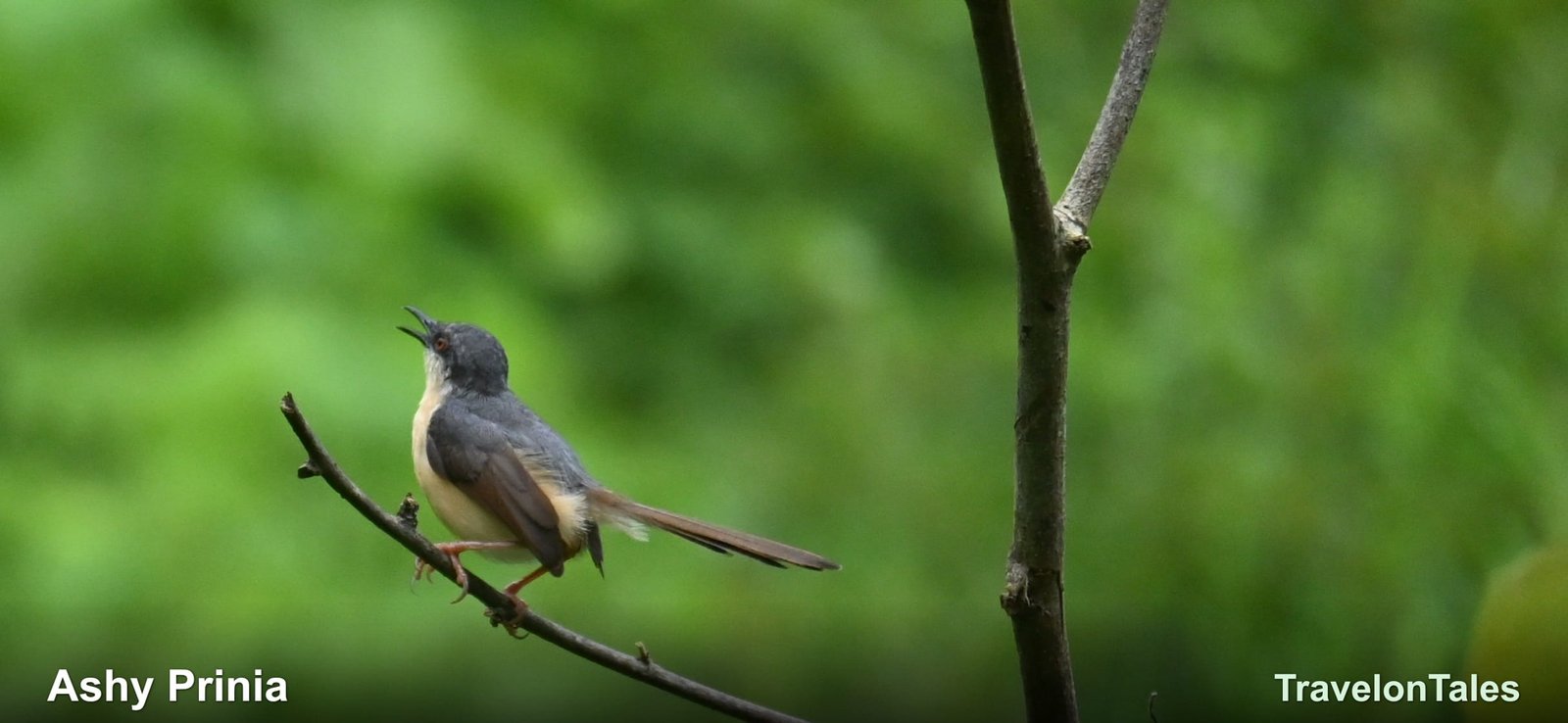
- Ashy Prinia: slate grey head and back, warm rufous wings, short black bill, pale eye, long tail flicked upward.
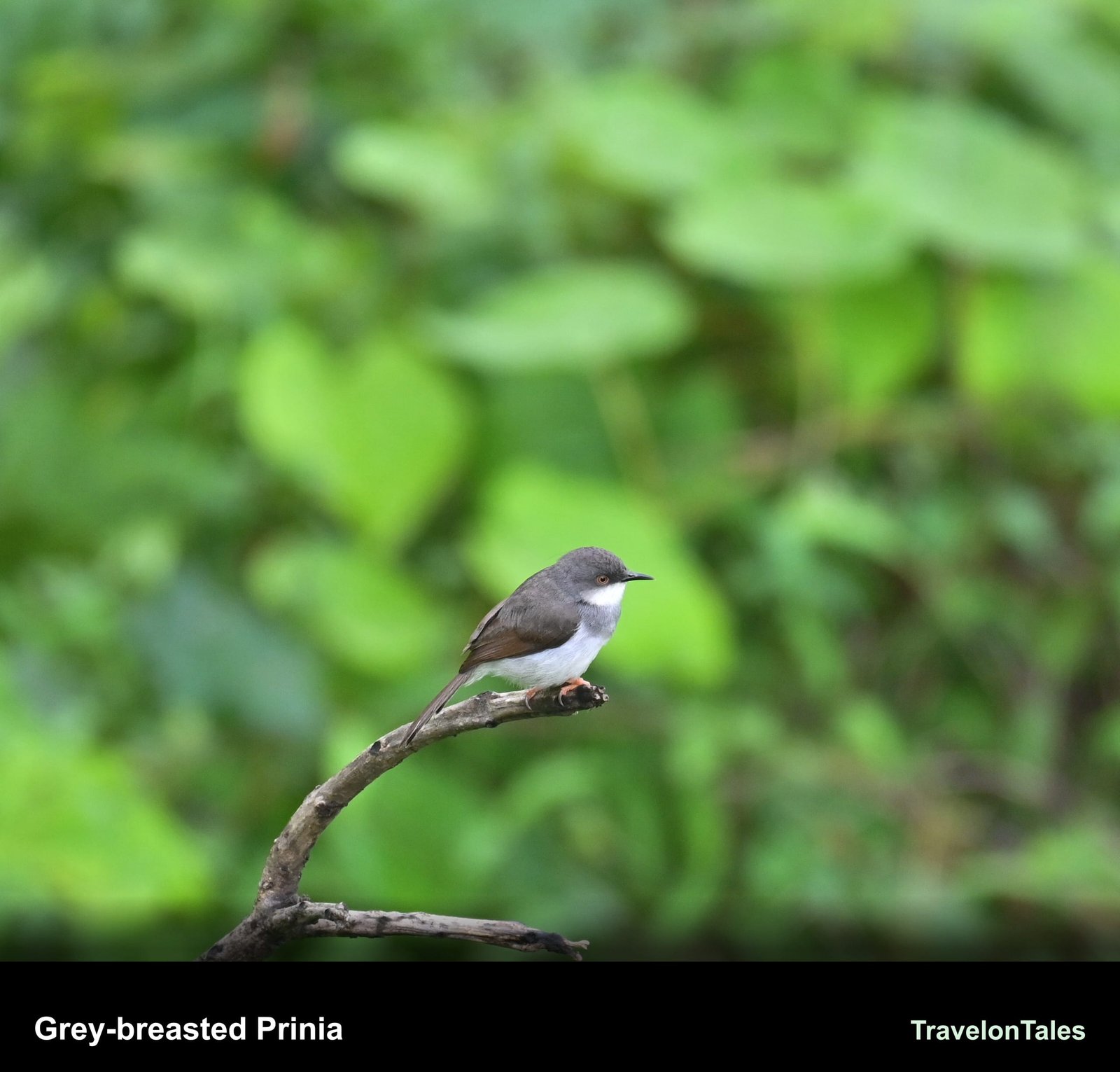
- Grey-breasted Prinia: browner overall, faint grey streaking across the breast, longer tail, paler face.
If the head looks clean grey and clearly darker than the wings, it is the Ashy Prinia. If the bird looks uniformly brown with a smudgy grey wash on the chest, it is the Grey-breasted.
Ashy Prinia
The Ashy Prinia (Prinia socialis) is about 13 cm long including the tail. Grey head and upperparts, rufous wing panel, buff underparts, and a black bill in the breeding season.
It is a bird of gardens, scrub, tall grass and field edges. It is one of the most common small birds in India and it is noisy for its size.
Grey-breasted Prinia
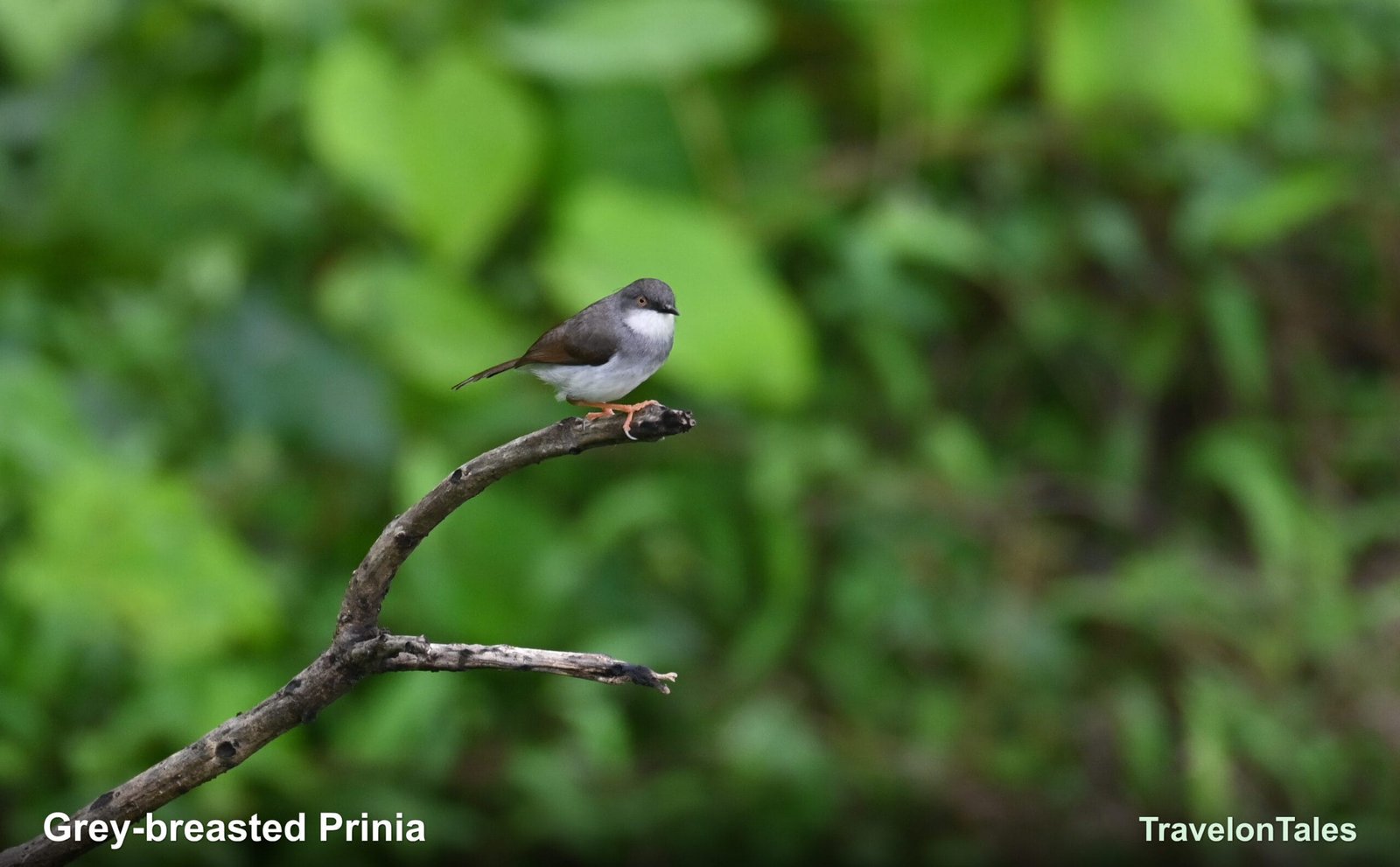
The Grey-breasted Prinia (Prinia hodgsonii) is slightly smaller and looks plainer. In breeding plumage it has a grey wash across the breast, which is where the name comes from.
Outside the breeding season that grey band fades and the bird becomes even harder to tell from other prinias. Then the tail length and the face pattern matter more.

Side by side
- Head: Ashy is clean grey. Grey-breasted is brown with a paler face.
- Wings: Ashy shows a warm rufous panel. Grey-breasted is plain brown.
- Breast: Ashy is plain buff. Grey-breasted has a grey band when breeding.
- Tail: both are long, but the Grey-breasted looks proportionally longer.
- Habitat: both like scrub, but the Ashy is far more common in gardens.
The tail
Both species hold the tail up and flick it constantly. This is the easiest way to know you are looking at a prinia and not a warbler or a wren.
The tail is also seasonal. Prinias grow a longer tail in the breeding season and a shorter one afterwards, which catches out a lot of people.
Where to see them
Both are easy in the right habitat. Scrub, tall grass, field edges, garden hedges and the open ground beside forest. Neither is a deep forest bird.
In Sindhudurg you will see them along the roads and around villages rather than inside the wooded belt where the kingfishers are.
Photography tips
- Be patient at one bush. They move constantly but they circle within a small area and come back.
- Shoot fast. 1/1000 or faster. They rarely sit still for more than a second or two.
- Get the wing panel. For the Ashy Prinia, a frame showing the rufous wing next to the grey head settles the identification.
- Listen first. Both call constantly. You will hear them long before you see them.
Frequently asked questions
How do I tell an Ashy Prinia from a Grey-breasted Prinia?
Look at the head. The Ashy Prinia has a clean grey head that contrasts with rufous wings. The Grey-breasted is brown all over with a grey wash on the chest.
How big are prinias?
Around 11 to 13 cm including the tail, and much of that is tail. The body is tiny.
Why do they flick their tails?
It is normal prinia behaviour, probably a signal to other birds. All prinias do it and it helps identify the group.
Do prinias change appearance in different seasons?
Yes. Tails are longer in the breeding season and plumage is brighter. The Grey-breasted Prinia loses much of its grey chest band outside breeding.
Are they hard to find?
No. Both are common in scrub and gardens. They are just easy to overlook because they are small and brown.
Related posts: Birds of Sindhudurg Field Guide, Chestnut-headed Bee-eater and Sindhudurg Monsoon Birding Guide.