
Most people go to Bhigwan in winter. They go for the flamingos, and they come back with the same photograph everybody else has — a pink line on grey water, taken from a boat. I went in the second week of September, when there is not a flamingo in sight, and I came back with birds I had never photographed in my life.
This was a two-day trip with Wildgram Tours, 12th and 13th September. I did not drive. I took a train to Pune and then a Solapur bus from there, and got down at the Bhigwan stop on the highway. That is about as simple as it gets.
Getting there without a car
Bhigwan sits on the Pune–Solapur highway, roughly 100 km out of Pune. Any Solapur-bound state transport bus passes through it. You tell the conductor “Bhigwan” when you get in, and he will remember. The bus does not enter the town. It stops on the highway, near the shops, and you get off there with your bag and your camera.
From that stop, the birding areas are still some distance away. Kumbhargaon village, where Agnipankh is, is a few kilometres off the highway on the backwater side. There are autos at the stop. If you have booked a stay, it is easier to tell them your bus timing and let them send someone.
The bus part took a little over two hours from Pune. It was not comfortable and it was not bad. I had a window, the road was wet in patches from the last rain, and there were sugarcane fields and then suddenly a lot of open brown-green nothing. That nothing is the point of the trip.
Agnipankh, and why the guide matters
I stayed at Agnipankh, in Kumbhargaon. It is the homestay that more or less started birding tourism here. Sandip Nagare turned his own house into a place for birdwatchers back in 2006, and over the years he has trained boys from the village — many of them from fishing families — as guides. The village used to hunt these birds. Now it makes a living showing them to people. That is not a small change and nobody there makes a speech about it.
The rooms are plain. You get a bed, a fan, a bathroom, and food that comes out of a village kitchen rather than a menu. Meals are fixed and vegetarian by default, served hot, on time, and in quantity. Do not go expecting a resort. Go expecting to sleep by ten and be out by six.
The guide came with the stay. This matters more than anything else I can tell you about Bhigwan. These grasslands look empty. Genuinely empty — dry grass, black rock, thorny scrub, a cattle track. You could walk through them for three hours and see four crows and decide the place is overrated. The guide knows which rock the sandgrouse sits behind at seven in the morning, and that is the difference between an empty memory card and a good one. The country itself is covered in the Kadbanwadi piece.
Day one: the morning that made the trip
We were out before sunrise. September mornings here are soft and grey, with a lot of moisture in the air, and the light comes in slowly instead of all at once. Good for looking, slightly annoying for photography — I was shooting a Nikon Z 50 with the 50-250mm, and for the first twenty minutes I was nowhere near a usable shutter speed.
The first proper bird was a Red Collared Dove sitting on a dirt track, doing absolutely nothing, which is what doves do best. Small, dusty pink, a neat black collar and a grey head. I took a few frames because the light was flat and the bird was calm, and it turned out to be one of my cleaner images from the trip.
Then the grassland started giving.
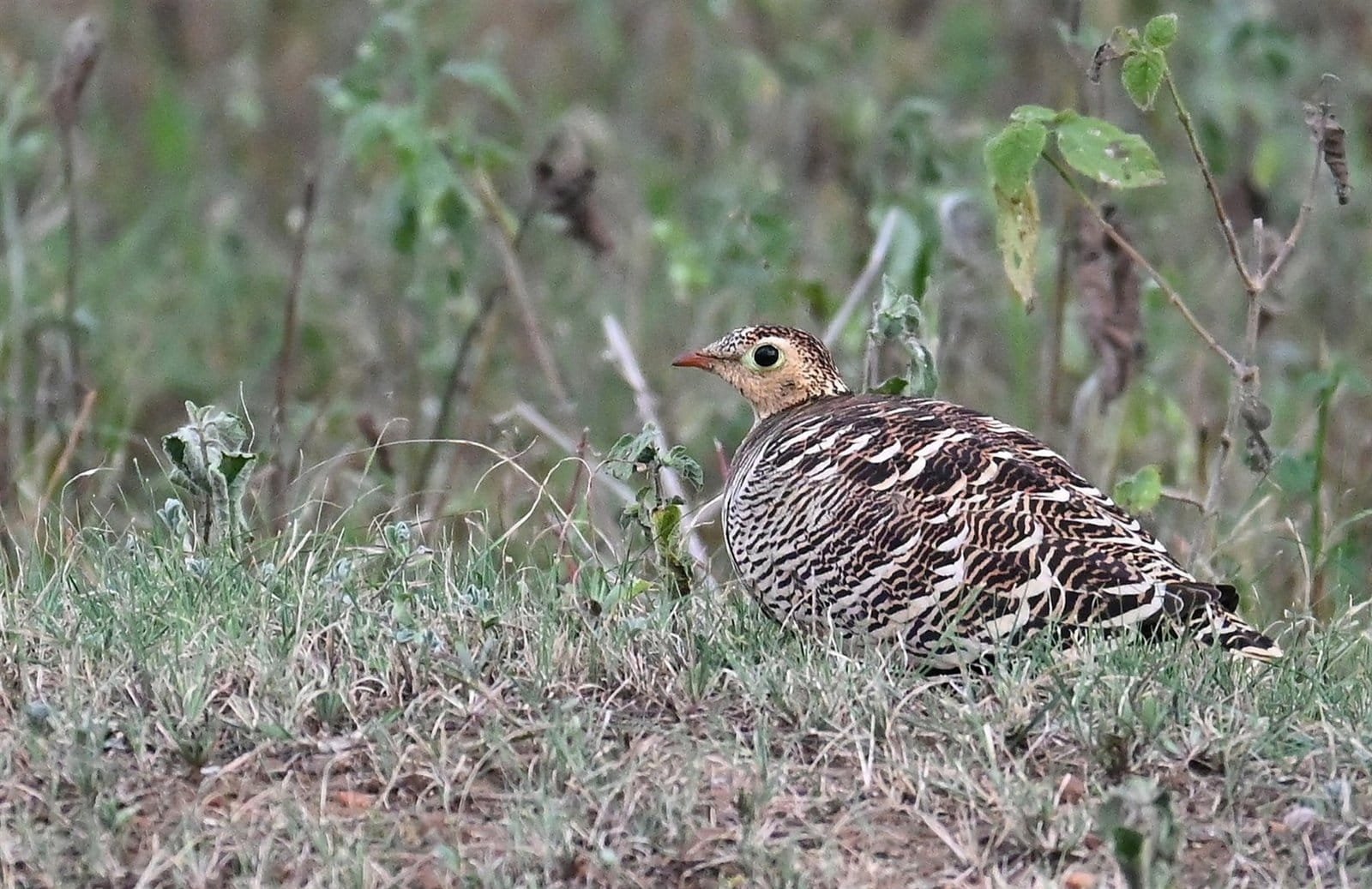
Around seven, the guide stopped, pointed at a patch of low green weed maybe twenty metres off, and said one word. I saw nothing. He waited. I still saw nothing. Then the thing moved, and a Painted Sandgrouse — a female, cream and black and heavily barred, with a pale ring around her eye and a red base to her bill — separated herself from the ground she had been part of a second earlier.
I have looked at that photo a lot since. It is the best frame I have taken in a long time, and I cannot claim any skill for it. She sat, I sat, the light was kind, and my guide had known she would be there.
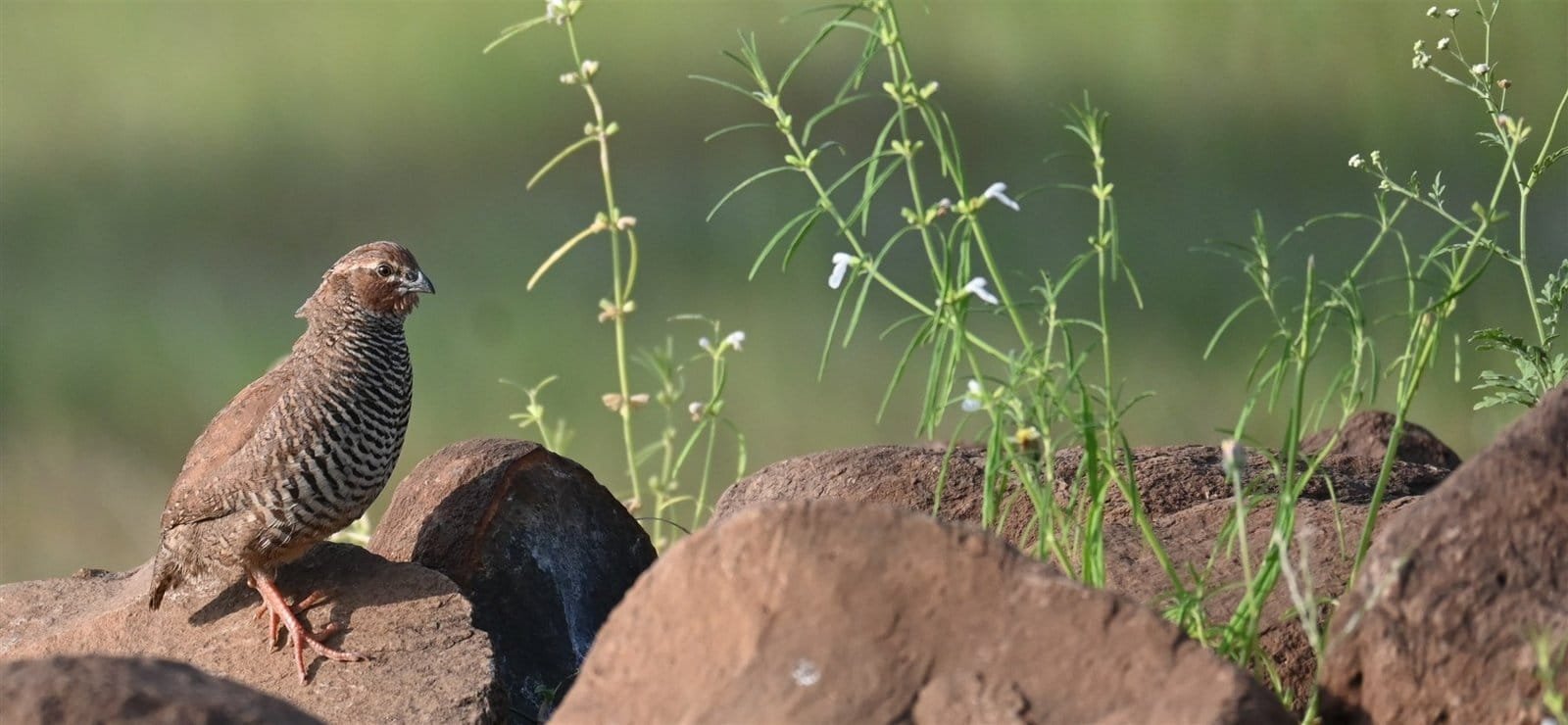
A little after that, on the rocky ground, a Rock Bush Quail climbed up on a boulder and stood in the open long enough for a proper picture. Barred flanks, rufous face, and those orange-pink legs.
Around eight, on a stonier stretch with the sun finally out, a Rain Quail — a male, with that black anchor shape on the chest and the striped face — stood on a mound of gravel and let me take a portrait. Rain Quails are a monsoon bird. In February you will not get this.
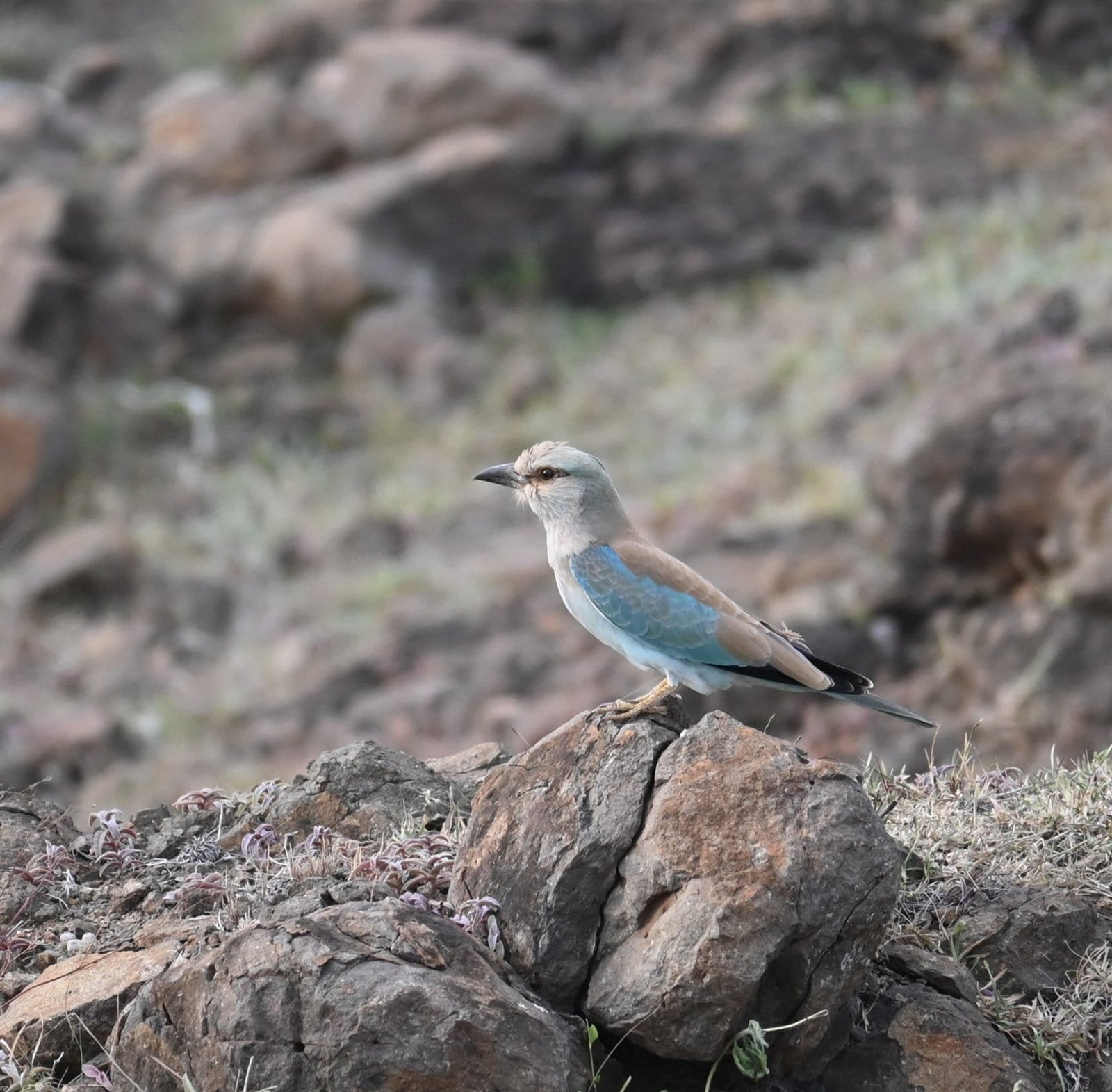
The other bird from that first morning that I keep going back to is the European Roller. Pale, sandy brown on the back with a soft blue wing and breast, sitting upright on a rock in a field of black stone. It is a passage migrant — it comes through in autumn on its way south — and September is exactly when you have a chance at one here. Winter visitors miss it entirely.
By nine the heat had arrived and the birds had gone quiet. We came back, ate, and slept through the middle of the day like sensible people.
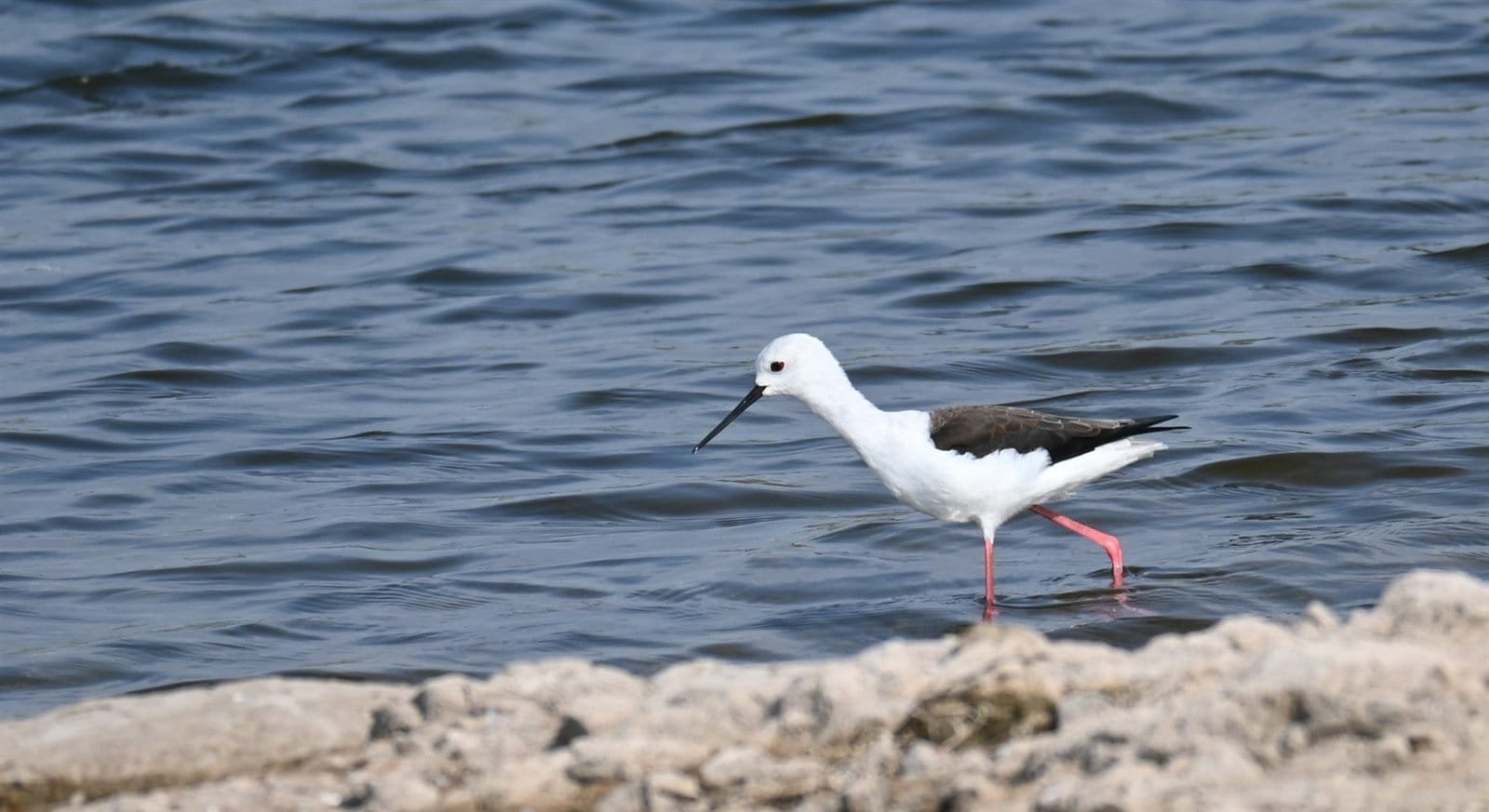
The evening session was slower. I walked down to the water’s edge, which in September is green and full rather than the shrunken winter version of itself. A Black-winged Stilt was working the shallows, all white and black with those absurd pink legs, and I photographed it mostly because it was there and moving nicely. There is a lot of that in birding. Not every bird is a lifer.
Day two: quieter, and then not
The second morning felt slow for a long time. We covered a lot of ground and I did not press the shutter for the better part of an hour. That happens, and if you have travelled seven hours to get somewhere it starts to feel like a personal insult.
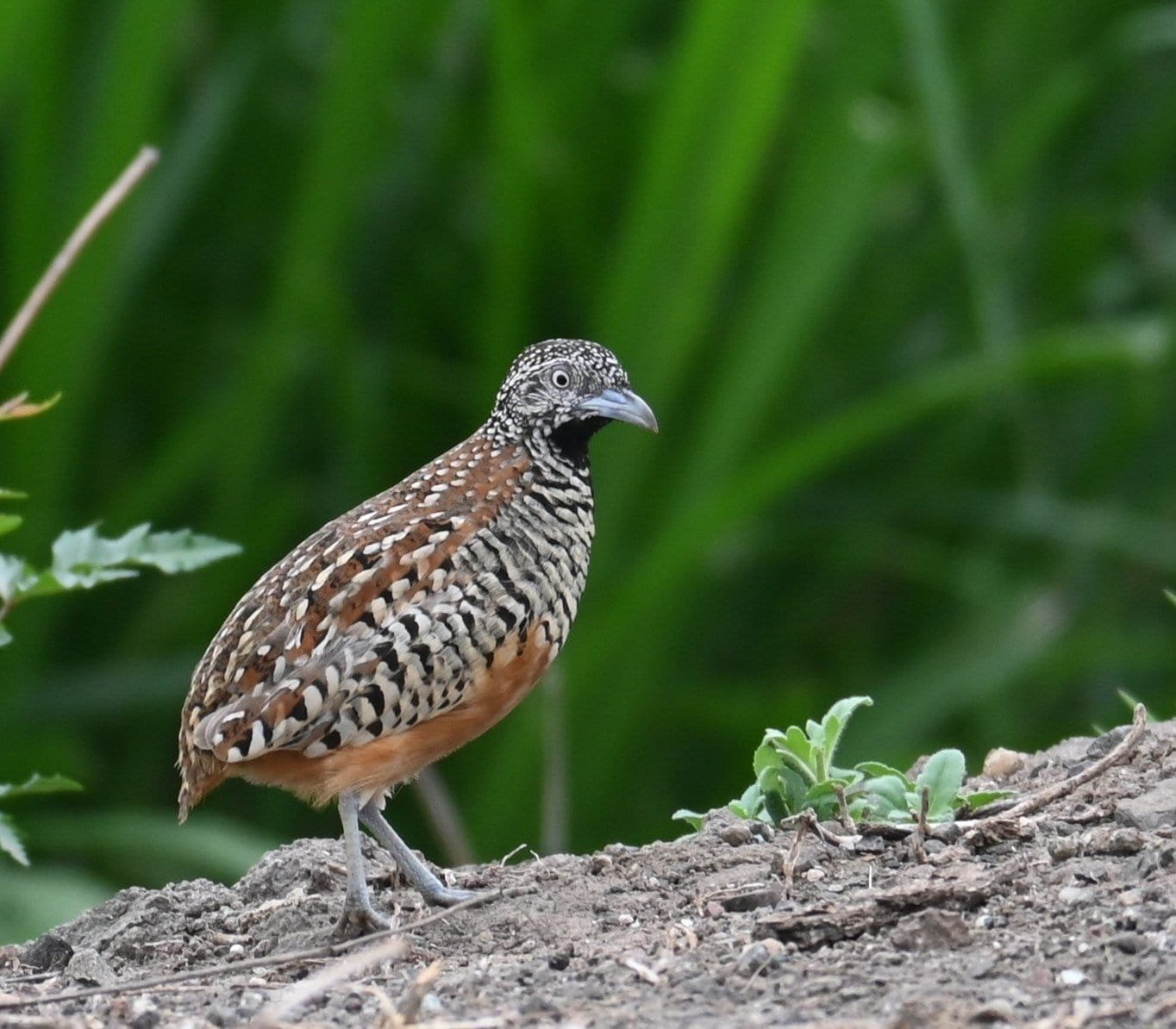
What saved it was a Barred Buttonquail on a mud bank against a wall of green grass. A female, which in buttonquails is the bigger, brighter, more aggressive sex — black throat patch, rufous shoulders, that beautifully speckled head. She walked out, stood still for a few seconds, and went back in.
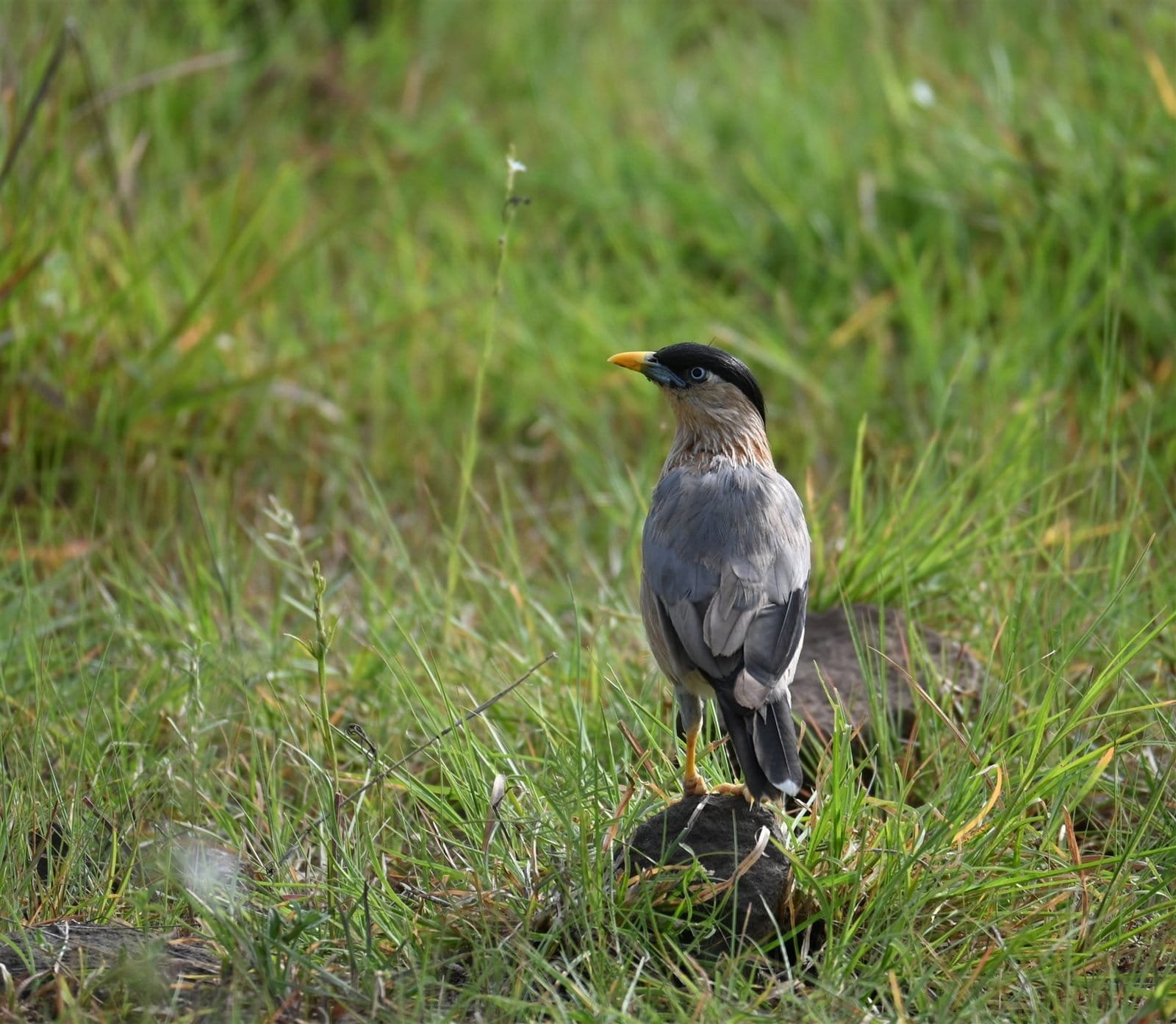
Later a Brahminy Starling posed on a small rock in tall wet grass, black crest up, yellow-and-blue bill catching the light. Common bird. Lovely photograph.
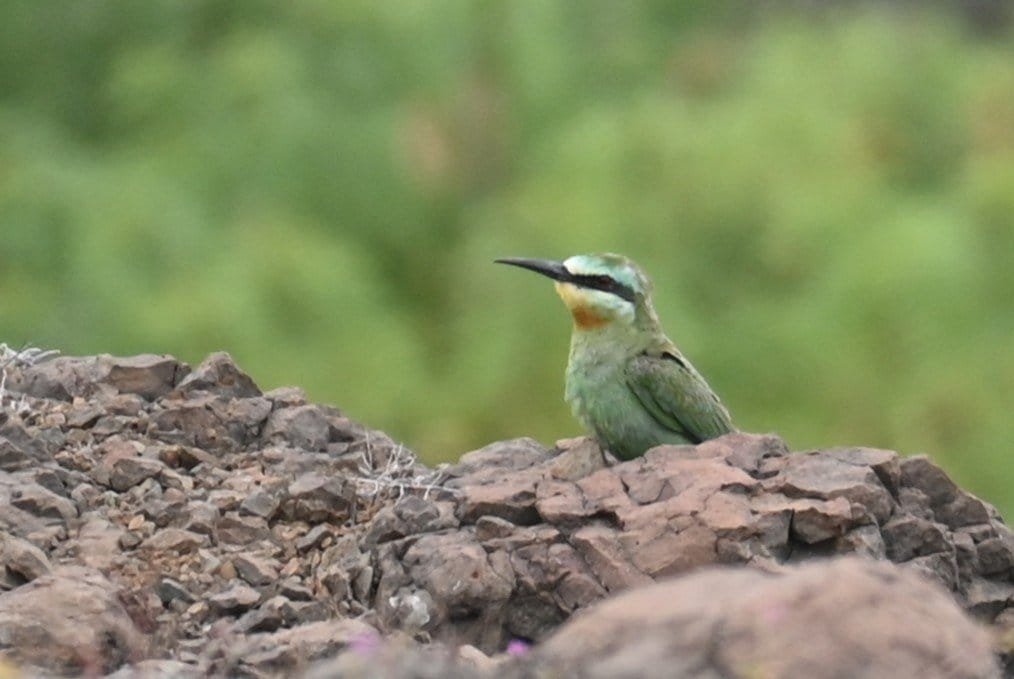
Around half past ten, well after the time you are supposed to stop birding, a bee-eater turned up on a rocky ridge — green, with a rusty throat and a blue face stripe, and bigger than the Green Bee-eaters that sit on every wire in the country. Blue-cheeked or Blue-tailed; I have written honestly about which elsewhere and I am still not certain. Either way it is an autumn bird here, and that one was luck.
The oddest sighting of the trip was on a road, not in a field. A Brown Crake — plain grey-brown, green-yellow bill, long dark legs — out in the open on tarmac, picking at something. Crakes skulk. Seeing one strolling down a road with no cover at all felt like catching a shy colleague dancing.
We packed up after that, ate, and I took a bus back to Pune from the same highway stop.
What I would tell you before you go
September is not the famous season, and that is the reason to go. There are no flamingos between roughly May and November. If flamingos are your whole reason for the trip, go in December or January — and the winter birds are worth a morning of their own. If you want grassland birds, quails, buttonquails, sandgrouse, and passage migrants like rollers and bee-eaters, come now. You will also have the place almost to yourself. On both mornings we saw no other birders.
Take the guide. I keep repeating this because it is the single thing that decides whether your trip works. These are not birds you find by wandering.
The boat is optional in this season. Boat rides at Bhigwan are built around the winter waterbird crowd. In September the grasslands are where the action is. Ask when you book rather than assuming.
Be out by six and back by nine. After that the light is harsh and the birds sit tight. Use the afternoon to sleep. Go out again around four.
Carry reach. Most of these birds are small, ground-dwelling and nervous. I managed with 250mm on a crop body, which is 375mm equivalent, but I cropped hard on nearly everything. If you have longer glass, bring it.
Shoes, not sandals. The ground is rock, thorn and cattle track, and after rain it is slippery.
Keep the plan loose. Two days is enough for four sessions. Do not add a side trip unless you are driving. Without a car, you are on bus time.
I went with low expectations, honestly. September at a place known for winter birds sounded like bad planning. I came back with a sandgrouse photograph I will be showing people for years, and a strong feeling that I had seen a version of Bhigwan that most visitors never bother with.
Go in the off season. The birds do not know it is the off season.
A note on names: we identify these birds ourselves and we do not always get it right. If you think we have called one wrongly, tell us — we would rather fix a name than leave it standing.